
Is your camera gathering dust? When you shoot, it's always the same subject, the same angle. This lack of inspiration affects everyone, whatever your level.
The good news? Inspiration isn't a fluke. It's a habit that you choose to develop. You don't need to travel far or buy a new camera to find the spark!
In this article, I share 10 tried-and-tested tips for breaking this deadlock and getting back in touch with the pleasure of photography. They work. It's up to you!
1. Vary your focal lengths and play with perspective
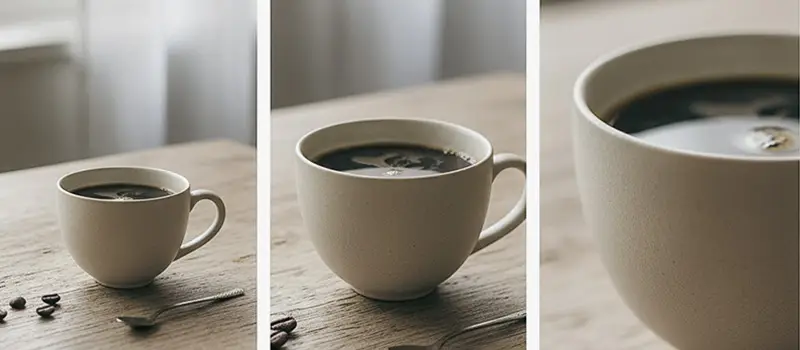
Do you always shoot with the same focal length? It's normal, we all develop our own habits. But it's also the best way of seeing the same thing over and over again.
Objective
Force your eye to break away from routine to rediscover familiar subjects from a radically new angle.
Exercise: 3 Focuses, 3 Looks in 15 Minutes
Choose a simple subject. You have 15 minutes. Photograph it using your three focal lengths (default focal length, Wide-Angle and Clip-on Macro).
Force yourself to get 3 photos that don't look the same:
- Wide Angle: Show the environment and the scale.
- Macro: Reveal the detail that no-one else sees.
- Default focus: Just capture it.
Profit
You can change your outlook in 15 minutes. It's the fastest way to unlock new ideas.
Tip: Are objectives expensive? I've got the solution
Budget is an obstacle. Fortunately, you can use your smartphone with clip-on lens kits (an external lens that clips onto your phone's lens).
It's the simple, affordable way to test what works best for you when it comes to photography!
See the comparative table of clip-on lenses for smartphones (prices and advice)
| Lens type | Description & Benefits | Price range (Kit or Unit) | Purchasing advice |
|---|---|---|---|
| Wide-angle (0.45X to 0.6X) | Force to get closer to the subject or to integrate a vast environment (landscapes, architecture). | 15 € à 40 € | Make sure you use a glass lens to limit distortion at the edges. |
| Macro (10X to 25X) | Allows you to focus on the infinitely small (details, textures). Radical change of subject. | 10 € à 30 € | The higher the magnification, the more demanding the focusing. |
| Telephoto lens (2X to 12X) | Tighten the framing and compress the shots (portrait, isolation of distant details). | 15 € à 60 € | Optical zoom (X2) is the most effective. Beyond that, the use of a mini tripod is recommended. |
2. Take (intelligent) inspiration from your favourite photographers
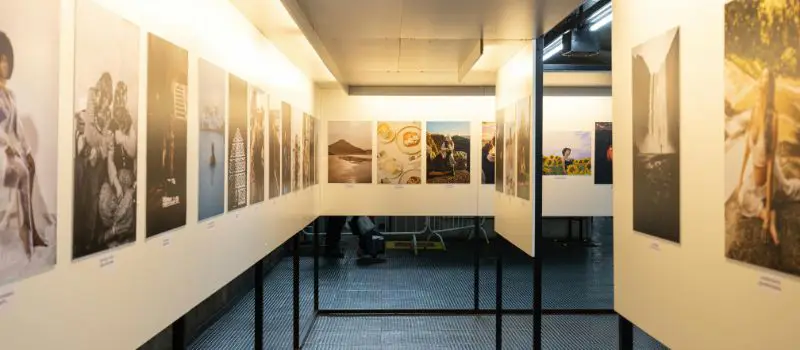
The difference between stupidly copying and being intelligently inspired? Analysis.
Objective
Break down the technique of your masters to understand their visual language and quickly forge your own style by art photography.
Exercise: The 3-Step Method
- Choose 1 photo of a photographer you love.
- Identify 3 specific elements that move you (low-angled light, asymmetrical composition, emotion of the subject).
- Recreate your own version with your subjects, in your environment. (Example: Do you like the misty atmosphere of northern landscapes? Go out at daybreak).
Profit
You will understand the techniques of the masters without losing your own personal touch. You develop your visual culture while forging your own style.
Please note: Inspiration is not plagiarism. The idea is not to repeat the same photo, but to understand what moves you and transpose it into your own world.
3. Nourish yourself with other arts

Photography does not exist in a vacuum. Filmmakers, painters and writers also work on light, composition and emotion.
Why not tap into these creative worlds?
Objective
Broaden your visual culture to unlock new ideas for composition and atmosphere.
Field exercise: Visual Borrowing
- Watch a film, browse a photo magazine or do some online research on an artist who moves you.
- Pick out 3 specific elements (colour, mood, composition) from the work.
- Reproduce this atmosphere in photos during the week.
Profit
You force your eye to observe differently and create powerful connections between artistic disciplines. Inspiration is everywhere.
4. Shoot at «forbidden» times»
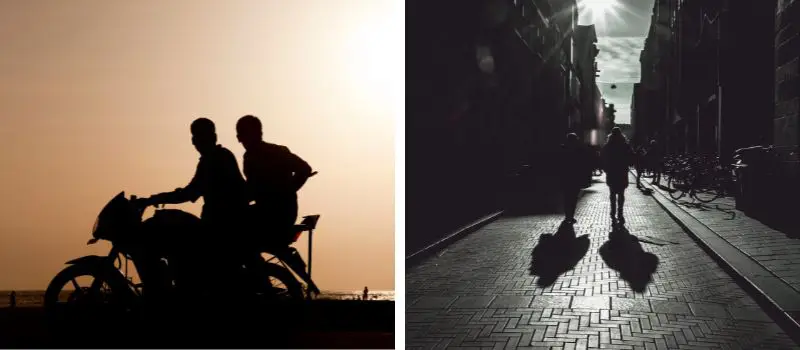
Every photographer learns to avoid midday sun and to shoot at golden hours. What if you did exactly the opposite?
Objective
Use lighting conditions that are reputed to be «bad» to break your automatisms and discover new, striking graphic atmospheres.
Exercise: The Full Day Challenge
- Go out and photograph between 12pm and 2pm on a bright sunny day.
- Or try urban night photography without a tripod: increase the ISO and deliberately look for motion blur, or use a makeshift support to stabilise the camera.
- Take 10 photos only against the light or with strong cast shadows. Concentrate on finding the graphic interest of this light.
Profit
While everyone else is waiting for the sun to set, you find the magic in broad daylight. You stand out by mastering «difficult» conditions and turning constraints into strengths (hard shadows, soft focus).
Photographers who master «difficult» conditions stand out. While everyone else waits for the sunset, you find the magic in broad daylight.
🔥 Have you been stagnating for months?
Take your game to the next level
You've mastered the technique, but your photos lack soul?
An outside view can change everything.
⚡
PERSONALISED INSPIRATION DIAGNOSIS
3 simple steps:
Instagram + 10 questions (2 min) → 40-page PDF report within 5 days
- ✅ Your hidden photographic strengths revealed
- ✅ Precise diagnosis your creative block
- ✅ 10 practical ways forward tailored to YOU
- ✅ 3 practical exercises + 15 inspiring photographers
Normal price: €149
69€
Save 80€
⏰ Only for Top 20
🛡️ Money-back guarantee
Minimum 3 ideas applicable or full refund within 14 days
5. Try out some unusual and fun techniques

Sometimes inspiration returns when you stop taking yourself so seriously. Dare to experiment with offbeat techniques, just for the fun of it.
Objective
(Re)discover the fun side of photography and unlock your creativity using unconventional techniques, without pressure to achieve results.
Exercise: Offbeat ideas
- Try out one of these simple ideas at home or outside:
Light painting: Draw with a torch during a long exposure. - Double exposure: Superimpose two images (in post-processing) for a new story.
- Creative reflections: Use puddles, windows or mirrors to distort reality.
- Forced perspective: Create fun trompe-l'œil effects with objects in the foreground.
Profit
You experiment without stress. These «wacky» attempts are often the source of unexpected and surprising images that rekindle your creative impetus.
6. Start photo journaling«
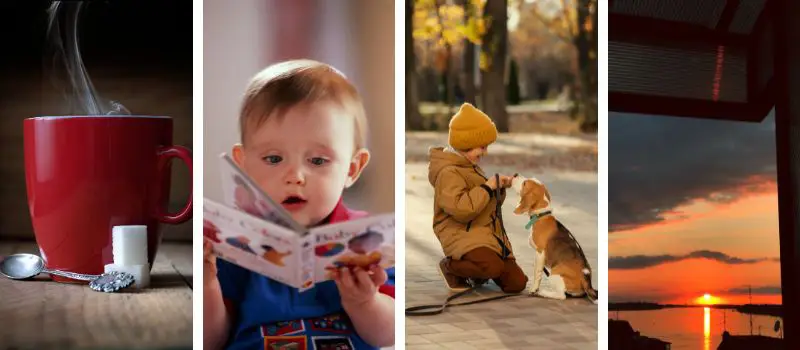
Simple concept: 1 photo a day of your daily life for 30 days. No artistic pressure, just document what you're experiencing.
Objective
Make photography an everyday activity and force your eye to compose with what you have at hand.
Exercise: The 30-Day Challenge
Photograph 1 micro-moment from your daily routine every day for 30 days (your smoking coffee, the light on your desk, your cat).
Profit
These micro-moments become your subjects. You create a regular discipline that forces you to deal with the ordinary and make progress even without constant inspiration.
Variants
Colour Challenge: A set colour each day (Monday = red, Tuesday = blue).
Fixed Time Challenge: One photo every day at exactly 5pm, wherever you are.
7. Radically change your photographic genre
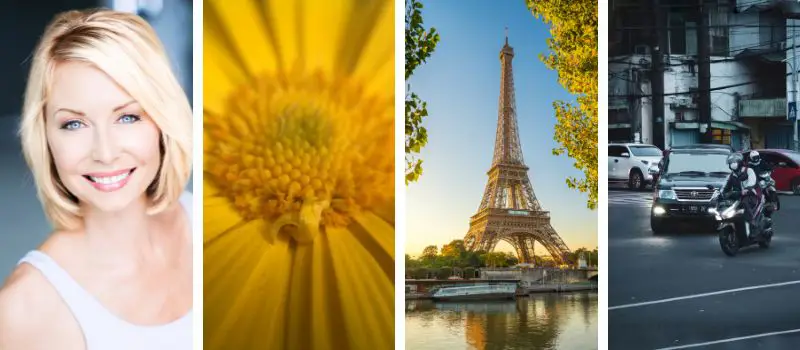
Still doing landscapes? Try portraiture. Still in the studio? Go out and shoot in the street.
Objective
Revolutionise your outlook by stepping out of your comfort zone so that the skills of one kind enrich the other.
Exercise: The 7-Day Challenge
Choose a different genre for each day of the week:
- Day 1: Portrait
- Day 2: Macro
- Day 3: Architecture
- Day 4: Street photography
- Day 5: Wildlife
- Day 6: Abstract
- Day 7: Dead Nature
Profit
A portrait photographer who tries his hand at landscapes brings a human touch to places. You'll develop graphic rigour and a new sensitivity that will help you progress more quickly.
8. Create a themed series over 1 month

Having a structured project often boosts inspiration. Rather than shooting at random, you build a coherent visual story.
Objective
Structure your photographic practice and develop your eye over time, telling a coherent story.
Exercise: The One-Month Contract
- Choose a specific theme (e.g. Coloured doors, Urban shadows, Portraits of trees).
- Set a target of 10 to 15 final photos over the course of a month.
- Develop consistency (same colour treatment, same format) to link images together.
Profit
Your practice becomes a real narrative project, not just a collection of isolated images. You develop a consistency and depth that will enable you to progress rapidly.
Ideas for accessible series: «Windows in my neighbourhood», «Urban reflections», «Portraits of trees», «Architectural details», «Market life».
9. Join an online photo challenge

Objective
Compensate for the drop in internal motivation thanks to a collective dynamic and regular deadlines.
Exercise: Find Your Community
- Join a community or group of photographers (Instagram, forum, local group).
- Choose a structured challenge with a specific theme and deadline (e.g. 365 Day Challenge, Monthly Challenge).
- Favour friendly communities that comment constructively on your work, rather than toxic likes competitions.
Profit
You force yourself to go out and shoot regularly. You get an outside view of your work and discover how others interpret the same subject, which feeds your progress.
10. Rest (really)

Sometimes the best way to find inspiration is to let go.
Your creative brain needs breaks to regenerate. Forcing inspiration only amplifies the blockage.
Objective
Allow your mind to relax so that you can recreate better. Give your eyes a rest so that they come back fresh and curious.
Exercise: The Official Break
Put your camera away for 1 to 2 weeks.
Take a stroll without shooting, just to observe.
Live without documenting: read, watch films.
Profit
When you pick up the camera, your eyes will be fresh again. You'll be inspired again by subjects you used to find commonplace.
Quote to remember: «Doing nothing also means creating the conditions for something to come into being.
Inspiration Diagnostic QUIZ: 2 minutes to discover your creative block
In just 2 minutes, identify your creative block and receive your personalised action plan.
Your camera has been sitting in the cupboard for weeks. When you go out to shoot, nothing really inspires you any more.
This quiz will :
✅ Identify your type of creative breakdown
✅ Revealing the hidden causes of your blockage
✅ Give you 3 immediate actions to test
🎁 BONUS: By completing the quiz, you'll receive your free detailed personalised diagnosis.
💡 Tip: If none of the answers fits you perfectly, choose the one that is closest to your current situation.
Estimated time: 2 minutes | 8 questions | Immediate result
What's next? Continue to feed your inspiration
You now have 10 concrete ways to get out of the creative slump.
The 5 Simple Habits :
- Observe for 10 minutes a day without any equipment.
- Analyse 1 photo of a master per week.
- Test 1 new technique per month.
- Share your images for positive feedback.
- Alternate intense exercise with total rest.
Inspiration isn't a gift, it's a flame that's fuelled by action. Now it's your turn!
Are you ready to transform your practice, move up a gear and finally reveal your own visual signature?
The 🔥 PERSONAL CREATIVE BOOST is the springboard you need: a personalised roadmap with practical advice on how to progress, but the €47 introductory offer is limited to the first 20 places. 🚀
❓ FAQ : Your Questions About Photo Inspiration
How long does it take to run out of photo inspiration?
A lack of inspiration can last from a few days to several months, depending on your situation. It's temporary and normal, even for professionals.
Don't feel guilty and apply the 10 tips in this article to shorten this period.
Do I need to invest in new equipment to get inspired again?
No, it's a marketing trap. Inspiration comes from your eyes, not your camera body.
Try out the 10 tips in this article for 1 month before buying: you'll see that the problem wasn't technical.
How do I know whether to stick with photography or change my style?
If photography has been a chore for more than 3 months, despite the breaks, it's a sign of change.
If it's just for a few weeks, it's a temporary blackout.
Try a radical change of subject or technique before giving up.
Is it normal not to have constant inspiration in photography?
Absolutely! Constant inspiration is a myth, even for the pros. What's the difference? They work despite the lows.
Inspiration is cultivated by regular practice, not by waiting for a muse. It's normal to have ups and downs.






0 Comments