💌 Newsletter: Surprise Gift
Morbihan lighthouses: complete guide to the most beautiful lighthouses to see

Morbihan lighthouses: complete guide to the most beautiful lighthouses to see

MORBIHAN GUIDE

Morbihan lighthouses: the most beautiful to see and photograph

← Back to the complete guide to lighthouses in Brittany

← See also lighthouses in Finistère

Morbihan is perhaps the Breton department that offers lighthouses their most contrasting setting. On one side, the Gulf of Morbihan - an almost silent inland sea of seemingly gentle waters. On the other, the brutality of the Côte Sauvage, the rough seas between Quiberon and Houat, and the cliffs of Belle-Île battered by the Atlantic.

Belle-Île-en-Mer alone has three lighthouses. Goulphar towers 92 metres above the sea. Les Poulains guards the north-western tip of the island. La Teignouse, offshore, has been guarding the passage to Belle-Île since 1845 - it is the oldest active lighthouse in the département. Further east, Port-Navalo marks the entrance to the Gulf, and Pen Lan watches over the Vilaine estuary.

I've had the privilege of photographing these magnificent buildings for a long time, often in difficult conditions. Each time, they remain fascinating and impressive subjects for me. Follow me in this article to discover these stone giants of Morbihan.
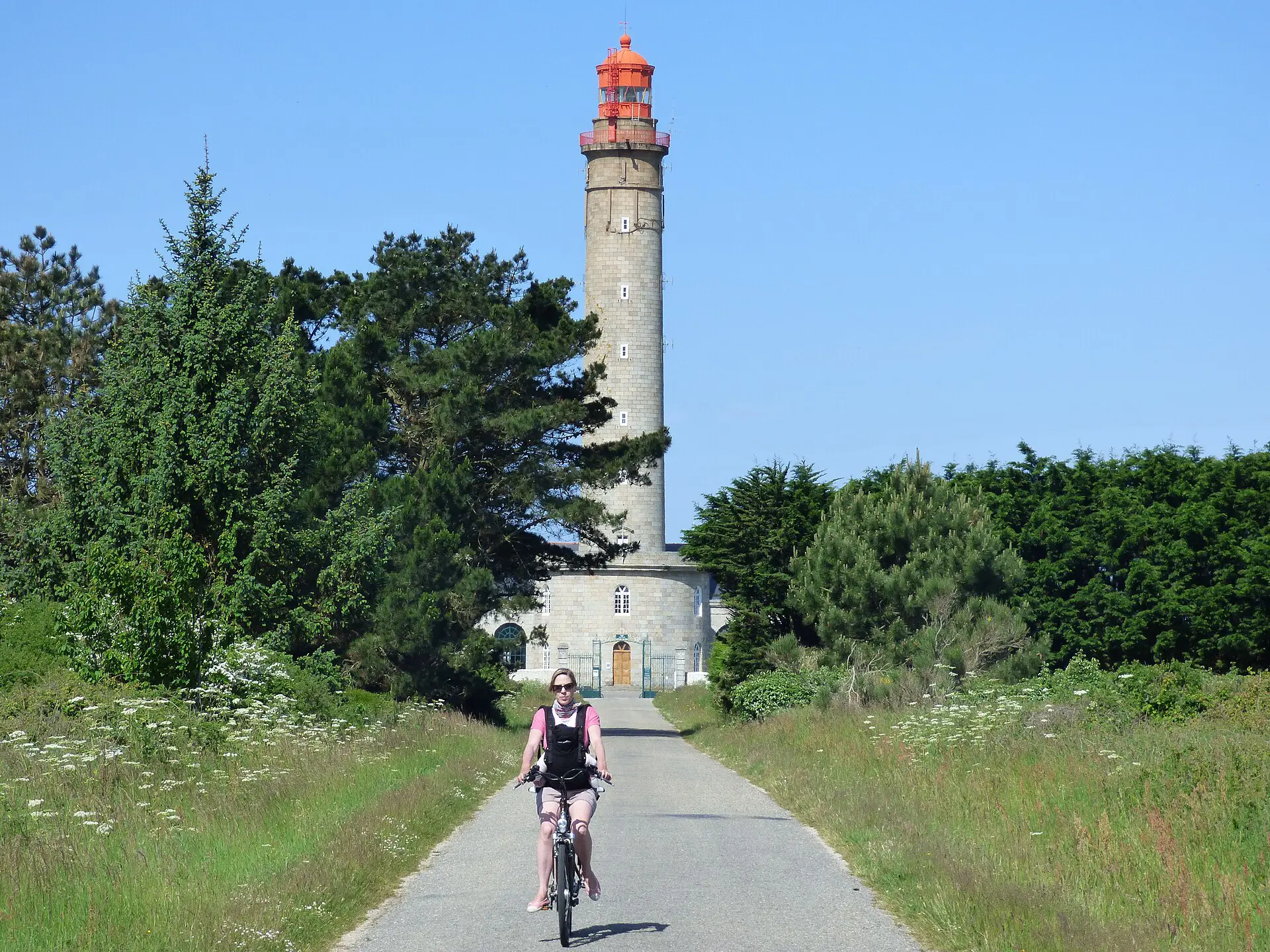
Goulphar lighthouse on Belle-Île-en-Mer
Goulphar lighthouse, Belle-Île-en-Mer - photo: Alexis Amarante, CC0 1.0, via Wikimedia Commons. See the original image .

Things to remember

Number

A dozen headlights

Morbihan has around ten main maritime lighthouses, as well as numerous other lights and beacons.

Belle-Île

3 headlights

Goulphar, les Poulains and Kerdonis form a natural triangle around the island.

Power

Goulphar

Perched 92 m above the sea, its light reaches 27 miles.

History

Port-Navalo

Saved from destruction in 1944 by the famous argument of the engineer Le Net.

Access

Easy

Several lighthouses are accessible by car or on foot, more easily than some of the lighthouses in Finistère.

Atmosphere

Lights

The light is often warmer at the end of the day, between the Gulf and the open Atlantic.

Map of Morbihan lighthouses

The map below will help you locate the lighthouses of Morbihan before planning your route. It immediately illustrates the geographical logic of the department: the three lighthouses on Belle-Île form a natural triangle around the island, The Quiberon peninsula is home to two other sites on the edge of the bay, and the rest of the coast stretches eastwards to the mouth of the Vilaine.

In practice, you can't tour the Morbihan in a single loop. The easiest way is to spend a whole day on Belle-Île and half a day on the Quiberon peninsula, then follow the east coast towards Port-Navalo and Pen Lan.

The interactive map loads only when clicked, to keep the page speeding up.

The lighthouses of Belle-Île-en-Mer

Belle-Île-en-Mer is the largest island in Brittany. It has three major lighthouses: Goulphar on the west coast, Les Poulains to the north-west and Kerdonis to the east. These three sites can be reached by bike.

Goulphar lighthouse in Bangor, Belle-Île-en-Mer
Goulphar lighthouse, Bangor - photo: Alexis Amarante, CC0 1.0, via Wikimedia Commons. See the original image .

Goulphar lighthouse - Belle-Île-en-Mer

Commissioned in 1835 to designs by Augustin Fresnel in Bangor, the Goulphar lighthouse is a double 52.25 m granite tower, perched 92 m above the sea. Its 247 steps lead up to an unobstructed view of up to 27 miles. It is one of the most powerful lighthouses in Brittany.

It now houses a museum dedicated to lighthouses and beacons, and serves as a remote control centre for the other lighthouses in Morbihan. Pen Lan has been remotely controlled since 1995. The Goulphar lighthouse is also at the heart of a current heritage issue: In Bangor, an association was set up in 2025 to bring together residents of Bellil who are concerned about the future of the building and its surroundings. Find out more about the Goulphare association.

Poulains lighthouse at the north-western tip of Belle-Île-en-Mer
Poulains lighthouse, Belle-Île-en-Mer - photo: Remi Jouan, CC BY-SA 3.0, via Wikimedia Commons. See the original image .

Poulains lighthouse - Belle-Île-en-Mer

Inaugurated on 15 September 1868 at the north-western tip of Belle-Île, this 18 m lighthouse is built on an islet that is naturally separated from the island at high tide. Since the installation of 32 m² of photovoltaic solar panels, it has been self-sufficient in energy and is now open to the public.

At the Pointe des Poulains, the fort acquired by Sarah Bernhardt in 1894 was one of her havens in Bellon. For nearly thirty years, until 1922, she spent her summers there and welcomed many of the leading figures of her time, facing one of Belle-Île's most stunning seascapes.

Kerdonis lighthouse at the eastern tip of Belle-Île-en-Mer
Kerdonis lighthouse, Belle-Île-en-Mer - photo: Remi Jouan, CC BY-SA 3.0, via Wikimedia Commons. See the original image .

Kerdonis lighthouse - Belle-Île-en-Mer

Brought into service on 1 June 1879 at the eastern tip of Belle-Île, this lighthouse is linked to one of the most famous acts of courage in the history of Breton lighthouse keepers. On 18 April 1911, lighthouse keeper Alexandre Matelot died suddenly while on duty. His wife and children operated the partially dismantled mechanism by hand throughout the night - without training, without respite, until the morning.

This act was hailed by the national and international press. The chansonnier Théodore Botrel, who celebrated maritime Brittany with a documentary precision that was rare at the time, immortalised it in a song.

Quiberon peninsula and bay

The Quiberon peninsula and the bay around it are home to three lighthouses of very different characters. Port-Maria closes off the Côte Sauvage to the south. Port-Haliguen, now deactivated, faces Carnac from the harbour. La Teignouse, offshore, has marked the passage between Quiberon and the island of Houat since 1845.

Port-Maria lighthouse to the south of the Quiberon peninsula
Port-Maria lighthouse, Quiberon - photo: Remi Jouan, CC BY-SA 3.0, via Wikimedia Commons. See the original image .

Port-Maria lighthouse - Quiberon

Built in 1892 to the south of the Quiberon peninsula, this 24.8 m white cylindrical tower with a green lantern marks the end of the Côte Sauvage. It is now surrounded by the town's buildings and cannot be visited.

The lighthouse has long accompanied the transformations of the port. It has lived through the era of fishing, then that of maritime links and a more lively, traveller-oriented district. This is undoubtedly what gives it its special place in the Quiberon landscape today.

Port-Haliguen lighthouse at sunrise
Port-Haliguen lighthouse, Quiberon - photography © Loïc Delplanque, all rights reserved.

Port-Haliguen lighthouse - Quiberon

Brought into service in 1856 at the entrance to Quiberon Bay opposite Carnac, this 11.30 m white cylindrical tower with a green lantern guided sailors for more than 110 years before being decommissioned in the 1970s. Its caretaker's house now houses a cultural centre. The lighthouse can be visited during the Heritage Days.

I had the chance to see it up close in September 2025, during a week-long exhibition at the Maison du Phare. At the time, a resident of the peninsula told me this phrase, which says a lot about Quiberon: «In Quiberon, you don't just pass through, you come here». It's all there: the discreet charm of a secluded spot, rich in well-guarded treasures such as the Port-Haliguen lighthouse.

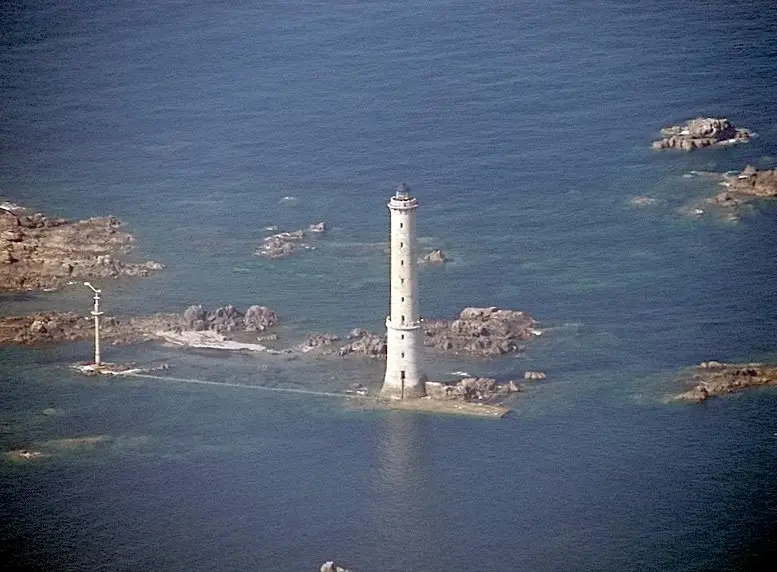
La Teignouse lighthouse at sea, between Quiberon and Houat
Teignouse lighthouse - photo : Pline, CC BY-SA 3.0, via Wikimedia Commons. See the original image .

Teignouse lighthouse - Off Quiberon

La Teignouse is an obvious part of the Quiberon skyline. Standing in the sea as an extension of Le Conguel, this lighthouse, commissioned in 1845, has watched over the exit to the bay for almost two centuries.

Behind this familiar silhouette lies an innovative lighthouse, which served as a pilot light in 1892 before being automated in 1983. It's not open to the public, but it's an integral part of the peninsula's maritime identity.

Gulf of Morbihan, east coast and islands

This area is the most geographically dispersed, but it includes some of the lighthouses with the deepest roots in local history. Port-Navalo has been guarding the entrance to the Gulf since 1895. Pen Lan marks the mouth of the Vilaine. Kernevest, extinguished in 2012, preserves the memory of forty years of female presence. The Grands Cardinaux keep watch off Hoëdic.
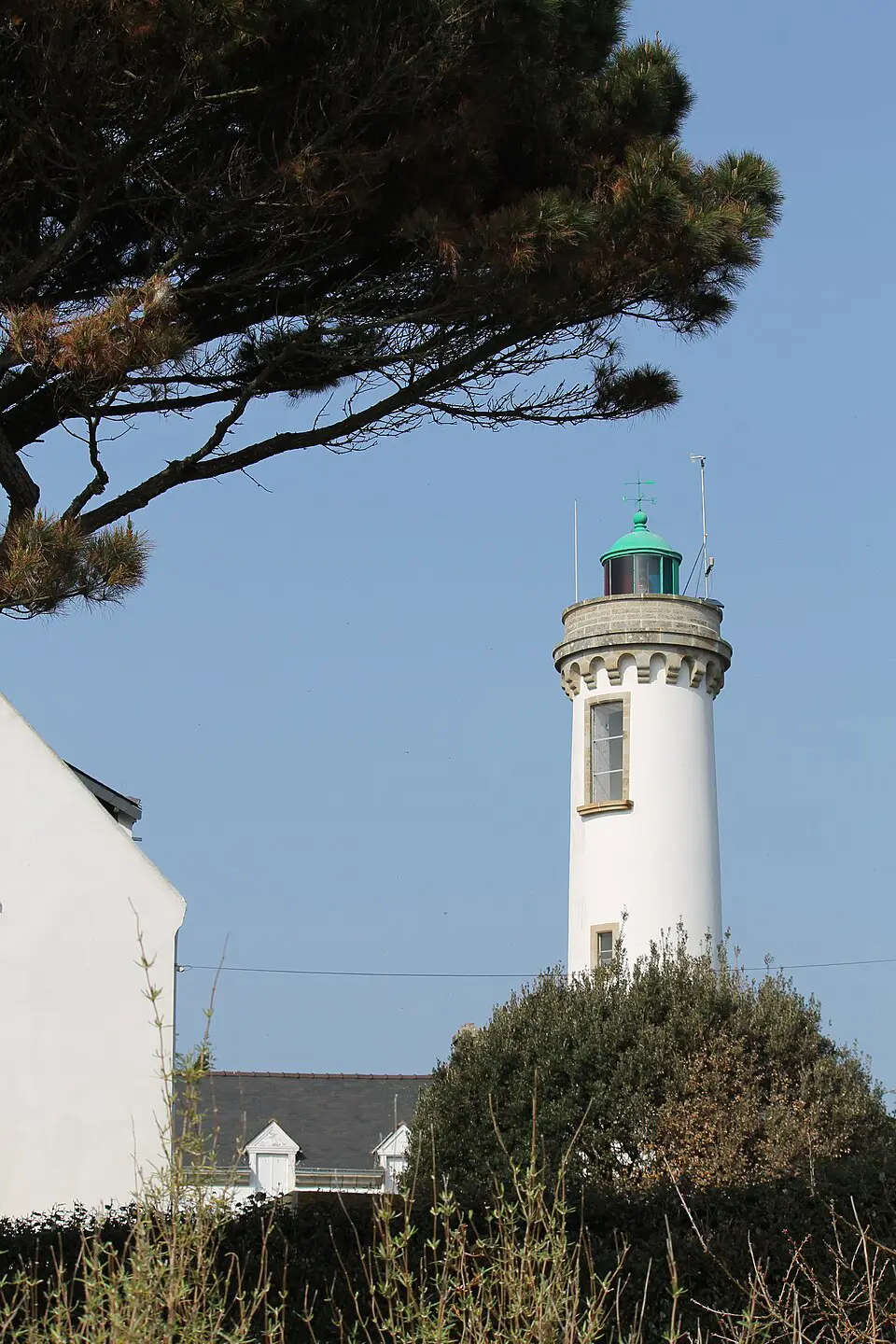
Port-Navalo lighthouse at the entrance to the Gulf of Morbihan
Port-Navalo lighthouse, Arzon - photo: Stéphane Batigne, CC BY-SA 3.0, via Wikimedia Commons. See the original image .

Port-Navalo lighthouse - Arzon

Built in Arzon at the entrance to the Gulf of Morbihan, this 19 m cylindrical lighthouse was brought into service in 1895. In 1944, the occupying forces planned to dynamite it, as they had done with so many Breton lighthouses. It was the engineer Le Net who convinced them - with an argument whose force has not aged a day:

«Lighthouses belong to no one, for they serve to save the lives of sailors of all nations.»
- Le Net engineer, 1944

And the lighthouse is still there!

Pen Lan lighthouse at the mouth of the Vilaine river
Pen Lan lighthouse, Billiers - photo: CaptainHaddock (assumed), CC BY-SA 3.0, via Wikimedia Commons. See the original image .

Pen Lan lighthouse - Billiers

Built in 1882 and commissioned in 1888 at the mouth of the Vilaine, on the Pointe de Pen Lan in Billiers, This 17.93 m lighthouse has long marked the entrance to the estuary. Since 1955, it has emitted a light with two occultations every six seconds, before being automated in 1995 and then remotely controlled from the Goulphar lighthouse in Belle-Île-en-Mer.

The history of the lighthouse can also be told from a woman's perspective. Its last keeper, Eulalie Le Marchand, worked there until 1995, when the site was automated. She looked after the optics, made sure the light was working properly and kept an eye on a number of neighbouring beacons, including Kervoyal and Basse-Bertrand. This daily presence is a reminder that before automation, a lighthouse relied not only on technology, but also on constant human attention. It's a reminder of the end of the world, of a patient, precise and invisible profession that was so useful.

Kernevest lighthouse at Saint-Philibert
Kernevest lighthouse, Saint-Philibert - photo: Amaustan, CC BY-SA 3.0, via Wikimedia Commons. See the original image .

Kernevest lighthouse - Saint-Philibert

Built in 1855 in Saint-Philibert to guide ships towards La Trinité-sur-Mer, the Kernevest lighthouse stood at the entrance to the river at Crac'h before it was shut down in 2012, its horizon gradually closing in with the buildings and trees.

Anna Le Bail was the lighthouse keeper for forty years, from 1925 to 1965, continuing a long-standing family tradition. Her presence remains attached to the site, as a reminder of a time when this small lighthouse still lived to the rhythm of a daily vigil.

Grands Cardinaux lighthouse off Hoëdic
Grands Cardinaux lighthouse, off Hoëdic - photo: CC BY-SA 1.0, via Wikimedia Commons. See the original image .

Grands Cardinaux Lighthouse - Off Hoëdic

The Grands Cardinaux lighthouse, to the south-east of Hoëdic, marks the approach to Quiberon Bay. Classified as a historic monument in 2020, it also owes a great deal to the commitment of a local association that fought for its restoration and for this «Hoëdic lighthouse» to regain its rightful place in the maritime landscape.

Art photography in Brittany

See my artistic photographs of Brittany

Shipwrecks, forests, lighthouses, the coasts of Morbihan and Finistère... A selection of limited edition prints to bring these landscapes home.

Limited editions Signed prints Breton landscapes
See photos of Bretagne

Each print is numbered and comes with a certificate of authenticity. Framing available on request, free delivery.

Morbihan lighthouses in brief

This table summarises the main lighthouses in Morbihan, their area, access and what makes them unique.

HeadlightZoneHeightAccessVisitableWhat makes it unique
GoulpharBelle-Île52,25 mFerry + islandYes, museumDouble tower, 92 m above sea level
FoalsBelle-Île18 mFerry + islandYesSarah Bernhardt, 30 summers in the nearby fort
KerdonisBelle-ÎleLighthouseFerry + islandNoHeroic gesture by the Matelot family (1911)
Port-MariaQuiberon24,8 mRouteNoEnd of the Côte Sauvage
Port-HaliguenQuiberon11,30 mRouteJEPDeactivated, cultural centre in the house
TeignouseLarge Quiberon16,35 mCoast / ferry viewNoIn service since 1845
Port-NavaloMorbihan Gulf19 mRouteNoSaved in 1944 by the engineer Le Net
Pen LanMouth Vilaine17,93 mRouteNoRemote-controlled from Goulphar
KernevestSaint-Philibert~15 mRouteNoOff 2012, 40 years of caretaking
Grand CardinalsLarge Hoëdic27 mBoatNoHistoric Monument 2020

The heights and dates mentioned are given for information only and may be subject to slight variations depending on the historical sources available.

Practical info

Here are some guidelines for organising your lighthouse visits in Morbihan, depending on the area and the season.

ZoneAccessBest momentPhoto advice
Belle-Île-en-MerFerry from Quiberon (approx. 45-50 min)Spring, autumnGoulphar in low evening light
Quiberon peninsulaRouteAll year roundPort-Maria from the sea in winter
Gulf of Morbihan & east coastCar + GR 34 footpathsApril-SeptemberPort-Navalo at ebb tide
Offshore (Teignouse, Grands Cardinaux)Ferry or boatSummerFrom the bridge of the Quiberon-Belle-Île ferry

2-day itinerary - Morbihan lighthouses

A simple itinerary combining Belle-Île, Quiberon, the Gulf of Morbihan and the Vilaine estuary in two days.

Day 1 - Belle-Île-en-Mer

Take the first ferry from Quiberon (about a 50-minute crossing to Le Palais). Arrive at Le Palais and take the car or bike to the Goulphar lighthouse in Bangor. Spend the morning exploring the site, climbing the 247 steps and enjoying the view 92 m above the sea.

In the afternoon, head for the Pointe des Poulains to the north-west: the islet, the rocks and the natural foreground towards the lighthouse. At the end of the day, head east towards Kerdonis, where the golden light falls on the lighthouse at the tip of Belle-Île. Overnight on Belle-Île.

Day 2 - Quiberon, gulf and east coast

Return to the mainland by morning ferry. Morning tour of the Quiberon peninsula: Port-Maria lighthouse to the south, at the end of the Côte Sauvage, then Port-Haliguen lighthouse around the harbour.

Then on to the Gulf: Port-Navalo in the middle of the day, the Pointe d'Arzon and the whirlpools at the entrance to the Gulf at ebb tide. Finish at Pen Lan in Billiers in the late afternoon, with the evening light over the Vilaine estuary.

My most beautiful photographs of lighthouses

Some of these lighthouses are part of my photographic work. In my limited edition collection of photographs of Finistère , you will find the Tourelle des Perdrix, but also the Four lighthouse caught in the violence of the swell.

These photographs are available in limited edition of 30, signed and numbered with a certificate of authenticity. Framing is available on request, and delivery is free.
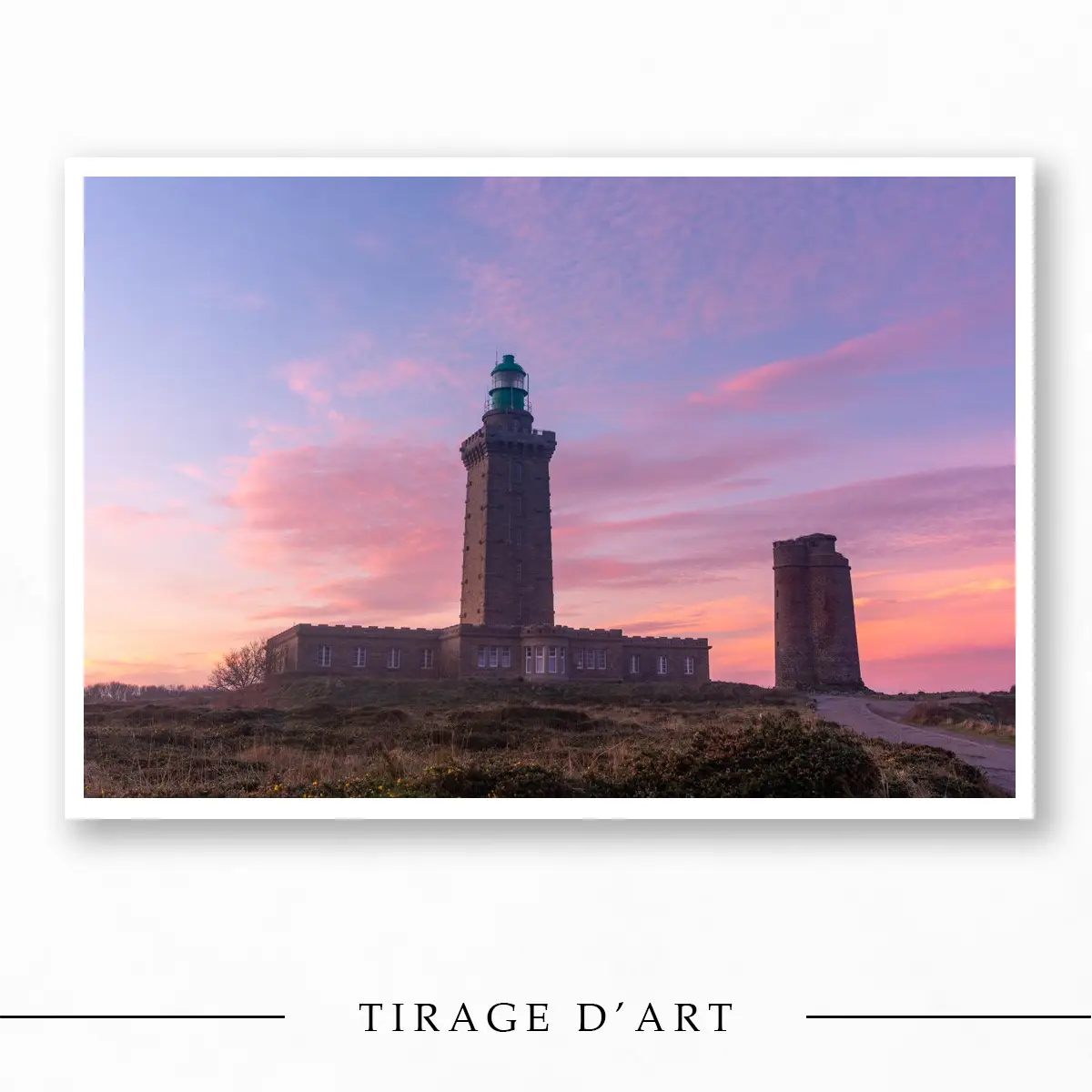
Art print of the Cap Fréhel lighthouse at sunrise

Cap Fréhel Lighthouse — limited edition art print.

Photograph of the Tourelle des Perdrix in Finistère

Tourelle des Perdrix — Limited edition art print.

Photograph of the Phare du Four lighthouse in a storm

Phare du Four — Limited edition black and white art print.

Storm surge of Justine in Le Conquet

Storm Justine — limited edition art print.

If you're fascinated by lighthouses in the middle of a storm, I invite you to discover my Storm guide to Brittany.

FAQ

How many lighthouses are there in Morbihan?

Morbihan has around ten main lighthouses. Belle-Île-en-Mer alone has three: Goulphar, les Poulains and Kerdonis.

Where can I find a map of Morbihan lighthouses?

The interactive map in this article locates all the main lighthouses in the département, from Belle-Île to the mouth of the Vilaine.

What is the most beautiful lighthouse in Morbihan?

Goulphar, in Belle-Île-en-Mer, is the most impressive with its double granite tower and its position 92 m above the sea. For photography, the Poulains offer an exceptional setting with their islet and rocks.

Can you visit the lighthouses in Morbihan?

Goulphar can be visited in season with its museography. Port-Haliguen is open during the Heritage Days. The other lighthouses in Morbihan are not open to the public, but are accessible from coastal paths.

Which Morbihan lighthouse to photograph first?

Goulphar for the unique architecture of its double tower. Les Poulains for its landscape and history. Port-Navalo for the light on the gulf at ebb tide.
Lighthouses Finistère: complete guide 2026

Lighthouses Finistère: complete guide 2026

FINISTÈRE GUIDE

Lighthouses in Finistère: the most beautiful to see and visit

← Back to the complete guide to lighthouses in Brittany

Finistère is the French department with the most lighthouses. Ouessant alone has five, and many of these date from the 19th and early 20th centuries.

Le Créac'h, l'Île Vierge, La Jument, Saint-Mathieu or le Four are the names that come to mind first. But when you really get down to the coast, you'll also come across more discreet lighthouses, lighthouses at the tip, lighthouses in towns and lighthouses at sea, all of which give Finistère a unique density.

I've been photographing this coast for a long time. I've always seen these lighthouses as silent presences, immobile guardians watching over an indomitable force.

Things to remember

Number

56 headlights

Finistère is still the French department with the most.

Ushant

5 headlights

One island alone is exceptionally dense.

Records

Île Vierge & Créac'h

One has a range of 82.5 m, the other around 60 km.

Former

Stiff

Lit in 1700, it is one of the oldest still in operation.

Icon

The Mare

Jean Guichard's 1989 photograph made it world famous.

Atmosphere

Iroise Sea

This is what gives these silhouettes their tension and strength.

Map of lighthouses in Finistère

The map below will help you locate the main lighthouses in Finistère before planning your route. Above all, it shows the main areas of the department: Ushant, the north coast, the Pointe Saint-Mathieu, the Brest roadstead, the Raz de Sein and South Finistère.

In practical terms, it shows one thing straight away: you can't visit this département in one quick loop. The easiest way is to group the stages by sector and save a whole day for Ushant.

The interactive map loads only when clicked, to keep the page speeding up.

Ushant lighthouses

To start with, you need to go to Ouessant. It's the island with the most lighthouses, and it's also the one that best sums up the importance of the Iroise Sea in Brittany's maritime history.

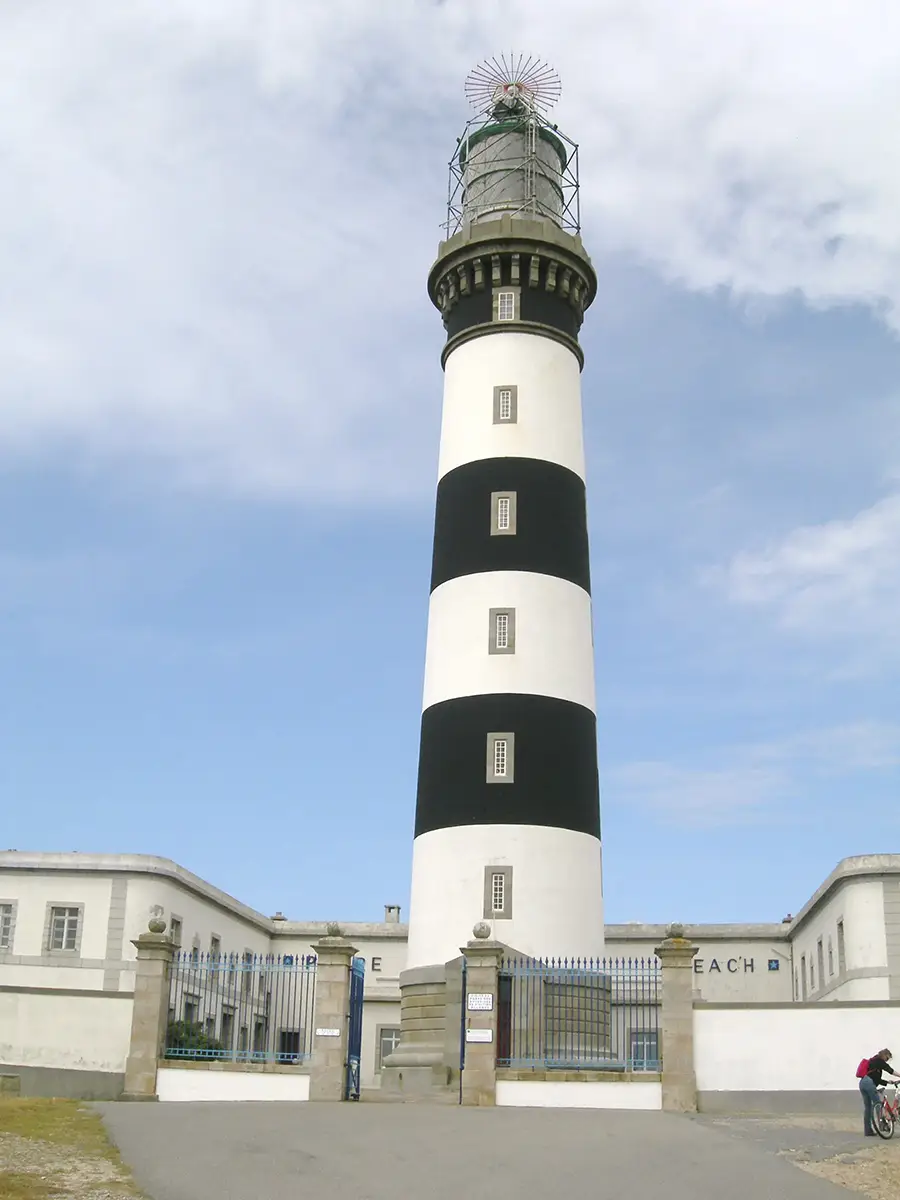
Créac'h lighthouse in Ushant
Créac'h lighthouse, Ushant - photo: Totodu74, CC BY-SA 3.0, via Wikimedia Commons. See the original image.

Créac'h lighthouse - Ushant

Built in 1863, this lighthouse with its black and white stripes is the most powerful in France. Its two white flashes every ten seconds can be seen from a distance of around 60km, and the old power station houses the Lighthouses and Beacons museum.

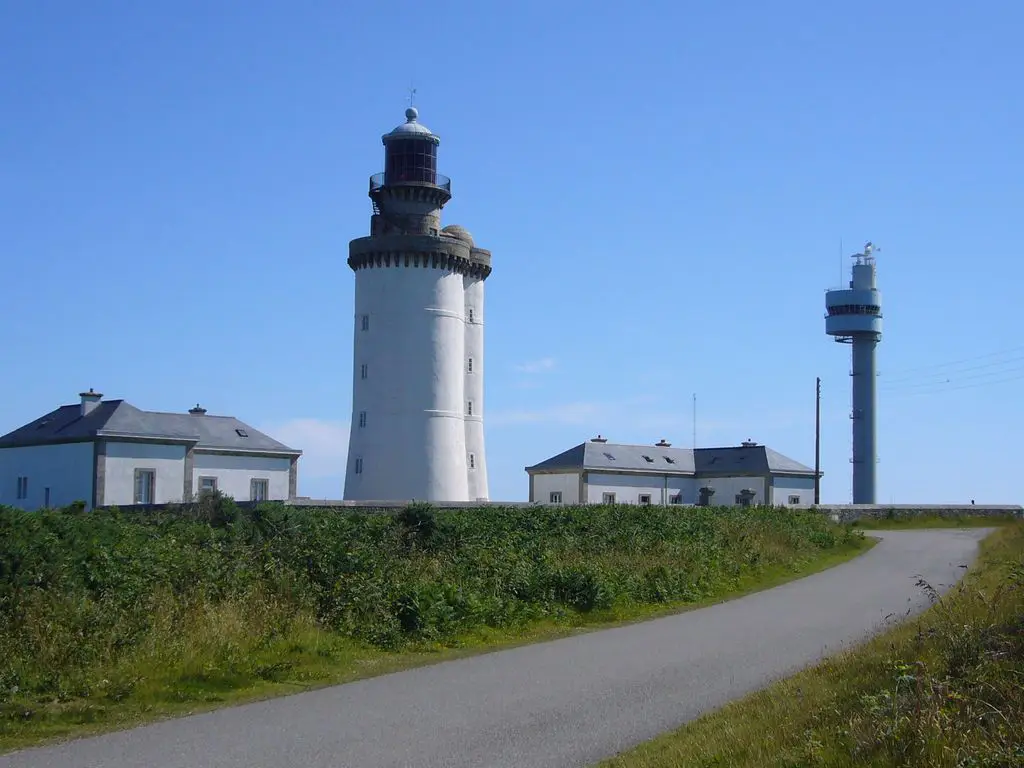
Stiff lighthouse on Ushant
Stiff lighthouse, Ushant - photo: Gzen92, CC BY-SA 4.0, via Wikimedia Commons. See the original image.

Stiff lighthouse - Ushant

Built by Vauban in 1695 and lit in 1700, it is the oldest lighthouse on Ushant. Its two adjoining towers offer a panoramic view of the island and the Iroise Sea.

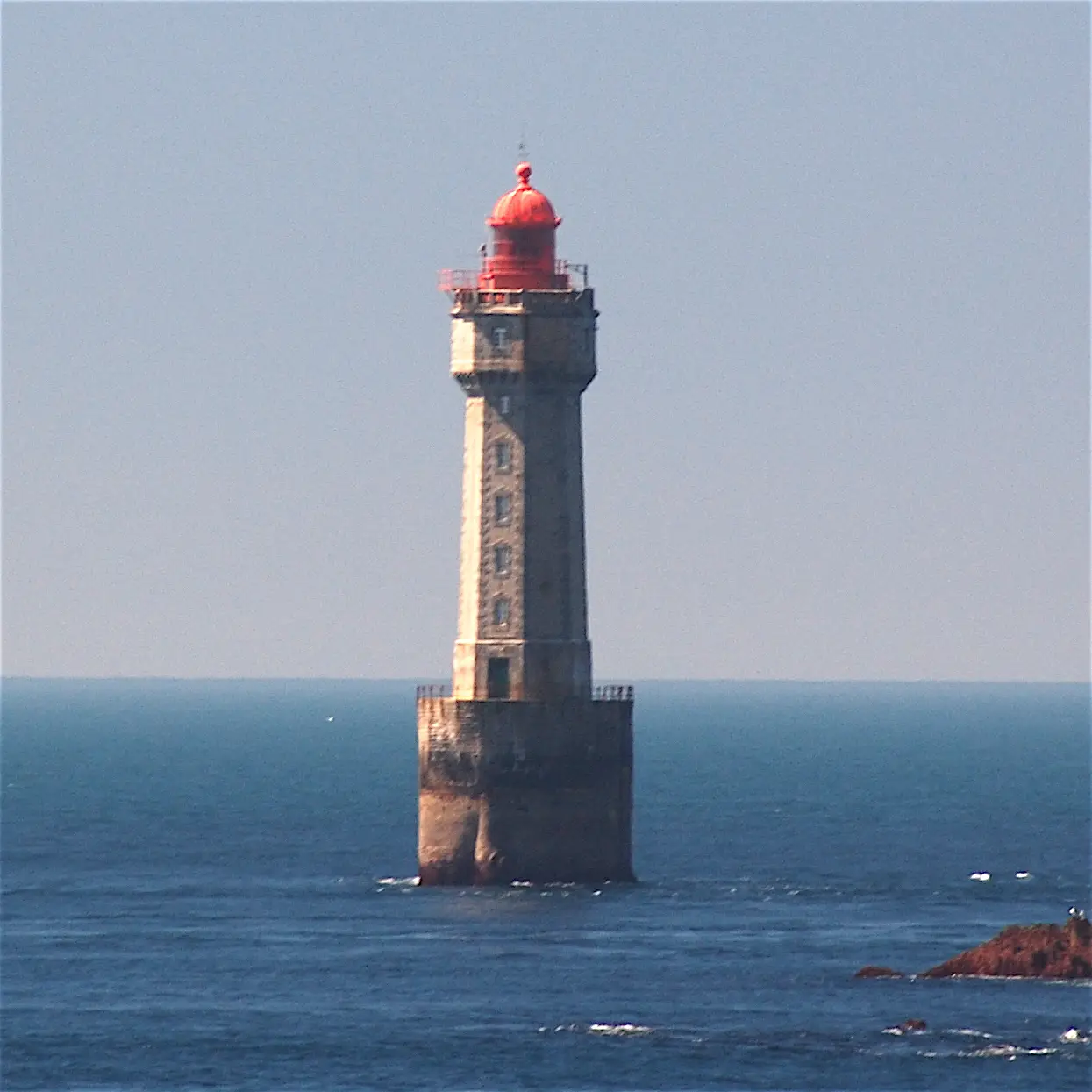
La Jument lighthouse off Ushant
La Jument lighthouse, Ushant - photo: Falken, CC BY-SA 3.0, via Wikimedia Commons. See the original image.

La Jument lighthouse - Ushant

Built between 1904 and 1911 thanks to a bequest of 400,000 francs from a Parisian benefactor, this lighthouse at sea became world-famous with Jean Guichard's photograph taken on 21 December 1989. Sensors on site measured a wave of 24.6 m in 2017-2018.

Kéréon lighthouse seen from Ushant
Kéréon lighthouse - photo: Julien Carnot, CC BY-SA 3.0, via Wikimedia Commons. See the original image.

Kéréon lighthouse - Ushant

Built between 1907 and 1916 in the Passage du Fromveur, it is nicknamed “the Palace” for its interior, with mosaics, inlaid parquet flooring and oak panelling. It owes this richness to the gift of Amicie Lebaudy.

Nividic lighthouse on Ushant
Nividic lighthouse - photo: Samuel Lamotte d'Incamps, CC BY-SA 2.0 FR, via Wikimedia Commons. See the original image.

Nividic lighthouse - Ushant

Built between 1912 and 1936 on the Pointe de Pern, it is the only lighthouse in France to be linked to the coast by a cable car. The pylons can still be seen from the coastal path.

North coast

After Ushant, the north coast offers a series of lighthouses in a sector that is easier to navigate. This is also where you'll find Île Vierge, Finistère's record-breaking lighthouse.

Île Vierge lighthouse at Plouguerneau
Île Vierge lighthouse, Plouguerneau - photography © Loïc Delplanque, all rights reserved.

Île Vierge lighthouse

At 82.5 m, it is the highest ashlar lighthouse in Europe. According to tradition, the islet where it stands was first a Druid sanctuary, then a Franciscan convent in the 15th century.

Île Wrac'h lighthouse at Plouguerneau
Île Wrac'h lighthouse - photo: Yann Caradec, CC BY-SA 2.0, via Wikimedia Commons. See the original image.

Île Wrac'h lighthouse

Commissioned in 1845 in Plouguerneau, it is accessible on foot at low tide. Since 2006, the former guardians' house has been home to an artists' residence and exhibitions.
Pontusval lighthouse at Brignogan-Plages
Pontusval lighthouse - photo: Steffen Heilfort, CC BY-SA 3.0, via Wikimedia Commons. See the original image.

Pontusval lighthouse

Lit on 15 September 1869 in Brignogan-Plages after numerous shipwrecks, it has been listed as a Historic Monument since 2011. Its last caretaker, Marie-Paule Le Guen, lived there until her death in November 2023.

Roscoff lighthouse in the town centre
Roscoff lighthouse - photography © Loïc Delplanque, all rights reserved.

Roscoff lighthouse

Commissioned in 1934 in the heart of the town, it has been automated since 2002. The lighthouse is still manned and is an integral part of the urban fabric.

Brest and the Iroise Sea

Around Brest and on the Iroise Sea, the lighthouses are easier to fit into a short break. This is the right area for a first discovery if you want to see several sites without too much driving.

Saint-Mathieu lighthouse in the abbey ruins
Saint-Mathieu lighthouse - photography © Loïc Delplanque, all rights reserved.

Saint-Mathieu lighthouse

Commissioned on 15 June 1835 in the ruins of the Saint-Mathieu de Fine-Terre abbey, this 36-metre lighthouse has 163 steps and a range of 29 miles. It has been listed as a Historic Monument since 2011 and is open to the public every day in July and August.

Kermorvan lighthouse linked by its granite bridge
Kermorvan lighthouse - photography © Loïc Delplanque, all rights reserved.

Kermorvan lighthouse

Commissioned in 1849 at Le Conquet, this 20.35 m square lighthouse, linked to the land by a granite bridge, is the most westerly land-based lighthouse in France. It has been open to visitors since 2022.

Petit Minou lighthouse at the entrance to Brest harbour
Petit Minou lighthouse - photography © Loïc Delplanque, all rights reserved.

Petit Minou lighthouse

Lit in 1848 in Plouzané, it guides ships as they enter Brest harbour. Closed since 2024 for restoration, it received major heritage support in 2025.

Four lighthouse battered by swell
Phare du Four lighthouse - photography © Loïc Delplanque, all rights reserved.

Four lighthouse

Built between 1869 and 1874 off Porspoder, this lighthouse at sea has been listed as a Historic Monument since 2017. It is one of Finistère's best-known lighthouses for the breakers that hit its tower. From the coast, it's one of the best subjects for photography in heavy weather.

Its name may make you smile at first sight, but Petit Minou simply comes from the headland where it stands, at the entrance to Brest harbour. Here, “Minou” has nothing to do with a cat and refers to the Breton word for cat. min, the tip or the mouthpiece.

Pointe du Raz and South Finistère

The Raz de Sein and the south of the département round off the route. There are fewer lighthouses to visit, but several very impressive sites.

La Vieille lighthouse in the Raz de Sein
La Vieille lighthouse - photo: Bastenbas, CC BY-SA 4.0, via Wikimedia Commons. See the original image.

La Vieille lighthouse

Built between 1882 and 1887 on Gorlebella Rock in the heart of the Raz de Sein, it remained manned until 1995. Its last guards refused to take over when it was automated.

Portzic lighthouse in Brest
Portzic lighthouse - photo : Pline, CC BY-SA 3.0, via Wikimedia Commons. See the original image.

Portzic lighthouse

Lit on 1 January 1848 at the narrowest point of the Brest Narrows, this 35 m octagonal lighthouse is the closest to the city. Its semaphore has regulated maritime traffic in the harbour since 1987.

Perdrix turret at the entrance to the Loctudy channel
Tourelle des Perdrix - photography © Loïc Delplanque, all rights reserved.

Partridge Turret

Erected in 1918 at the entrance to the Loctudy and Île-Tudy channels, it is distinguished by its black and white checkerboard pattern. Threatened with destruction, it was saved thanks to local efforts.

The main lighthouses in Finistère in brief

A quick overview of the lighthouses not to be missed and how to approach them on site.

HeadlightZoneAccessVisitableWhat makes it unique
Créac'hUshantFerry + islandAdjacent museumThe most powerful in France, range approx. 60 km
StiffUshantFerry + islandYes, in seasonLit in 1700
The MareUshantSea / boat viewNoThe 1989 photo made her a global icon
KéréonUshantSea / boat viewNoInterior nicknamed «the Palace»
NividicUshantCoastal pathNoThe only cable car of its kind in France
Virgin IslandNorth coastShuttle / excursionYes, in seasonEurope's tallest ashlar lighthouse
Île Wrac'hNorth coastLow tideYesArtists in residence since 2006
PontusvalNorth coastRoad + footpathNoA long presence for Marie-Paule Le Guen
RoscoffNorth coastCity centreNoGuarded urban lighthouse
Saint-MathieuBrest / IroiseRouteYesHoused in the ruins of the abbey
KermorvanBrest / IroiseGranite bridgeYesThe most westerly land-based lighthouse in France
Little KittyBrest / IroiseRoad + footbridgeClosed for cateringHeritage work in progress
OvenBrest / IroiseView from PorspoderNoSpectacular breakers
La VieilleRaz de SeinSea / boat viewNoRefusal to change over during automation
PortzicBrestRouteNoActive semaphore in the harbour
Partridge TurretSouth FinistèreCoastal viewNoBlack and white checkerboard

Practical info

Here are some practical guidelines for organising your stopovers in the main areas of Finistère.

ZoneAccessPossible visits linked to lighthouses
UshantFerry from Le Conquet or Brest.Stiff lighthouse, open from 4 April 2026 to 1 November 2026; Musée des Phares et Balises at the foot of Créac'h, currently closed for works, with reopening planned for 2026.
North coastCar, then crossing or access depending on the site.Île Vierge, guided tour of the large lighthouse from March to October depending on the tides; Île Wrac'h, access on foot around low tide almost all year round, with exhibitions in July and August.
Brest / IroiseAn easy loop by car.Saint-Mathieu, open from March to January with daily opening in July-August; Kermorvan, open from April to early November with daily opening in July-August; Petit Minou, no visit to the lighthouse during the works, only the exterior.
Pointe du Raz & the south Finistère coastStages spaced further apart.La Vieille and Le Four lighthouses are not open to visitors, but can be seen from the coast or when out at sea; Portzic and Tourelle des Perdrix can be discovered from the coastal paths.

Exploring the lighthouses of Finistère? See also our guide to Morbihan lighthouses, You'll be able to compare the two Breton départements and enhance your coastal itinerary.

My most beautiful photographs of lighthouses

Some of these lighthouses are part of my photographic work. In my limited edition collection of photographs of Finistère, You'll find the Tourelle des Perdrix, as well as the Four lighthouse caught in the violence of the swell.

These photographs are available in limited edition of 30, signed and numbered with a certificate of authenticity. Framing is available on request, and delivery is free.

Art print of the Cap Fréhel lighthouse at sunrise

Cap Fréhel lighthouse - limited edition fine art print, photography © Loïc Delplanque.

Fine art photography of the Tourelle des Perdrix in Finistère

Tourelle des Perdrix lighthouse - limited edition fine art print, photography © Loïc Delplanque.

Black and white photograph of the Four lighthouse in the middle of a storm

Tempête sur le phare du Four - limited edition black and white fine art print, photography © Loïc Delplanque.

Giant wave from storm Justine at Le Conquet

Tempête Justine au Conquet - limited edition fine art print, photography © Loïc Delplanque.

If you're fascinated by lighthouses in the middle of a storm, I invite you to discover my complete guide to storms in Brittany The latest information: wave records, places to photograph and shooting tips.

FAQ

What is the highest lighthouse in Finistère?

The Île Vierge lighthouse, at 82.5 m.

Can you visit the Ushant lighthouses?

The Stiff can be visited in season, and the Créac'h can also be discovered via the Lighthouses and Beacons Museum. La Jument, Kéréon and Nividic are not open to the public.

Which lighthouse is the best to see in Finistère?

For a first discovery, the best place to start is Créac'h, Île Vierge, Saint-Mathieu and Le Four.

Which lighthouse to photograph in bad weather?

Le Four is a benchmark in Finistère. La Jument and La Vieille are also big names when the sea forms.

What is the oldest lighthouse still in operation in Finistère?

Le Stiff, lit in 1700.

Brittany lighthouses: history, map and photos by department

Brittany lighthouses: history, map and photos by department

FULL GUIDE

Lighthouses of Brittany: guide to the most beautiful lighthouses to visit

Brittany is home to over a third of France's lighthouses, covering some 2,700 km of coastline. This guide lists the most remarkable lighthouses in Finistère, Côtes-d'Armor, Morbihan and Ille-et-Vilaine - their history and the anecdotes that accompany them.

I've been photographing these coasts for years. Let me take you on a voyage of discovery of these giants of the seas.

Things to remember

Lighthouses in Brittany

1/3 of France's 148 leading lights

A density that is unique in Europe, concentrated along some 2,700 km of coastline.

Departments

29 - 22 - 56 - 35

Finistère, Côtes-d'Armor, Morbihan and Ille-et-Vilaine.

Records

Île Vierge & La Jument

Europe's tallest ashlar lighthouse, and one of the most famous lighthouse photos in the world.

Heritage

From the Stiff to La Jument

From Brittany's oldest working lighthouse to the giants of the Iroise Sea.

Map of lighthouses in Brittany

The map below shows the main lighthouses in Brittany. Click on the image to display the interactive map without leaving this page and prepare your own lighthouse tour. lighthouse route.

First click on the image to load the Google Maps map, then zoom in and explore the lighthouses directly from this page.


This interactive map shows the main lighthouses in Brittany, from Finistère to Côtes-d'Armor, via Morbihan and Ille-et-Vilaine. You can see the location of each lighthouse at a glance, making it easier to plan your itinerary along the lighthouse route along the Brittany coastline.

Lighthouses in Finistère

With 56 lighthouses, including 14 listed as historic monuments, Finistère is the French department with the most. Ouessant alone is home to five. Most were built between 1830 and the beginning of the 20th century.e century, following the invention of the Fresnel lens, which transformed navigation in the Iroise Sea.

Créac'h lighthouse on Ushant at dusk
Créac'h lighthouse, Ushant - photo: Totodu74, CC BY-SA 3.0, via Wikimedia Commons. See the original image.

Créac'h lighthouse - Ushant

Its two white flashes every 10 seconds remain visible for 60 km - the most powerful lighthouse in France, and for a long time the most powerful in the world. The old power station at its foot houses the Musée des Phares et Balises, One of the largest collections of Fresnel lenses in Europe.

Île Vierge lighthouse, a large stone tower overlooking the sea
Île Vierge lighthouse, Plouguerneau - photography © Loïc Delplanque, all rights reserved.

Île Vierge lighthouse

At 82.5 metres, it is the highest ashlar lighthouse in Europe. The islet is thought to have been a Druid sanctuary before becoming the site of a Franciscan convent in the 15th century. Its 397 spiral steps lead up to a circular space entirely clad in stone.’opaline Saint-Gobain.

La Jument lighthouse surrounded by waves off Ushant
La Jument lighthouse, Ushant - photo: Falken, CC BY-SA 3.0, via Wikimedia Commons. See the original image.

La Jument lighthouse - Ushant

Built between 1904 and 1911 thanks to a bequest from a Parisian grateful to the lighthouses for saving him from shipwreck, it has become one of the most famous images in maritime photography. On 21 December 1989, Jean Guichard's photo of the lighthouse keeper facing a giant wave went around the world.

The lighthouses of Côtes-d'Armor

The Pink Granite Coast and the Bréhat archipelago give the lighthouses of the Côtes-d'Armor an instantly recognisable visual identity. The local stone, warm-toned granite, is an integral part of the lighthouse architecture.

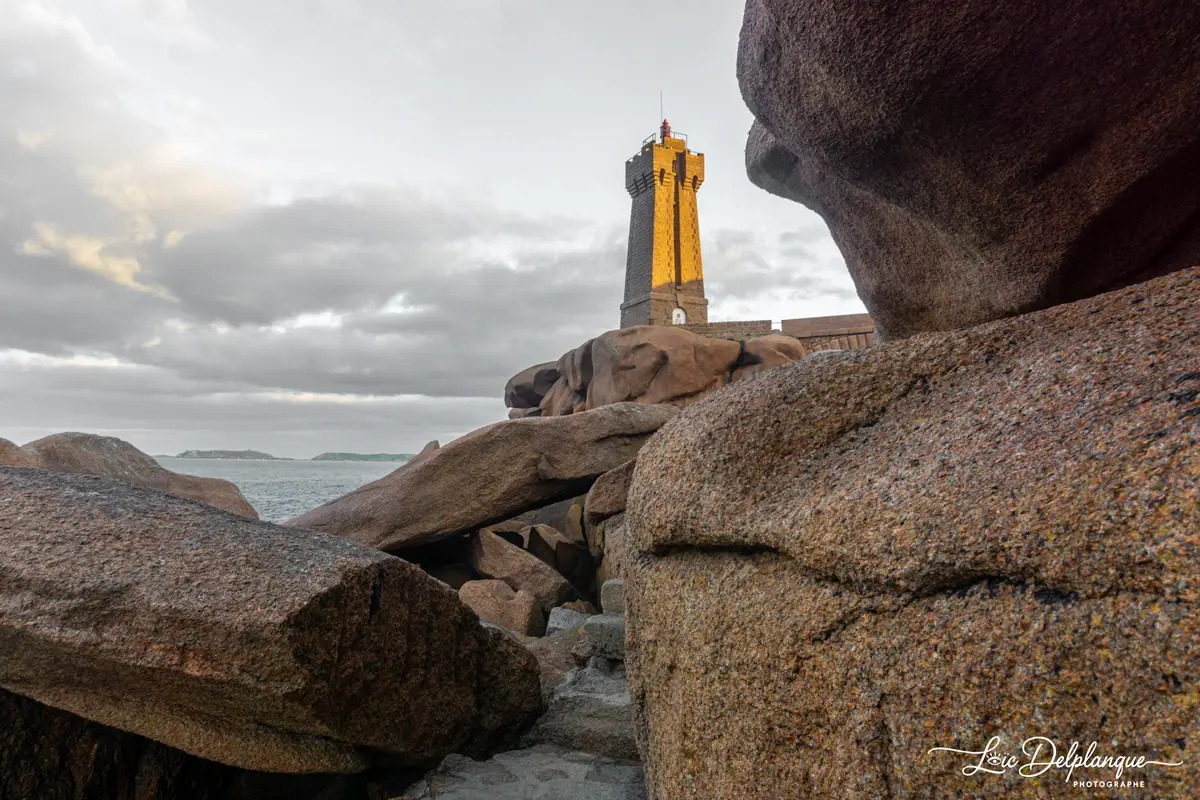
Mean Ruz lighthouse on the pink granite rocks of Ploumanac'h
Mean Ruz lighthouse, Ploumanac'h - photography © Loïc Delplanque, all rights reserved.

Mean Ruz lighthouse - Perros-Guirec

Built of pink granite from La Clarté and lit in 1948, it replaces the original 1860 fire, blown up by German troops. Its interior mosaics are the work of Rennes mosaicist Isidore Odorico.

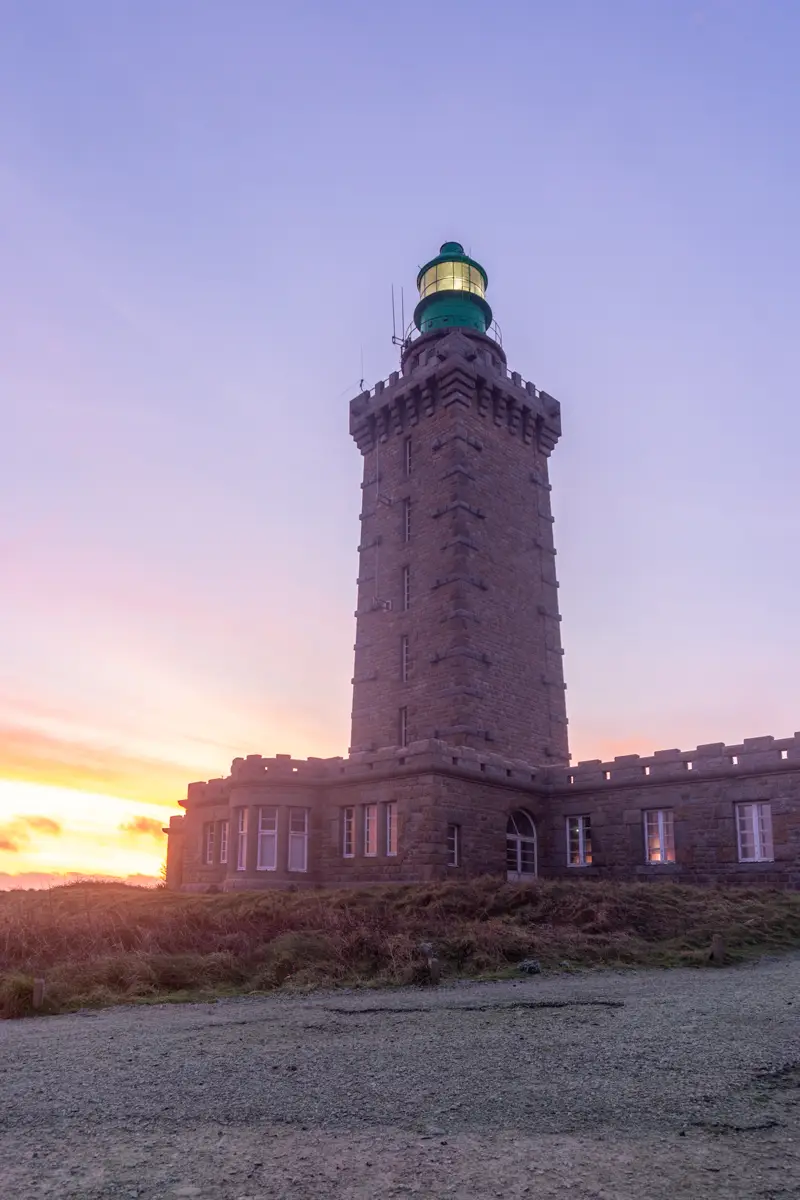
Cap Fréhel lighthouse dominating the cliffs of Côtes-d'Armor
Cap Fréhel lighthouse - photography © Loïc Delplanque, all rights reserved.

Cap Fréhel lighthouse

Three lighthouses have stood on this promontory since 1702. The current lighthouse, lit in 1950 after the destruction of the previous one, is a listed historic monument. It was the last guarded lighthouse in France until 2019.

Les Héaux de Bréhat lighthouse on an offshore reef
Les Héaux de Bréhat lighthouse - photo: Pilot’22, CC BY-SA 3.0, via Wikimedia Commons. See the original image.

Les Héaux de Bréhat lighthouse

Designed by Léonce Reynaud and lit in 1840 on the Épées de Tréguier reefs, it is the second oldest French lighthouse on the high seas. Partially blown up in 1944, it was rebuilt and raised one storey.

Lighthouses of Morbihan

Belle-Île-en-Mer is home to the Morbihan's best-known lighthouses, starting with Goulphar and Les Poulains. But the department also boasts Port-Navalo at the entrance to the Gulf, the Grands Cardinaux off Hoëdic, and Pen Lan at the mouth of the Vilaine.

Poulains lighthouse on a rocky promontory in Belle-Île-en-Mer
Poulains lighthouse, Belle-Île-en-Mer - photo: Remi Jouan, CC BY-SA 3.0, via Wikimedia Commons. See the original image.

Poulains lighthouse - Belle-Île-en-Mer

Inaugurated in 1868 at the north-western tip of Belle-Île, on an islet inaccessible at high tide, it owes some of its fame to Sarah Bernhardt. At around 18 m high, it is now open to the public and runs on solar energy.

Goulphar lighthouse overlooking the south coast of Belle-Île-en-Mer
Goulphar lighthouse, Bangor - photo: Alexis Amarante, CC0 1.0, via Wikimedia Commons. See the original image.

Goulphar lighthouse - Belle-Île-en-Mer

This 52.25 m lighthouse has dominated the south coast of the island since 1836. It can be visited in summer and is used as a remote control centre for navigational aids in Morbihan. Despite its listed status, the lighthouse is falling into disrepair, prompting the creation of the association Grand Phare watchmen.

Port-Navalo lighthouse surrounded by pine trees at the entrance to the Gulf of Morbihan
Port-Navalo lighthouse, Arzon - photo: Stéphane Batigne, CC BY-SA 3.0, via Wikimedia Commons. See the original image.

Port-Navalo lighthouse - Arzon

This 19 m cylindrical lighthouse, built in 1895, was almost blown up in 1944. The engineer Le Net saved it with a famous phrase: «Lighthouses belong to no one, for they serve to spare the lives of sailors of all nations».»

The lighthouses of Ille-et-Vilaine

From the Bay of Mont-Saint-Michel to Saint-Malo, Ille-et-Vilaine has few lighthouses, but they all play a key role on one of Europe's busiest shipping routes.

Grand Jardin lighthouse on a rock off the coast of Saint-Malo
Grand Jardin lighthouse, Saint-Malo - photo: Unukorno, CC BY 4.0, via Wikimedia Commons. See the original image.

Grand Jardin lighthouse - Saint-Malo

Standing on a rock off the Rance estuary, this 32.71 m lighthouse, commissioned in 1868 and rebuilt after 1944, marks the approach to Saint-Malo amid the shallows. Its double red light can be seen for almost 17 miles.

Pierre-de-Herpin lighthouse seen from the Pointe du Grouin
Pierre-de-Herpin lighthouse, off Cancale - photo: Alan Hughes, CC BY-SA 3.0, via Wikimedia Commons. See the original image.

Pierre-de-Herpin lighthouse - Pointe du Grouin

Commissioned in 1882 on a rock off the Pointe du Grouin, this 24 m lighthouse marks the entrance to the Bay of Mont-Saint-Michel and the passageway to the Channel Islands. Its base can be seen at low tide.
Rochebonne lighthouse overlooking the beach and rooftops of Saint-Malo
Rochebonne lighthouse, Paramé - photo: JGS25, CC BY-SA 4.0, via Wikimedia Commons. See the original image.

Rochebonne lighthouse - Saint-Malo

Lit in 1868, this 19.90 m square tower forms, with the Grand Jardin, the alignment of the channel of the Grande Porte. Partially destroyed in 1944, it was rebuilt and relit in 1951.

The route of Brittany's lighthouses

In just a few days, you can follow a veritable lighthouse route, from the tip of Finistère to the ramparts of Saint-Malo. The idea is not to see everything, but to choose a few emblematic stops, both on the mainland and on the islands.

Finistère & Mer d'Iroise

  • Pointe Saint-Mathieu - Lighthouse in the ruins of a medieval abbey, facing the Iroise Sea.
  • Ushant - Two days minimum by bike: Créac'h, Stiff, Nividic, La Jument and Kéréon.
  • Virgin Island - The highest lighthouse in Europe, accessible by shuttle from Lilia or Aber Wrac'h.

North coast & islands

  • Mean Ruz & Cap Fréhel - Two days on the GR 34, between pink granite chaos and cliffs.
  • Belle-Île-en-Mer - A day's cycling from Poulains to Goulphar along the wild coast.
  • Saint-Malo & Pointe du Grouin - Grand Jardin can be seen from the ramparts, and Pierre-de-Herpin from the headland.

Before each stage, check the tide times and coefficients: some paths, landing stages and car parks depend directly on the water level.

Limited editions - Brittany lighthouses

These four lighthouses are part of my collection of limited edition art prints - 30 signed and numbered copies on Hahnemühle paper with certificate of authenticity.

Art print of the Cap Fréhel lighthouse at sunrise

Cap Fréhel lighthouse - limited edition fine art print, photography © Loïc Delplanque.

Fine art photography of the Tourelle des Perdrix in Finistère

Tourelle des Perdrix lighthouse - limited edition fine art print, photography © Loïc Delplanque.

Black and white photograph of the Four lighthouse in the middle of a storm

Tempête sur le phare du Four - limited edition black and white fine art print, photography © Loïc Delplanque.

Giant wave from storm Justine at Le Conquet

Tempête Justine au Conquet - limited edition fine art print, photography © Loïc Delplanque.

If you're fascinated by lighthouses in the middle of a storm, I invite you to discover my complete dossier on lighthouses in the middle of a storm. storms in Brittany The latest information: wave records, places to photograph and shooting tips.

Emblematic lighthouses by department

An overview of the lighthouses not to be missed if you're planning a photographic trip to Brittany.

HeadlightDepartmentAccessVisitableWhat makes it unique
Créac'hFinistère (29)Ushant FerryAdjacent museumOne of the most powerful lighthouses in Europe (range ~60 km).
Virgin IslandFinistère (29)Boat, Aber Wrac'hYes, in seasonEurope's tallest ashlar lighthouse.
Cap FréhelCôtes-d'Armor (22)Car, GR 34Yes (July-August)France's last remaining lighthouse until 2019.
Mean RuzCôtes-d'Armor (22)GR 34, Ploumanac'hOutdoor freePink granite and Odorico mosaics.
FoalsMorbihan (56)Pied, Belle-ÎleYesSarah Bernhardt - lighthouse now powered by solar energy.
Pierre-de-HerpinIlle-et-Vilaine (35)View from the Pointe du GrouinNoGuards the entrance to the bay of Mont-Saint-Michel.

To find out more, you can also discover how I design a limited edition fine art photo print, from the choice of paper to framing.

FAQ

What is the highest lighthouse in Brittany?

The Île Vierge lighthouse at Plouguerneau in Finistère stands 82.5 metres high. It is the highest lighthouse in Europe and the highest ashlar lighthouse in the world. You have to climb 397 steps to reach the lantern.

Can you visit the Ushant lighthouses?

The Stiff lighthouse (1695, designed by Vauban) is open to the public during the season. Le Créac'h is accessible via its Lighthouses and Beacons Museum. La Jument, Kéréon and Nividic are lighthouses at sea that are not accessible - they can be seen from coastal paths or by boat.

Which Breton department has the most lighthouses?

Finistère, with 56 lighthouses - the highest concentration of maritime sentinels in the world. The Iroise Sea is one of the most dangerous and busiest shipping areas on the planet, which historically justifies this exceptional density.

Can you sleep in a Breton lighthouse?

Yes, the Kerbel lighthouse in Riantec (Morbihan) has been converted into a studio apartment perched 25 metres high. The lighthouse keeper's house on Île Vierge (Finistère) offers an eco-cottage facing the ocean. 

The Unmissable Legends of the Forest of Brocéliande

The Unmissable Legends of the Forest of Brocéliande

Key points to remember: Brocéliande is the setting for the Arthurian cycle, where the stories of Merlin, Viviane and Morgane have shaped the cultural identity of this Breton forest. These medieval legends continue to permeate the collective imagination, lending a unique mythological dimension to the Paimpont massif.

Brocéliande and its legends: Merlin, Viviane and Morgane

Merlin imprisoned by Viviane, Lancelot raised under water, Morgane which traps unfaithful knights: the Brocéliande forest home to the most famous Arthurian legends. You'll discover who these characters are, their stories of love and betrayal, and how they became embedded in the real-life sites of the Paimpont massif.

To prepare your visit with the GPS coordinates for each location, consult my guide to the Brocéliande forest.

Merlin imprisoned: the tragic end of the enchanter

Merlin meeting Viviane near the Barenton fountain. The soothsayer falls madly in love with the young fairy. She agrees to become his companion, but on one condition: that he teach her all his magical secrets.

Merlin hesitates. He knows what awaits him. His visions have already shown him his own destiny. But love is stronger than reason. He reveals to Viviane the ultimate spell: how to hold a man forever.

The fairy waits for the right moment. One day, when Merlin had fallen asleep in the forest, Viviane trace nine magic circles around him and says nine enchanted phrases (Wikimini - Fée Viviane). The enchanter wakes up a prisoner. A prison without bars, made entirely of air and magic. He can never get out.

According to some versions, Viviane immediately regretted what she had done. She didn't believe the spell would really work. According to others, she wanted to keep Merlin for her alone until the end of time. The two lovers remain together in this invisible prison, separated from the world but reunited for eternity.

The King Arthur loses its advisor. Without Merlin , the Round Table is faltering. The decline of Camelot start.

Viviane and the education of Lancelot: forging the perfect knight

Viviane is not just Merlin's lover. She plays a central role in another story: the education of Lancelot du Lac (Wikipedia - Fée Viviane).

The young Lancelot is the son of King Ban of Benoïc. When his father dies and his kingdom falls, the baby is taken in by the Lady of the Lake. Viviane takes her to his palace under the waters of the'Comper pond. She decides to make him the perfect knight.

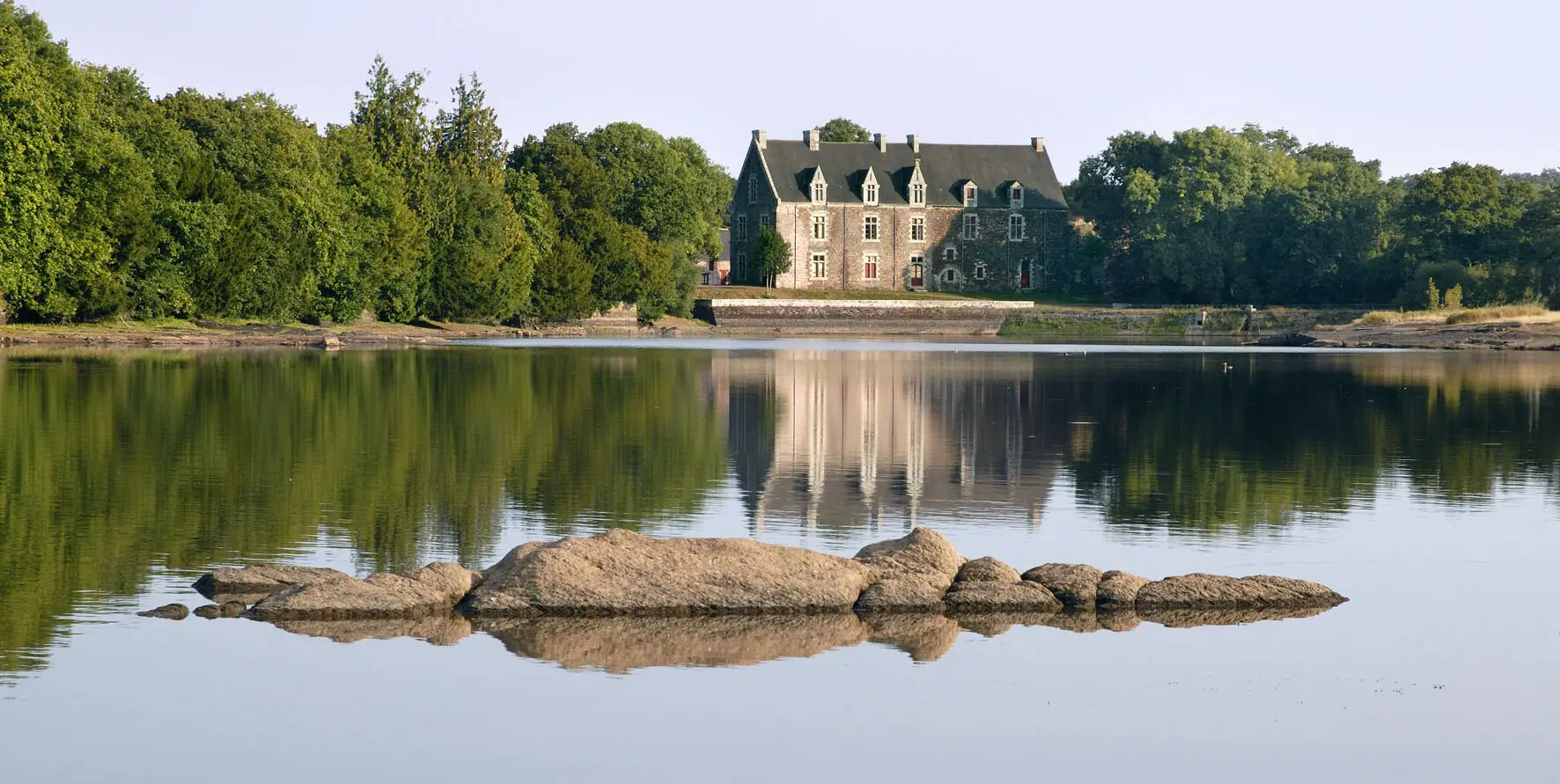
Château de Comper Brocéliande Etang Viviane Crystal Palace Dame du Lac
The Château de Comper and its pond where, according to legend, the crystal palace of Viviane, the Lady of the Lake, is hidden. Photo : Centre de l'Imaginaire Arthurien, CC BY-SA

The child grows up cut off from the world of men. Viviane teaches him:

  • Hunting and sword fighting
  • Music and the courtly arts
  • Courtesy and good manners
  • Letters and wisdom
  • Courage and nobility of spirit

Lancelot was unaware of his royal origins throughout his childhood.

When he reaches adulthood, Viviane deems him ready. She leads him to Camelot to be knighted by the king Arthur. Lancelot joins the Round Table and quickly became the most famous of all the knights. His loyalty to the Queen Guenièvre will be legendary - the very loyalty that will later enable him to break the spell of Morgane.

Morgane and the Valley of No Return: the revenge of a betrayed woman

Morgane, Arthur's half-sister, studied magic with Merlin. She became a formidable magician. Then she falls in love with a knight called Guyomard.

One day, she catches him in the arms of another woman. The betrayal shatters her. Rather than cry, Morgane decides to take revenge - not just on her unfaithful lover, but on all men who betray their oath of love.

She created the Val sans retour, an enchanted valley in the forest of Brocéliande (Wikipedia - Val sans Retour). Any knights who have deceived their lady and enter this valley are immediately trapped by circles of magical mist. There is no way out. The spell is relentless.

Guyomard is the first prisoner. The woman who accompanied him was given an additional curse: she felt the cold of ice from her feet to her waist, and the fire of an inferno from her waist to her head. An eternal punishment.

For seventeen years, the knights accumulated in the Val. Two hundred and fifty-three Arthurian warriors are prisoners (Wikipedia - Val sans Retour). None can break the spell of Morgane - until the arrival of Lancelot.

Lancelot, perfectly faithful to Guenièvre despite the years, enters the Val sans retour. Her pure heart automatically breaks the enchantment. The mists dissipate. The 253 knights regain their freedom. The most dazzling action of Morgane against Arthurian chivalry ended in failure.

This story reverses the usual roles in medieval literature. A woman takes magical power to punish men. She judges, condemns and imprisons. The knights become the victims, powerless in the face of female magic.

Yvain and the Fountain of Barenton: the duel that sets off the storm

Between 1176 and 1181, Chrétien de Troyes writes Le Chevalier au Lion (Maremurex - The Lion Knight). It tells the story of'Yvain, Gauvain's cousin, in the forest of Brocéliande.

Yvain learns of the existence of a magical fountain guarded by a mysterious Black Knight. Anyone who pours water from the spring onto the stone staircase unleashes a terrible storm. The guardian appears to punish the unwary.

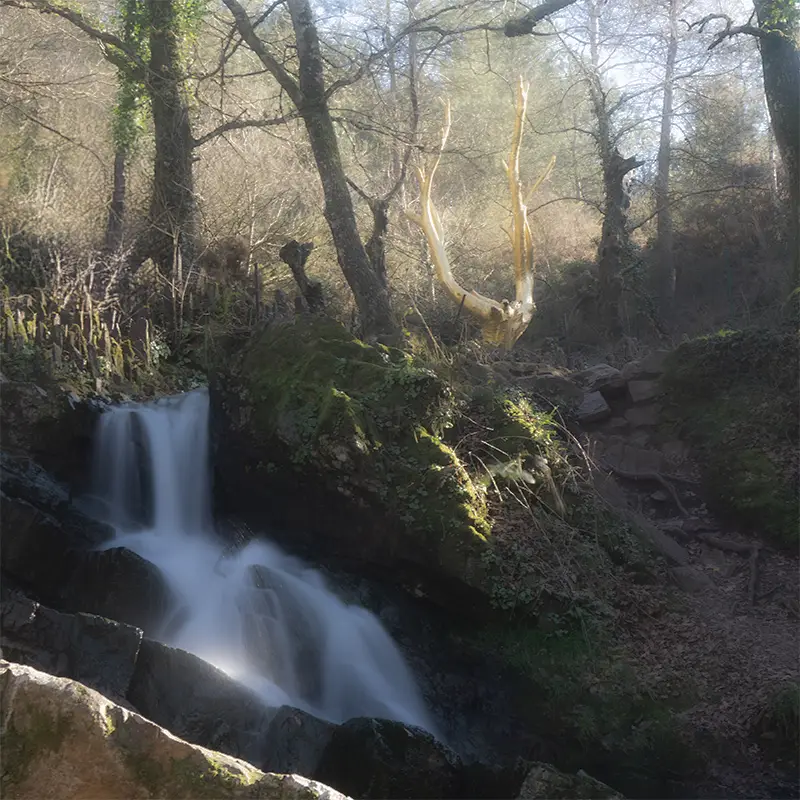
Cascade Brocéliande mossy rocks golden light Barenton fountain - ©Loïc Delplanque
The Brocéliande waterfall evokes the Barenton Fountain, the setting of the legends of Yvain, Merlin and Viviane - ©Loïc Delplanque

Yvain decided to take up the challenge. He found the fountain and poured water over the stone. A thunderstorm broke out immediately. The Black Knight emerges, furious. The two men face off in a fierce battle.

Yvain mortally wounding his opponent. But the knight manages to escape to his castle. Yvain pursues him, hoping to finish the fight. This is the start of a long series of adventures that will lead him to become the "Lion Knight" - accompanied by a lion whom he saves and who becomes his faithful companion.

This story anchors the forest of Brocéliande in the literary geography of the Arthurian cycle. Chrétien de Troyes creates a link between a real place - the Paimpont massif - and the medieval imagination.

The legendary places of Brocéliande: from myth to stone

To help you distinguish between legendary accounts and real historical remains, here is a guide to the main sites:

WebsiteType of monumentAssociated legendArchaeological reality
Merlin's tombNeolithic covered walkwayPrison of air where Viviane locked up the enchanterMegalithic remains dating from 4000 BC.
Barenton fountainNatural spring in the forestYvain's battle against the Black KnightA spring with special geological properties
Val sans retourValley of moors and shaleMorgana's enchanted domain trapping the unfaithfulSite ravaged by fire in 1990 (Chrislyne - Arbre d'Or)
Comper CastleMedieval fortressViviane's invisible crystal palace beneath the pond13th-century castle housing the Centre de l'Imaginaire Arthurien
Hotié de VivianeMegalithic chestViviane's observation point on her estate4500-year-old funerary monument (Brocéliande Guide - Hotié)

This table shows how legends of the Brocéliande forest have been grafted onto authentic prehistoric and medieval sites, creating a fascinating overlap between history and mythology.

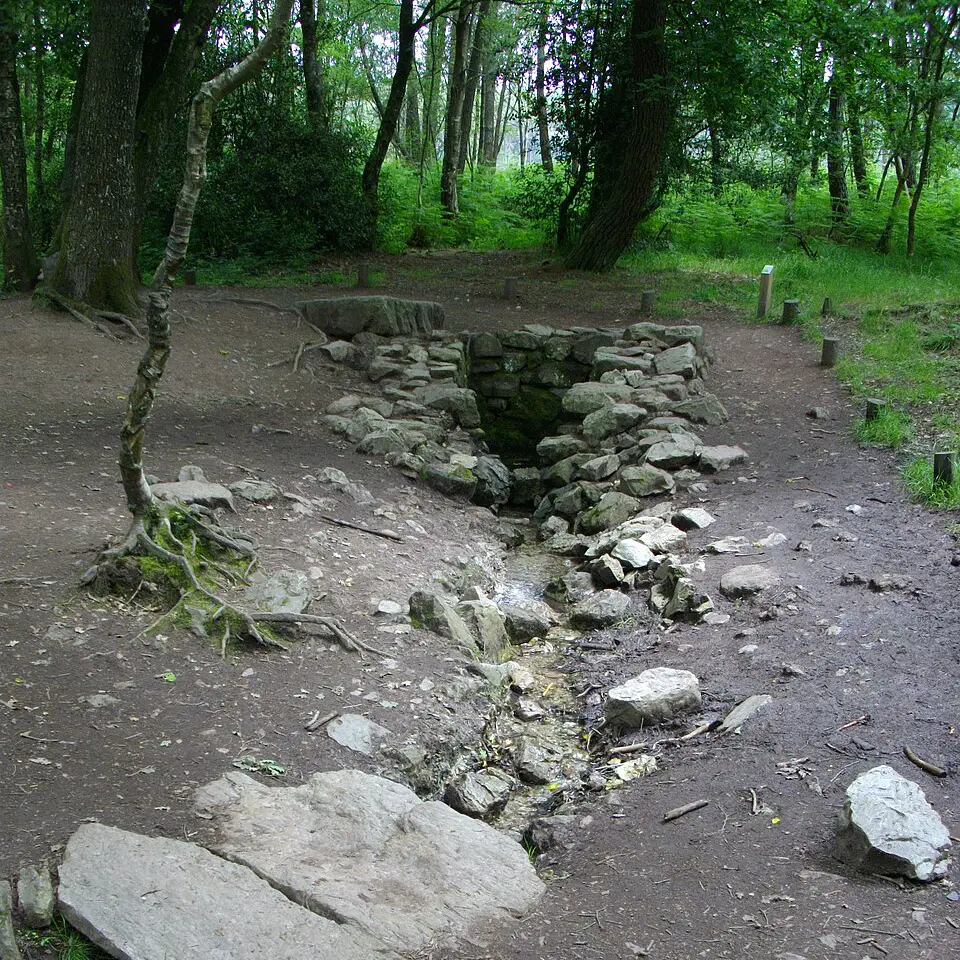
Fountain of Barenton Brocéliande perron stone legend Yvain Knight of the Lion
The Barenton Fountain, where Yvain challenged the Black Knight. According to legend, pouring water on the stoop triggers the storm. Photo : Wikimedia Commons, free licence

The little Breton people: korrigans and creatures of the night

The Arthurian legends are not the only ones to inhabit Brocéliande. Visit Breton folklore adds his own creatures.

The legendary creatures of the Paimpont massif :

  • The korrigans These mischievous little creatures dance around the standing stones and play tricks on hikers.
  • The night washerwomen ghosts washing their clothes by streams - seeing one is a sign of imminent death
  • The black dogs ghostly creatures that lead night-time travellers astray
  • Night mares equine apparitions that lead the unwary off the trail
  • The Guillotin Oak : remarkable tree 500 years old and 9.6 m in circumference (Wikipedia - Guillotin oak)

These creatures of folklore live side by side with Arthurian figures. Merlin rubs shoulders with korrigans. Viviane shares the forest with the washerwomen. The line between the legends of chivalry and the people of Brittany remains blurred, reinforcing the supernatural atmosphere of the place.

Abbé Gillard and the Church of the Grail: when Christianity meets legend

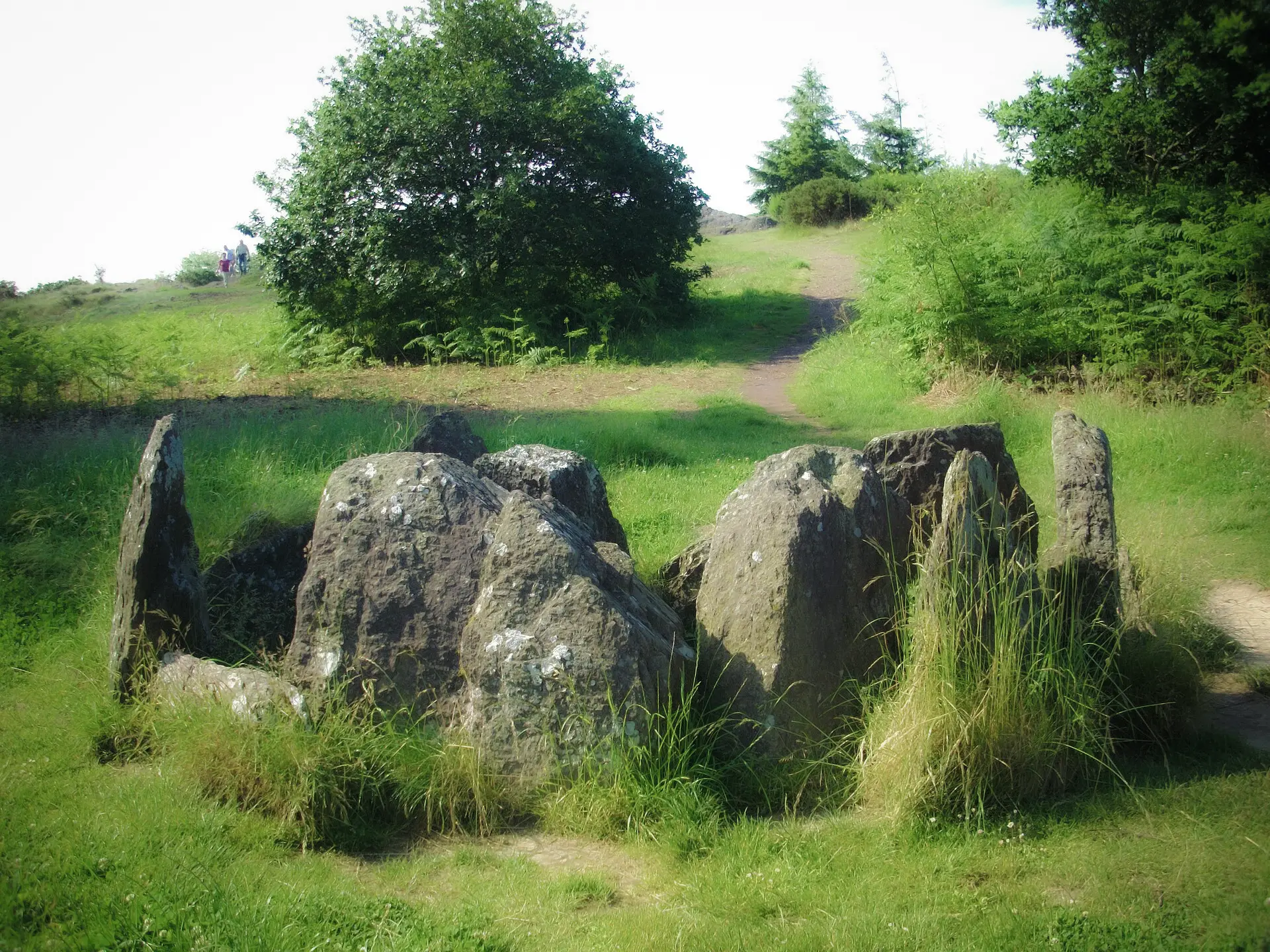
Hotié de Viviane Brocéliande Neolithic megalith schist Val sans Retour
Le Hotié de Viviane, a 4500-year-old megalithic chest overlooking the Val sans Retour. Photo : Wikimedia Commons, modified, free licence

Visit 1942, l'abbé Henri Gillard arrives at Tréhorenteuc, a remote village in the heart of the forest (Wikipedia - Church). He discovered a dilapidated church and a poor population scarred by the war.

Gillard has a bold vision: to decorate his church with the symbols of the Grail and Arthurian legends. During twelve years, He transformed this Christian place of worship into a sanctuary combining Catholic faith and pagan mythology. (Tréhorenteuc church - Abbé Gillard).

The symbolic elements of the Church of the Grail :

  • Stained glass windows representing the white stag, a symbol of Christ and a creature of Celtic legend
  • Mural paintings evoking the quest for the Grail
  • Mysterious inscriptions combining sacred Latin and Arthurian references
  • Mosaics illustrating the knights of the Round Table

It is the only church in the world dedicated to the legend of the Grail. This unique syncretism shows how legends of Brocéliande go beyond the literary framework to become rooted in local spirituality. Myth becomes prayer. Fiction becomes sacred.

Prepare your visit to the places of legend

These stories take on another dimension when you actually walk through the places where they take place. Visit Merlin's tomb , the Barenton fountain the Val sans retour Each site bears the memory of these millennia-old stories.

For a simplified first visit with GPS coordinates of each location and car parks, consult my complete guide to the Brocéliande forest. You'll find all the practical information you need to explore the legendary sites on your own.

If Brocéliande fascinates you, discover also the 8 most beautiful forests in Brittany, each with its own identity and unique landscapes. And to extend your connection with these mythical places, explore my collection of photographs of Breton forests, where I tried to capture the special atmosphere of these natural spaces steeped in history.

The legends of the Brocéliande forest weave an invisible web between the trees. Merlin prisoner of love, Viviane shaping the perfect knight, Morgane avenging betrayals, Yvain defying the storm: these stories can't be read, they have to be experienced.

Walk to the Merlin's tomb. Pour the water from the Barenton fountain. Cross the Val sans retour. Every step you take brings you closer to these thousand-year-old stories. The red shale beneath your feet bears the memory of eight centuries of Arthurian mythology.

Ready to explore these legendary places? Download my complete guide with GPS coordinates, car parks and detailed routes so you don't miss a thing. And if these forest landscapes move you, discover my collection of photographs where I've tried to capture this unique atmosphere where nature meets legend.

Brocéliande first visit guide
(with GPS coordinates)

FAQ

Is Merlin's Tomb really home to the famous enchanter?

No. This site is a Neolithic covered walkway dating back to 4000 BC, well before the Arthurian legends. Two slabs of red schist remain, damaged in the 19th century by treasure hunters. However, visitors still leave wishes here. Myth has transformed these remains into a living sanctuary.

What is the history of Le Val sans Retour?

Morgane's enchanted domain in the Arthurian legends, the Val sans Retour was a trap for unfaithful lovers. Following the fire in 1990, the Golden Tree was installed to symbolise the rebirth of the site. Explore this mythical site by following the signposted paths.

Does the Barenton Fountain have any powers?

In the 12th century, Chrétien de Troyes described how pouring water into it triggered a storm. This is where Merlin and Viviane met. The water, reddened by the iron in the soil, creates a unique atmosphere where legend and geology meet.

Where can I find Viviane's crystal palace?

At the Château de Comper in Concoret. Legend has it that Viviane's crystal palace lies beneath the pond. The castle now houses the Centre de l'Imaginaire Arthurien, with exhibitions on Arthurian stories.

Why is the church in Tréhorenteuc called "Porte du Graal"?

Because Abbé Gillard decorated it entirely with symbols from the Grail legend and the Arthurian cycle between 1942 and 1954. The stained glass windows depict the white stag and the quest for the Grail, the mosaics illustrate the knights of the Round Table, and the inscriptions combine Christian sacred texts with references to the Arthurian legend. It is the only church in the world dedicated to the legend of the Holy Grail.

Should you fear the Korrigans in the forest?

The Korrigans are the mischievous guardians of these woods. They dance around the standing stones at night and play tricks on disrespectful hikers. Stay on the paths. Avoid the banks of the lakes at dusk: the night washerwomen attract the unwary.

The 8 Most Beautiful Forests in Brittany: Hikes & Itineraries 2025

The 8 Most Beautiful Forests in Brittany: Hikes & Itineraries 2025

📋 In this article

  • -8 exceptional Breton forests Huelgoat, Brocéliande, Quénécan, Camors, Fougères, Cranou, Beffou and Pont-Calleck
  • -Interactive Google Maps 20 forests in Brittany with GPS parking and points of interest
  • -Interactive route generator 24 forestry routes with duration, level, historical anecdotes and Visorando links
  • -Exceptional heritage rocky chaos, Arthurian legends, Neolithic megaliths, 17th-19th century industrial forges
  • -Professional photo advice ICM techniques, panoramas, backlighting, golden hour and best light spots

🌲 Interactive map: 20 Forests of Brittany

🗺️ Interactive map (20 forests of Brittany) - This map shows the 8 forests detailed in the article plus 12 alternatives to explore. Find car parks with precise GPS coordinates and major points of interest in each forest.

🎲 Want to discover a forest in Brittany? Generate a surprise hike from our 24 most beautiful routes in Brittany's forests - with duration, level of difficulty, professional photo advice and a direct link to Visorando for each forest route.

🌲 Find your next hike in our beautiful Breton forests

Generate a surprise tour from our 30 best itineraries

🌊 Brittany direct to you?

Receive my exclusive articles on Brittany and discover my latest photographs of the region. Every month, you'll find great tips, secret places and my favourite Breton spots.

✓ Exclusive content - ✓ No spam - ✓ Easy unsubscribe

🌲 The 8 Most Beautiful Forests in Brittany

Brittany is home to some exceptional forests where legends, nature and history meet. Here are eight must-see forests with their own special features: rocky chaos, megaliths, historic forges, lakes and family trails. Each forest is presented with its location, car parks, routes and photo tips.

Forest n°1
Chaos of Huelgoat forest Finistère Bretagne

The granite chaos of Huelgoat, Finistère. Loïc Delplanque

🌲 Huelgoat (Finistère) - Le Chaos du Moulin

The Huelgoat Chaos was formed 300 million years ago, when the Earth's crust melted deep underground to form granite. This magma rose and cooled 6-8 km below the surface.

Over millions of years, erosion of the Hercynian chain has exposed this massive granite. Freezing, thawing and weathering then fractured the rock, creating this labyrinth of gigantic boulders - some weighing over 100 tonnes - now embedded in a dense forest.

Caption: Tradition has it that Gargantua knocked on the door of the inhabitants of Huelgoat to ask for lodging. They served him a meagre porridge of buckwheat. Vexed by this minimalist hospitality, the giant set off again towards Léon. To express his displeasure, he emptied his pockets of all the pebbles he had accumulated during his journey, throwing them angrily at the current site of chaos. A memorable anger that shaped the landscape for eternity.

📍 Practical Information

  • 📍 Location: Huelgoat, 29690 (Finistère)
  • 🅿️ Parking : Rue du Général De Gaulle - Free
  • ⏱️ Circuits : 1h (family) to 4h (full)
  • 📸 Optimum spotlight : Mare aux Sangliers

📍 Remarkable sites

  • Chaos du Moulin Huge blocks of granite piled up haphazardly, you weave between the rocks like in a labyrinth.
  • Mare aux Fées A magical and peaceful corner where you can watch dragonflies dance above the water
  • Mare aux Sangliers The wild boars from the forest used to come to bathe there, and if you look closely, the rounded, half-submerged rocks strangely resemble them.
  • Gouffre After the autumn rains, the water rushes in with impressive force.
  • Artus camp — The remains of an ancient Gallic fortified camp, a place steeped in history
  • Trembling Rock — A 100-tonne block that can be made to swing with a simple push of the hand

📸 Photo Council

Choose misty autumn mornings to recreate the magic of chaos. The low light under the canopy means you need to use a tripod and slow shutter speeds.

Forest no. 2
Arbre d'Or Brocéliande forest Val sans Retour Brittany

The Golden Tree at Val sans Retour, Brocéliande Forest, Paimpont © Loïc Delplanque

🏰 Brocéliande (Ille-et-Vilaine) - Les Légendes

The forest of Paimpont was known as Brécilien until the 15th century. Its identification with the legendary Brocéliande, an imaginary forest created by Chrétien de Troyes in the 12th century, was established in the mid-19th century thanks to the work of the scholar Félix Bellamy.

The area covers a total of 11,000 hectares, including 7,000 hectares of Arthurian sites. Shaped by three centuries of iron mining (17th-19th centuries), the area is still home to the ruins of old forges and the reservoirs that supplied the foundries with hydraulic power.

Caption: According to Arthurian tradition, the Barenton Fountain marks the first meeting place between Merlin the Enchanter and the fairy Viviane. Considered to be a marvellous fountain, pouring its water over the stone steps was supposed to bring rain. This popular belief led to numerous processions during periods of drought.

Discover my complete guide to the forest of Brocéliande, with all the must-see places, the Arthurian legends and my advice on preparing your visit.

📍 Practical Information

  • 📍 Location: Paimpont, 35380 (Ille-et-Vilaine)
  • 🅿️ Parking : Esplanade de Brocéliande - 48.0199, -2.1719 - Free admission
  • 🌳 Surface area : 9,000 hectares – Brittany's largest forest massif
  • ⏱️ Circuits : 2h to 6h depending on itinerary
  • 📸 Optimum spotlight : Barenton fountain (quiet morning)

📍 Remarkable sites

  • Barenton fountain The spring where, according to legend, Merlin first met Viviane
  • Guillotin oak A thousand-year-old oak, one of the last witnesses of the ancient forests.
  • Paimpont Abbey A medieval abbey in the heart of the town, the ideal starting point for discovering the forest.
  • Etang de l'Abbaye A body of water created during the time of the ironworks, right at the foot of the abbey
  • Val sans retour — The valley where the fairy Morgana kept unfaithful lovers, it is said
  • Merlin's tomb — A Neolithic dolmen that Arthurian legend has made its own

📸 Photo Council

Experiment with vertical filming (ICM) to capture the mystical atmosphere of Brocéliande. Set your shutter speed to 1/4s or 1/2s, then move the camera vertically during the exposure. The trunks become blurred lines, creating a dreamlike atmosphere reminiscent of Arthurian legends.

Forest no. 3
Lake Guerlédan Quénécan forest Brittany

Lake Guerlédan and Quénécan forest, Central Brittany. Loïc Delplanque

⛰️ Quénécan (Morbihan)

The Quénécan forest stretches over 3,700 hectares between Morbihan and Côtes-d'Armor, to the south of Lac de Guerlédan. Nicknamed "Brittany's Little Switzerland" for its undulating terrain, it is home to the Gorges du Daoulas, a natural canyon carved out by the river.

The massif is home to the Forges des Salles, an iron-making village founded in 1622-1623 by Henri II de Rohan. For more than 250 years, blast furnaces and forges transformed the local ore into cast iron using charcoal and hydraulic power.

Production ceased in 1877. The village has been completely restored and can now be visited freely or with a guide.
Industrial Heritage : Henri II de Rohan, a Protestant leader from Brittany, created the Forges des Salles in 1622 to put an end to the anarchic exploitation of local ore and to organise the extraction of iron, wood and water rationally. Blacksmiths, workers, charcoal burners and miners formed a complete village, and the working life of the 18th and 19th centuries has now been restored.

📍 Practical Information

  • 📍 Location: Sainte-Brigitte (56) / Perret (22)
  • 🅿️ Parking : (48.2149, -3.1298) - Free of charge
  • 🌳 Surface area : 3,700 hectares
  • ⏱️ Circuits : 2h to 4h depending on itinerary
  • 📸 Optimum spotlight : Daoulas gorges (viewpoint)

📍 Remarkable sites

  • Daoulas gorges - A natural canyon with steep walls
  • Lake Guerlédan - The largest artificial lake in Brittany
  • Bon-Repos Abbey - 12th-century Cistercian ruins
  • Forges des Salles - Restored steel village, open to visitors

📸 Photo Council

Create a panorama to show the full extent of the gorges. Take several shots by shifting the camera, then stitch them together in post-production.

Forest n°4
Camors forest Morbihan Brittany

Camors National Forest, Morbihan, Brittany. Loïc Delplanque

🗿 Camors (Morbihan)

The Camors state forest covers 648 hectares in the north of the Auray region. Accessible to all, it offers easy trails and calm ponds ideal for families.

The Camors state forest covers 648 hectares in the north of the AurThe forest is home to a number of Neolithic menhirs erected around 5,000 years ago, which probably marked territories or served as ritual landmarks. The forest boasts a full range of leisure facilities, including picnic areas, children's play areas and a tree climbing course.

Megalithic heritage : The Menhir Braz, nicknamed the "star menhir", measures 3.40 metres. Not far away stands the more modest Menhir Bihan, measuring 1.70 metres. Listed as historic monuments in 1934, they date back 5,000 years.

📍 Practical Information

  • 📍 Location: Camors, 56330 (Morbihan)
  • 🅿️ Parking : Site du Petit Bois - (47.8446, -3.0137) - Free admission
  • 🌳 Surface area : 648 hectares (national forest)
  • ⏱️ Circuits : 1 to 3 hours depending on itinerary
  • 📸 Optimum spotlight : Étang du Petit Bois (morning reflections)

📍 Remarkable sites

  • Braz menhir - Raised stone, 3.40 m high, listed as a historic monument
  • Menhir Bihan - Megalith measuring 1.70 m
  • Cornevec alignment - Fifty menhirs over 250 m
  • Covered walkway at Lann Er Vein - Neolithic burial chamber
  • Étang du Petit Bois - Family leisure area
  • Tortorec Cross - Old cross in the forest

📸 Photo Council

At dawn, the banks of the lake and the hamlets are adorned with changing reflections. Try your compositions with the first rays filtering through the trees.

Forest n°5
Fougères forest Ille-et-Vilaine Brittany

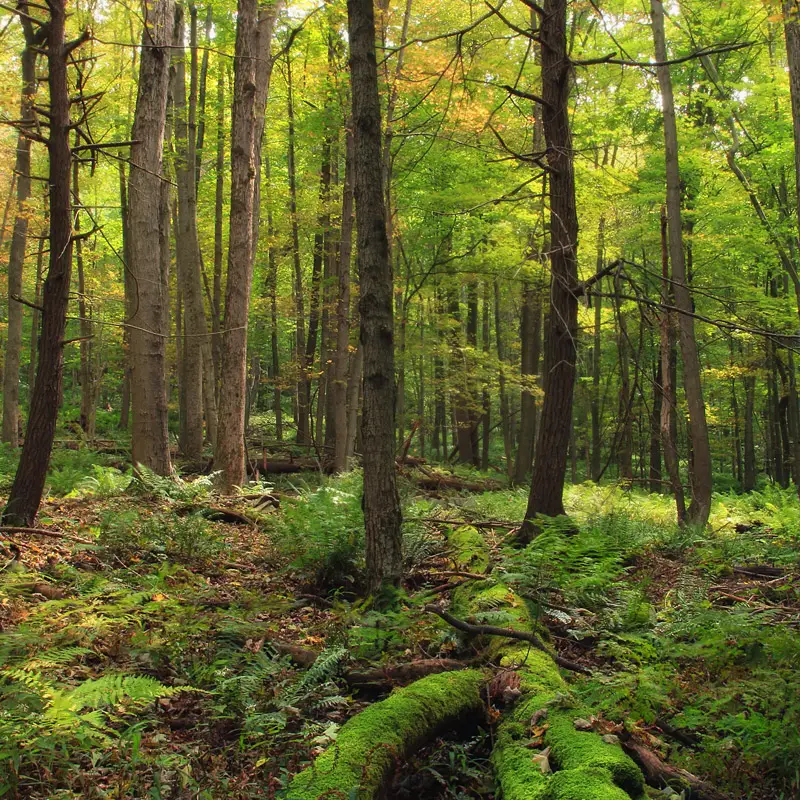
Fougères forest, Ille-et-Vilaine, Brittany. Photo Pixnio CC0 (Public domain)

🌳 Fougères (Ille-et-Vilaine)

The Fougères state forest covers 1,584 hectares to the north of the town, in the municipalities of Landéan and Laignelet. Made up mainly of hundred-year-old beech trees, it is one of the most beautiful beech forests in Brittany. The dense canopy of old beech trees filters out the light, creating a meditative atmosphere ideal for long walks.

Less touristy than Huelgoat or Brocéliande, it offers an authentic immersion in nature. During the Vendée War in 1793, the forest served as a refuge for royalist insurgents at the Battle of Fougères.

Historical heritage : The forest was the scene of the Battle of Fougères on 3 November 1793, during the Galerne expedition in the Vendée War. Royalist troops captured the town after fierce fighting.

📍 Practical Information

  • 📍 Location: Landéan / Laignelet, 35133 (Ille-et-Vilaine)
  • 🅿️ Parking : Chênedet crossroads (D177) - (48.3948, -1.1736) - Free of charge
  • 🌳 Surface area : 1,673 hectares (ONF state forest)
  • ⏱️ Circuits : 1 to 4 hours depending on itinerary
  • 📸 Optimum spotlight : Sentier de la Pierre Enfouie (undergrowth)

📍 Remarkable sites

  • The Buried Stone Trail - Signposted 5.5 km circuit, 1h30
  • Centenary beech trees - Majestic trees characteristic of the massif
  • Chênedet leisure centre - Pond, supervised swimming in summer
  • Cordon des Druides - Alignment of a dozen menhirs
  • Pierre Courcoulée (Pierre des Huguenots) - Neolithic megalith

📸 Photo Council

Old beech trees give off a soft, green light. Focus on details with a macro or telephoto lens: bark, roots, carpets of dead leaves.

Forest n°6
Forêt du Cranou Quimerc'h Finistère Brittany

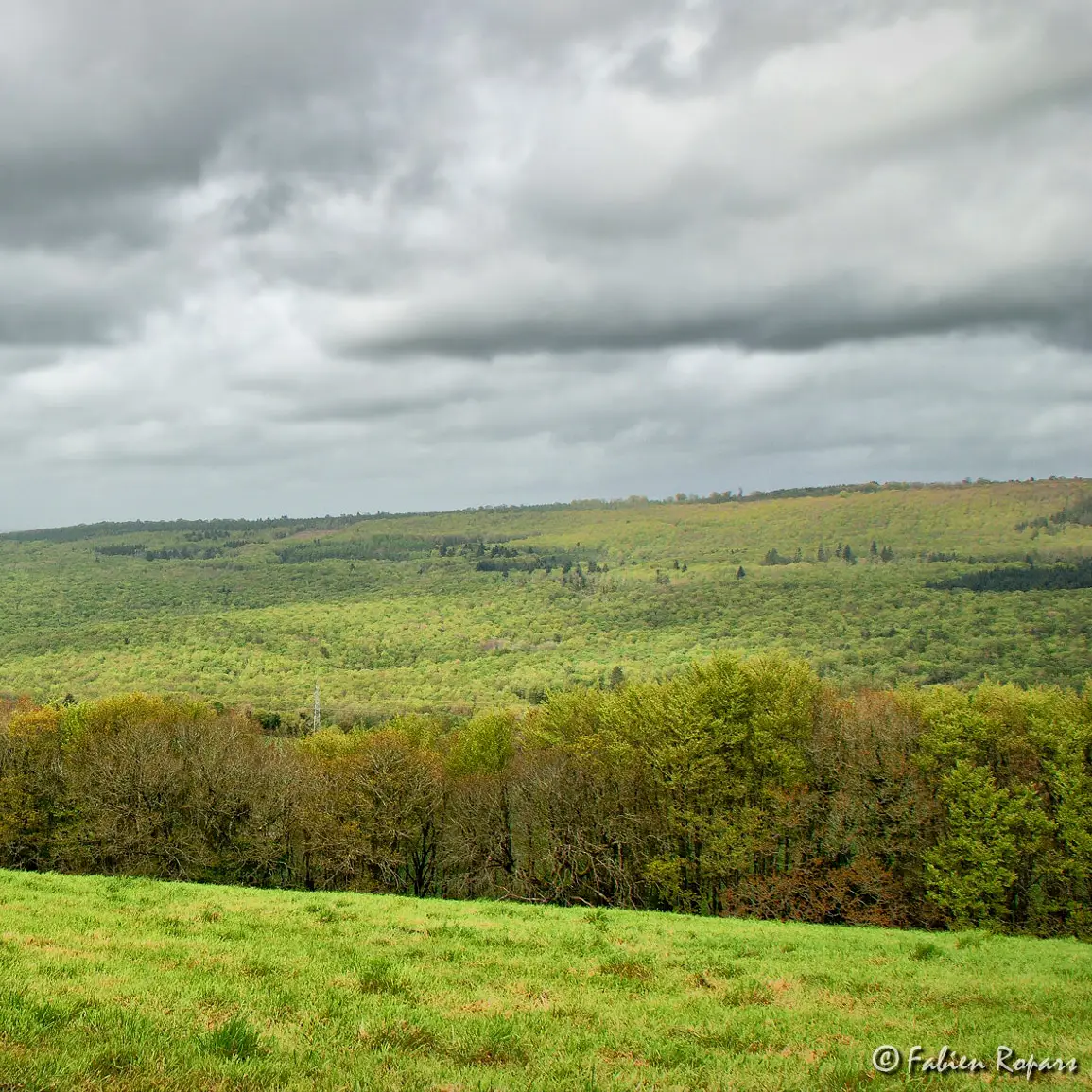
Forêt du Cranou near Quimerc'h, Finistère, Brittany. Photo Wikimedia Commons Fabien Ropars / CC BY-SA 3.0

🌲 Cranou (Finistère) - Forêt Domaniale du Cranou

The Cranou state forest covers 627 hectares between Hanvec and Le Faou, in the Armorique Regional Nature Park. Including the adjacent communal woods and private plots, the total forest covers 1,321 hectares, making the Cranou the largest forest in Finistère.

Its altitude varies from 60 to 321 metres. Less frequented than other Breton forests, it attracts lovers of tranquillity. Crossed by the GR37, it offers a 3km interpretation trail and an 11-hectare forest arboretum.

⚠️ Attention: Since storm Ciaran, some small paths are no longer accessible and several bridges have been destroyed, making it difficult to cross the river without a bridge. The forest remains magnificent and accessible to dogs.

Legend of Saint Conval : Saint Conval, driven out of the Bois du Gars after cutting down the local lord's oak trees, took refuge in the Cranou forest. The new lord gave him permission to use all the trees. As a reward, the saint declared that there would never be a shortage of wood in the Cranou forest.

📍 Practical Information

  • 📍 Location: Hanvec / Le Faou, 29460 (Finistère)
  • 🅿️ Parking : Route de Rumengol (48.3158, -4.1010) - Free of charge
  • 🌳 Surface area : 627 ha (national forest) / 1,321 ha (total forest area)
  • ⛰️ Altitude : 60 to 321 metres
  • ⏱️ Circuits : 1h to 5h (GR37 + signposted routes)
  • 📸 Optimum spotlight : Forest arboretum (diversity of tree species)

📍 Remarkable sites

  • Saint-Conval fountain 17th-century devotional fountain in schist rubblework, housing a kersanton stone statue of the saint. Registered as a historic monument in 1956.
  • Saint-Conval Calvary Erected in 1627 by the sculptor Roland Doré, in kersanton stone. Only the shaft remains, the crosspiece has disappeared. The last vestige, along with the fountain, of a 15th-century chapel destroyed during the Second World War.
  • Forest Estate Tour — 12.5 km loop (3h10, moderate difficulty, 332m elevation gain) through oak and beech woods — Crozon Tourism
  • Forest Arboretum — 14 hectares of free access, created in 2008 to study the adaptation of trees to climate change. It succeeds a sylvetum from 1970 (ONF/INRA) and brings together more than 150 species from around the world.
  • GR37 footpath The long-distance footpath crosses the forest from one side to the other, through oak and beech groves.

📸 Photo Council

Stand at the base of a tall tree and photograph the top from a low angle: the tree dominates the image, accentuating its verticality.

Forest n°7
Beffou forest Côtes-d'Armor Brittany highest forest

Forêt départementale de Beffou, highest forest in Brittany, Côtes-d'Armor. Loïc Delplanque

🌲 Beffou (Côtes-d'Armor) - The highest forest in Brittany

The Beffou departmental forest covers more than 630 hectares in the municipalities of Loguivy-Plougras, La Chapelle-Neuve and Lohuec. Owned by the département since 1951, it is the highest forest in Brittany, with Le Pavé, the highest peak in Trégor at 322 metres, at its heart.

Managed by the ONF and classified as a sensitive natural area, it is dominated by beech trees (its name means "residence of the beeches" in Breton), with oak, chestnut and yew trees over a hundred years old. The constant humidity and dense canopy create a special atmosphere, with lush moss and subdued light. The Sentier de Job (Job Trail) is a 1.2 km trail through the fauna and flora.

Historical heritage : The forest is home to the Brohet covered walkway (18 metres long, one of the longest in Brittany), a collective grave dating back to the 3rd millennium BC. It is crossed by the old Roman road that linked Le Yaudet to Carhaix. Until the 18th century, Beffou was a thriving metallurgical centre. Coal and clog makers worked here until the early 20th century.

📍 Practical Information

  • 📍 Location: Loguivy-Plougras / La Chapelle-Neuve / Lohuec, 22780 (Côtes-d'Armor)
  • 🅿️ Parking : RD11 / allée forestière n°25 junction - Free - (48.4911, -3.4807)
  • 🌳 Surface area : More than 630 hectares (departmental forest)
  • ⛰️ Altitude : Highest point at 322 metres (le Pavé)
  • ⏱️ Circuits : 1 to 3 hours depending on route
  • 📸 Optimum spotlight : Job trail (yew and moss)

📍 Remarkable sites

  • Job's path - Interpretation trail 1.2 km, 1 hour
  • Le Pavé - Highest point in Trégor at 322 m
  • Allée couverte du Brohet - 18 m long (Neolithic tomb)
  • Centenary yews - Sacred trees of the Celts
  • Clogmaker's hut - Historical reconstruction

📸 Photo Council

For macros with soft, pastel bokeh, shoot in the undergrowth in the morning or at the end of the day when the ambient light is low. Use a wide aperture (f/2.8 to f/4) with a macro lens to isolate moss, fungi or insects from the background. Position yourself close to the subject with a distant, solid-coloured background: the diffuse green tones of the foliage will create dreamlike bubbles of light. Avoid direct sunlight.

Forest no. 8
Pontcallec forest river Morbihan Brittany

Pontcallec river in the Berné forest, Morbihan. Photo Wikimedia Commons Lanzonnet / CC BY-SA 3.0

🌲 Pontcallec (Morbihan) - Forêt Domaniale de Pont-Calleck

The Pont-Calleck state forest covers 541 hectares in the commune of Berné. Formerly owned by the Marquisate of Pontcallec, it became state property in 1963 and has been managed by the ONF since 1966. Listed as a Natura 2000 site, it occupies a plateau and hillsides on the right bank of the river Scorff, renowned for its trout, salmon and otters.

The poor, acidic granite soil is home mainly to pedunculate oak, beech and chestnut trees. The maximum altitude is 164 metres.

Historical heritage : The Pontkalleg valley preserves traces of the ancient seigneury established in 1281. The estate is home to Pontcalleck castle (private, closed in August), the chapels of Saint-Albaud and Sainte-Anne des Bois, the remains of a medieval hamlet, as well as the site of the old pond and the remains of the old forges that exploited the local wood and water from the Scorff.

📍 Practical Information

  • 📍 Location: Berné, 56240 (Morbihan)
  • 🅿️ Parking : Maison Forestière roundabout near Pont-Neuf (D110 & D204) - (47.9434, -3.3606) - Free of charge
  • 🌳 Surface area : 541 hectares (national forest)
  • ⛰️ Altitude : Maximum 164 metres
  • ⏱️ Circuits : 1h30 to 4h (16.9km Pontkalleg circuit)
  • 📸 Optimum spotlight : Site of the old pond

📍 Remarkable sites

  • River le Scorff — River classified Natura 2000, renowned for its Atlantic salmon, trout, and European otters
  • Pontcallec Castle — Former fortress of the marquisate, rebuilt under Louis XIII. It was here that the Marquis de Pontcallec prepared his famous conspiracy of 1720 against the Regent. Today, it is the mother house of the Dominican Sisters of the Holy Spirit (private property, closed in August)
  • Medieval hamlet Discovered in 1973 during a reforestation project by the National Forestry Office. Six hamlets comprising 59 buildings and 6 enclosures, occupied from the Iron Age to the 19th century.
  • Sainte-Anne des Bois Chapel Chapel of the Pontcallec estate, built in 1865
  • Saint-Albaud Chapel – Religious heritage along the Pontcallec valley route
  • Site of the old pond — Former ornamental pond of the lordly estate, now an open landscape in the heart of the forest
  • Remains of the forges Remains of the old forges that exploited the forest's timber in the 19th century, to the point of ruining it through excessive extraction.

📸 Photo Council

Polarising filter for your photographs on the river.

🌲 And now?

These 8 forests offer the best of Brittany. From the rocky chaos of Huelgoat to the beech forests of Fougères, from the legends of Brocéliande to the wild gorges of Quénécan, each has its own character. Choose your forest for your next weekend walk or hike.

If you were interested in this article, check out my photographs of Brittany.

📸 Discover My Photographs of Brittany

❓ Frequently Asked Questions

What is the most beautiful forest in Brittany?

Brocéliande remains the most emblematic with its Arthurian legends. Huelgoat impresses with its unique rocky chaos. Fougères seduces with its majestic beech forests. The choice is up to you: mystery, geology or wilderness.

What is the largest forest in Brittany?

The Brocéliande forest is the largest in Brittany at 9,000 hectares, located between Morbihan and Ille-et-Vilaine. The Fougères forest (1,600 hectares) is the largest state-owned forest in Brittany. Le Cranou (1,321 hectares) is the largest forest in Finistère.

What is the legendary forest of Brittany?

Brocéliande is THE legendary forest of Brittany. It is home to Merlin's tomb, the Barenton fountain, the Valley of No Return and the Golden Tree. Arthurian stories have mentioned this forest since the 12th century.

Which is the wildest corner of Brittany?

The forest of Quénécan offers the Daoulas gorges, a wild and unspoilt setting. Beffou, the highest forest in Brittany, reveals an almost underground atmosphere with its centuries-old yew trees and dense mosses. Cranou also offers some remote and authentic areas.

Which forests are ideal for families with children?

Camors and Brocéliande offer short circuits that are perfect for families. Huelgoat also offers accessible trails with fascinating rocky chaos for children. Avoid Fougères and Pontcallec (distances too long).

Which forest should you choose to photograph Brittany's landscapes?

Huelgoat for its rocky chaos, Brocéliande for its mysterious atmosphere, Fougères for its majestic beech forests, and Quénécan for its wild gorges. Each forest offers unique compositions depending on the light and the season.

Storms in Brittany: history, locations, images and prevention

Storms in Brittany: history, locations, images and prevention

Some of the photographs featured in this article are available for sale in limited editions and were produced by Loïc Delplanque, professional photographer in Morbihan.

Introduction

Photograph taken by Loïc Delplanque of a wave submerging the Le Conquet seawall during storm Justine.

Photography by Loïc Delplanque, on 30 January 2021, during the Justine storm in Le Conquet. A colossal wave crashed onto the sea wall.

Photos of storms in Brittany (limited edition)

These phenomena are part of everyday life in Brittany. They fascinate, worry, stupefy... And while we sometimes end up no longer paying attention to them, they remind us of our fragility and question our relationship with nature.

This article looks at the formation of storms and the storms that have hit Brittany over the years.
It looks at their impact on the coastline, the increased risks associated with climate change, and how the region is adapting to erosion.

This is a recurring phenomenon here. Brittany is one of the most exposed regions in France.

Situated at the junction of the English Channel and the Atlantic, it is regularly affected by very active lows from the North Atlantic. Winds Violent storms, huge swells, floods or power cuts: every winter brings its share of bad weather.

Ciaran, Lothar and other major events have left visible traces on the coastline, but also in the collective memory.

Outils Météo Tempêtes Bretagne : Real-time monitoring

Smartphone displaying a "Rainy Day" weather alert in front of a window covered in raindrops

Weather Brittany

Wind Force Calculator

Simply enter the wind speed and the calculator will display its strength directly on the Beaufort scale. This makes it easier to see what a 70 km/h wind really means.

🌊 Historical storms in Brittany

Weather events in the region since 1984

November 22–24, 1984
🌪️Storm of November 1984
Flooding, thrown pebbles, very strong winds
Zones : Landerneau, Breton coast
⚡ Up to 175 km/h
October 15–16, 1987
💨1987 hurricane
Major devastation, forests destroyed
Zones : Ouessant, Quimper, Finistère
⚡ 200 km/h (Ouessant), 187 km/h (Quimper)
January 25–26, 1990
🌀Daria storm
Violent winter storm
Zones : Belle-Île, Pointe du Raz
⚡ 176 km/h
3 February 1990
⛈️Herta storm
Second strongest storm in 50 years
Zones : Belle-Île, Pointe du Raz, Granville
⚡ Up to 170 km/h
December 26, 1999
Storm Lothar
Storm of the century (1st wave)
Zones : Ushant, Saint-Brieuc, Finistère
⚡ 184 km/h, 173 km/h
December 27, 1999
🌊Storm Martin
Storm of the century (2nd wave)
Zones : Southern Brittany, Loire-Atlantique
⚡ Violent winds
January 31, 2021
🌬️Tempête Justine
Flooding, outages, extreme conditions
Zones : Breton coast
⚡ Nearly 150 km/h
November 1–2, 2023
💥Ciarán storm
Exceptional, historic record
Zones : Pointe du Raz, Plougonvelin, Bréhat
⚡ 207 km/h (record)

The storms originate in the North Atlantic, generated by depressions resulting from the temperature differences between the poles and the tropics. The jet stream directs them towards Europe, with violent winds. Brittany, the western tip of France, is in the front line of these phenomena.

Since 1980, 182 storms have hit Brittany, according to Météo-France. According to Weather Brittany, the average is three per year. The 1987 hurricane, with its winds at 216 km/h, is still etched in people's memories. Archives mention a major episode as far back as 1287.

Port-Haliguen lighthouse at sunrise in Quiberon - artistic photography Lighthouses in Brittany

Read more about Breton storms

To extend this immersion in rough seas, discover our article dedicated to the lighthouses in Brittany History, access and ideas for walks around the sentinels that watch over the coast in all weathers.

A guide for each département: Finistère, Côtes-d'Armor, Morbihan and Ille-et-Vilaine.

Read the article on lighthouses in Brittany

7 memorable storms in Brittany

Photo of a hurricane seen from space, symbolic illustration of the 1984 hurricane
Satellite photo of a hurricane, used symbolically to illustrate the 1984 hurricane.

November 1984

On 22 and 23 November 1984, two storms hit the northern half of France, particularly the Brittany. At that time, naming them was not yet done in France or Europe.

The night of 23 to 24 November 1984 will go down in the annals of Brittany's meteorological history. An unusually intense storm hit the region, causing extensive damage and flooding along the coasts.

Gusts exceeded 150 km/h on the Breton coast, with peaks of up to 175 km/h in places.

The town centre of Landerneau, in the Finistère region of France, has been flooded. The raging waves threw tonnes of pebbles onto the coasts, changing the coastal landscape.

These extreme winds uprooted trees, damaged buildings and disrupted infrastructure.

To find out more

Hurricane of October 1987

The storm of 1987, nicknamed the "Hurricane of 1987", the storm hit Brittany and Normandy with exceptional force, leaving an indelible mark on the region's meteorological history.

An unusual weather episode

On the night of 15th to 16th October In 1987, an explosive low-pressure system swept across north-western France, generating exceptionally strong winds. In Brittany, gusts were measured at 200 km/h in Ushant and 187 km/h in Quimper.

But it was in Granville, on the neighbouring coast, that the absolute record of 216 km/h was recorded - a value that remains unbeaten to this day, even after the passage of Ciaran in 2023.

It left a lasting imprint: a quarter of Brittany's forests were destroyed, tens of thousands of homes were left without power, and material damage was estimated at nearly 23 billion francs nationwide.
Illustration of a storm in Brittany, with a lighthouse in turmoil, trees uprooted and a house damaged.

This illustrated infographic looks at the consequences of a storm on the Brittany coast.

The Breton landscape was profoundly altered. "The landscape resembled a field of ruins, like Verdun," recalled some inhabitants, struck by the extent of the damage. (source The weather channel)
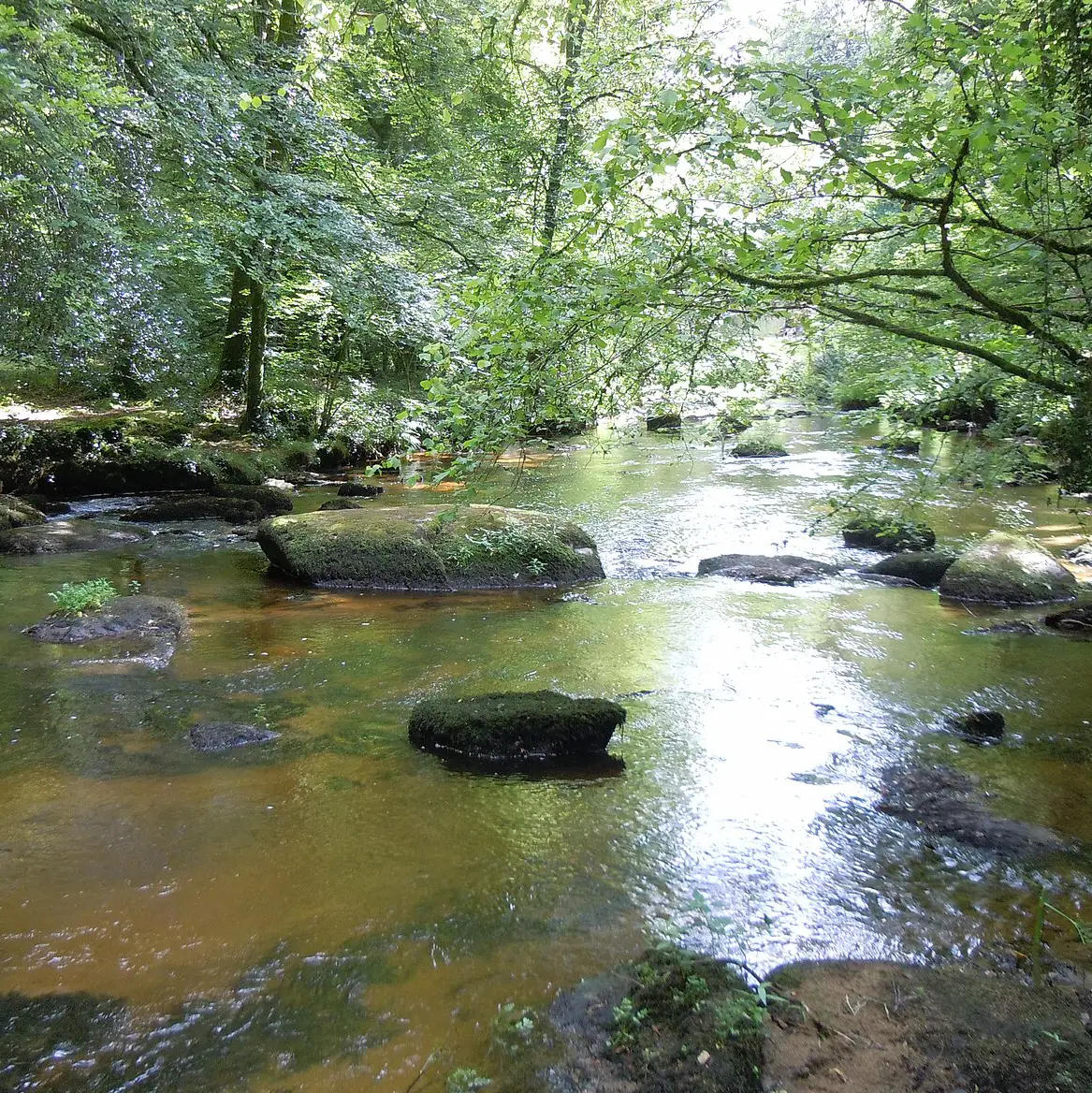
Despite its intensity, the number of victims remained relatively limited due to a passage and a low tidal range. For many local residents, this night remains one of the most significant weather events of the century.

Considerable damage

The impact was devastating:

  • 15 people lost their lives in France.
  • The damage was estimated at around 23 billion francs at the time, or 3.5 billion euros.
  • Nearly a quarter of Brittany's forests have been destroyed.
An exceptional meteorological phenomenon!

Often mistakenly described as a hurricane, it was in fact a depression in the mid-latitudes. Its atmospheric pressure dropped to 948 hPa in Brest, a record since the station was created in 1945. Its speed, around 110 km/h, helped amplify its devastating effects.

A turning point in storm management

This extreme weather event marked a turning point in awareness of the weather threat in Brittany and Normandy.

It has led to improved warning systems and better preparedness for storms.

Paradoxically, ten years after the disaster, the forestry balance sheet has been positive, with almost complete reforestation of the destroyed areas and the appearance of 30,000 hectares of new forests.

The October 1987 hurricane remains etched in the collective memory as a reminder of the power of nature and the need for constant vigilance in the face of extreme meteorological phenomena.

Daria (25 and 26 January 1990)

Photo of storm Daria in 1990: cars driving along the Boulevard Barnaart in a sandstorm, wind force 12, towards Bloemendaal aan Zee and the Zeeweg.

Daria in January 1990: sandstorm on the Boulevard Barnaart (Netherlands), wind force 12. Fotopersbureau de Boer 

January 25–26, 1990. Storm Daria, also known as the Burns’ Day Storm, marked the beginning of a winter many Bretons won’t forget. This cyclone bomb hit hard, with gusts measured at 176 km/h at the Pointe du Raz and violent swells that shook the entire coastline from the English Channel to the Atlantic (source: Wikipedia).

And that was just the beginning. Daria paved the way for an impressive series of at least ten storms, including Vivian, Herta and Wiebke, which swept through the forests, destabilised the power grids and left a lasting mark on the memories of those who lived through them (source: Wikipedia).

93 dead in six countries. Daria didn't just shake the roofs, she changed lives. There were 45 deaths in the UK, 19 in the Netherlands, 10 in Belgium, 8 in France, 7 in Germany and 4 in Denmark. A brutal episode, the human consequences of which have left their mark on Europe (source: Wikipedia).

Herta (3 February 1990)

19/20 FR3 of 04 February 1990 - Deadly storm in France - Tempête Herta - Archive INA

19/20 FR3, 4 February 1990 - Herta, a murderous episode in France.
INA archive, available on YouTube.

Herta hit France in the middle of the day, an unusual passage for this type of phenomenon.

Devastating winds

It was the second strongest storm in 50 years in the northern part of the country.

From 9 a.m. onwards, extremely powerful winds swept across Brittany, reaching speeds of 167 km/h at the Pointe du Raz and 162km/h at Belle-Île-en-Mer. At the same time, Normandy was hit by gusts of up to 170 km/h in Granville.

As the storm moved inland, gusts reached 133 km/h at Nantes (Pays de la Loire) and 151 km/h at Cap de la Hève, near Le Havre in Seine-Maritime (Normandy). Herta then hit the Île-de-France region, where winds peaked at 158 km/h at Brétigny-sur-Orge.

A heavy human and material toll

In France, 23 people lost their lives that day. Among the regions hardest hit, Brittany was not spared.

In Herbignac, a resident recounts:

"The wind was blowing at over 120 kph continuously, gusting to 140 kph; a huge branch almost as wide as the road fell behind my car... My wife was shaking with fear, and scanned the windows hoping they would hold." (source: infoclimat)

In Pipriac, a lorry driver was killed when a tree fell. Three other people were seriously injured when bay windows were blown out during the storm.

Material damage was extensive: the church in Brielles lost its steeple, buildings were damaged in Rennes, and businesses suffered damage in Cancale and Vitré. Throughout the region, many trees were uprooted (source: Ouest France)

Lothar and Martin (December 1999)

Photo after storm Martin in December 1999 in Angoulême showing uprooted trees and clearing teams

Damage in Angoulême on the morning of 28 December 1999, after storm Martin.
Nicolas Dessaux - Personal work

Lothar and Martin, which hit Brittany on 26 and 27 September. December 1999, left their mark on the region's history with their exceptional violence. These meteorological events have been described as the "storms of the century" because of their intensity and considerable impact.

They have caused 140 deaths in Europe, including 92 in France alone.

Entire forests were destroyed, farms were severely damaged, and roofs were torn off. The power grid suffered heavy consequences, leaving some cities, including Rennes, without electricity for a time.

A dramatic accident claiming 4 victims on the RN12 was a reminder of the brutality of the events. More than 150,000 homes without electricity, emergency services overwhelmed... Lothar only lasted a few hours, but its passage left a stunned region. As this video shows.

Lothar struck the Breton coasts on December 26, bringing extraordinarily strong winds.

Record gusts were recorded:

  • 184 km/h on the island of Ouessant
  • 173 km/h in Saint-Brieuc, the regional record for this event
  • 158 km/h at Pleyber-Christ

There are many accounts of Lothar, and they all say the same thing: nobody was prepared for such violence.

On the night of 26 December 1999, Brittany was hit hard. In the Trégor region, residents woke to the sound of gusts of wind, discovering in the early hours of the morning roofs blown off, roads blocked and trees on the ground.

Martin followed the next day, 27 December, particularly affecting the south of Brittany.

It strikes a more southern area of Brittany than the first storm, but with similar strength.

It is having less of an impact on the region, but the Loire-Atlantic is suffering considerable damage, particularly to its forests.

The power grid is affected once again, while the estuaries and coasts experience flooding.

In Ille-et-Vilaine, the damage was extensive, and five people lost their lives: four in a vehicle hit by trees in Montauban, and another in Boussac, after the roof of her house collapsed.

(sources : The weather channel) - See photographs of storms in Brittany

Justine (30 January 2021)

Photograph of an incredible wave during the Justine storm in Brittany on the right and its framed image on the left

30 January 2021, storm Justine at Le Conquet. A powerful wave rises up, evoking the silhouette of a dragon. Photograph by Loïc Delplanque

Loïc Delplanque: “During storm Justine, the waves were hitting harder than usual. Soaked, I was heading back to the car when it emerged from the sea. What’s beautiful about waves, beyond the power they give off, is the imagination they spark. Some will see a simple wave, I see a dragon from the seas. And you, what do you see in this photo?”

Justine hit Brittany on 31 January 2021.

With winds reaching almost 150 km/h, it caused flooding, power cuts and property damage.

The coasts were violently battered by impressive waves. Residents had to cope with extreme weather conditions, a reminder of man's vulnerability in the face of nature.

Ciarán (1ᵉʳ to 2 November 2023)

Tempête Ciarán: la Bretagne face à l'urgence climatique - Enquêtes de région Le Mag - France 3 Bretagne

Enquêtes de région Le Mag: Tempête Ciarán - la Bretagne face à l'urgence climatique.
Report broadcast on France 3 Bretagne, presented by A. Masteau.
One year after the night of 1er to 2 November 2023, this documentary looks at the human, economic and climatic consequences of Ciarán in north-west France.

Ciarán, on the night of 1 to 2 November 2023, was exceptionally violent. Some media were quick to describe it as the "storm of the century".

Four people lost their lives in France during the passage of Ciarán. In Brittany, an Enedis technician died in Pont-Aven while working to restore electricity.

Extraordinarily strong winds

Ciarán generated gusts of wind of an intensity rarely seen in Brittany :

  • 207 km/h recorded at Pointe du Raz in Finistère, setting a new record
  • 193 km/h measured at Plougonvelin, also in Finistère
  • 180 km/h recorded on the island of Bréhat in the Côtes d'Armor

Even inland, the winds remained very violent:

  • 125 km/h at Rostrenen in Côtes d'Armor
  • 108 km/h recorded at Rennes in Ille-et-Vilaine
Extensive damage

The consequences of Ciarán have been devastating for the region:


  • Many trees uprooted and roofs damaged
  • Roads cut off and marinas devastated
  • Around 1.2 million homes without electricity in France, many of them in Brittany

I went to the Perharidy peninsula a few days after the storm. It had left its mark everywhere. Dozens of trees down, paths blocked, embankments gutted. It was a desolate sight.


We often hear about winds of over 200 km/h, power cuts and material damage. But when you're there, when you see these familiar landscapes disfigured, it takes you by storm. Every tree on the ground is a reminder of just how much can change overnight.


That day, I also learned that the Ponthus beech in the Brocéliande forest had also been felled. An emblematic tree, full of stories, walks and memories for many.

Key statistics

When we think of storms in Brittany, we often think of the wind. But it's not just the gusts. Some data are just as impressive

Wave crashes over a lighthouse in Brittany during a storm

Illustration of a Breton lighthouse in the face of bad weather: when the sea strikes relentlessly during a winter gale.

Unusual waves

Here are some of the record wave heights seen on Brittany's coasts in recent decades. All these heights come from precise measurements or reliable estimates:

- 24.60 metres. This is the height of a wave recorded at the Mare lighthouse during the winter of 2017-2018.
Sensors installed on site, combined with an image analysis system, have made it possible to measure it precisely. When you think of the isolation of this lighthouse on the open sea, you can imagine what it must feel like to be faced with such a mass of water, in the noise, wind and spray.
(Source: measurement campaign at La Jument lighthouse, winter 2017-2018 - see also Wikipedia entry on the lighthouse)

- 21.1 metres. This is the height of a wave measured off the coast of Finistère during the passage of storm Ciaran, on the night of 1 to 2 November 2023.

This value was recorded near the Pierres Noires buoy, south of Ushant, the most westerly point in mainland France.

The significant height of the waves had already reached 11.7 metres, but this isolated breaker exceeded 21 metres, the equivalent of a six-storey building.

This is an impressive figure, and a reminder of the violence of the phenomena on this part of the coast exposed to the great swells of the North Atlantic.

Inland too, the impact was brutal.

In Guingamp, Aurélie, aged 48, says she was woken up at 4am by "a huge noise". A tree in her garden split in two: "It didn't go far. Within a few degrees, it was a disaster...".


(Sources: The Weather Channel and Le Parisien via Aurélie's testimonial)

- 23.60 metres. This is what the Pierres Noires buoy measured during the Petra storm off Molène in early February 2014.
For more than ten hours, the waves stayed above 14 metres. A violence that did not stop at sea.

In Lomener, Ambroise Le Floc'h recalls: "the wind in the shutters, with the shutters slamming a lot; you can hear the swell hitting the sea wall...".


(Sources: Infoclimat, Le Point)

- 16 metres. That's the size of the waves recorded on Ouessant and Belle-Île-en-Mer during the storm of 16 October 1987, pushed by a long and powerful swell along the entire Breton coastline.
The sea level rose by 1.7 m in Brest and Le Conquet, despite a low tidal range.

Wave crashing on a lighthouse during a storm
A lighthouse alone against the elements: the sea rages on during a storm.

A number of residents still remember it:

"My grandmother lived in Cancale: her house shook in the gusts, right down to her bed. Even the windows vibrated", recalls a member of Infoclimat, recalling that night when the wind "cannonades" were raging and all the boats in the port of Concarneau were clinging to the ramparts.


A night when the sea and the wind spoke loudly - and all of Brittany had to listen.


(Sources: Wikipedia, Infoclimat)

- 17.7 metres above sea level - Jument lighthouse
On 3 January 2018, at the Jument lighthouse on Ushant, several exceptionally high waves - known as "scélérates" - were observed. One of them reached 17.7 metres above sea level, the height of its crest. The most impressive wave that day was measured at 24.6 metres from trough to crest.

(Sources: Wikipedia)

Where can you watch the storms in Brittany?

The most exposed areas

Brittany is one of the regions most exposed to storms, especially on its coasts.

Places like the Pointe du Raz, Ushant, the Crozon peninsula and the Bay of Mont-Saint-Michel regularly experience extreme conditions. Violent winds, high waves, exceptional tides and submersions follow one another every season.

During episodes like Ciarán, these areas were particularly hard hit. Some port cities, such as Brest, Lorient and Saint-Malo, regularly suffer major material damage.

Estuaries and low-lying areas remain vulnerable to flooding. In the face of these many dangers, the authorities are reminding people of the importance of constant vigilance.

The Four lighthouse

Photograph of a wave submerging the Four lighthouse under a stormy sky on the right and its framed image on the left

Photograph taken on 29 January 2020 by Loïc DelplanqueOn 30 January 2021, during the Justine storm in Le Conquet. A colossal wave crashes onto the sea wallduring a violent storm off the coast of the Four lighthouse. Its framed version is on display next door.


The Four lighthouseIt is well known for the huge waves that crash against its walls during storms. First lit in March 1874, it lies between the English Channel and the Atlantic.

It can be seen from the GR34 at Landunvez and Porspoder. Built over four years on the rock of Le Four, it resembles the Pierres Noires lighthouse. These twin lighthouses guide sailors through the dangerous Le Four channel.

At the Four lighthouse, the spectacle is as impressive as it is worrying. These phenomena can also be deadly.

On 27 April 1873, when construction of the lighthouse was not yet complete, a "dull wave" capsized a boat carrying supplies and materials, killing three sailors.

Despite the repeated assaults of the elements, the Le Four lighthouse has withstood the most extreme conditions.

Its sturdy construction and strategic position have enabled it to withstand the vagaries of the sea d'Iroise.

However, certain traces remain visible: on 1 February 1904, it was struck by lightning, causing extensive damage.

Even today, the Four lighthouse remains a symbol of resilience in the face of the waves.

The wild Morbihan coast

Photo of a wave submerging a rock on the wild Morbihan coast on the right and its framed interpretation on the left

Photograph taken on 21 October 2022 by Loïc Delplanque on the wild Morbihan coast. A huge wave submerges a rock off the coast.


The wild coast of Morbihan, with its steep cliffs and secluded beaches, it is often exposed to the raging elements, particularly during the winter months.

These extreme weather phenomena are characterised by powerful winds and impressive waves that shape the coastal landscape.

The storms on this coast can generate gusts frequently exceeding 100 km/h, with records sometimes reaching 150 km/h during the most intense episodes.

These violent winds, combined with the particular topography of the coast, create spectacular and dangerous sea conditions.

The waves generated by these storms can reach considerable heights, sometimes in excess of 10 metres.

These extreme conditions often attract curious onlookers and photographers, but represent a real danger to the safety of people and coastal infrastructures.

The local authorities regularly take precautionary measures during these events, such as closing certain access points to the coast or issuing warnings to the population.

The Côte Sauvage du Morbihan also lives to the rhythm of these phenomena, sometimes violent.

Storms and climate: understanding the issues

Illustration of a boat approaching a lighthouse at sea

Maritime illustration - A sailboat sails by a lighthouse in the sunshine.

The role of climate change

Climate change is already making itself felt in Brittany, with warming of +1.4°C since the 1960s. By 2100, the rise could reach +4°C.

Years such as 2022, which are considered very warm today, would then become rather cool years.

Droughts will be longer and more intense: soils will remain dry for an extra month, and their intensity could rise by 47 %. Conversely, winter rainfall will increase by 14 %, with more frequent extreme events (+9 to 44 %), which will increase the likelihood of flooding.

River flows will fall by 37 % at the end of the summer, extending the low-water period (when water levels are at their lowest) by a month.

Sea levels could rise by between 36 and 69 cm, making flooding more frequent.

The Atlantic Ocean, which is warmer and more acidic, will experience marine heat waves more often.

And forest fires could gain 25 days a year of favourable conditions.
An increasingly contrasted climate, between water shortages and sudden excesses.

Impact of global warming on storms

Climate models predict a northward shift in trajectories, with more intense winds in winter.

In Brittany, this type of change comes on top of other effects of global warming - rising sea levels, more vulnerable coasts, more extreme rainfall. The following points outline the main impacts.

Illustration of global warming with the Earth sitting on a desert floor under a blazing sun

Global warming - Illustration showing the Earth in character, affected by drought and heat.

Global warming : Since the end of the 19th century, the sea level in Brest has risen by around 30 cm, according to available tide gauge measurements. This rise has accelerated over the last few decades, reflecting a global trend linked to climate change global warming.

Coastal vulnerability : The low-lying areas of Brittany's coastline, as well as certain islands, are particularly exposed to the risk of marine submersion. Communities such as Treffiagat in Finistère have had to demolish houses threatened by coastal erosion and rising sea levels.

Intensification of extreme events : Global warming is leading to an increase in the frequency and intensity of extreme rainfall events, as well as accelerating coastal erosion. These phenomena are being observed in Brittany, where episodes of heavy rain are becoming more frequent and more intense.

Shifting storm tracks : Climate models predict a northward shift in trajectories in the North Atlantic, which could modify Brittany's exposure to these events. This development is linked to changes in atmospheric currents brought about by global warming.

Combined impact on the communes of Brittany : The rise in sea level, combined with the intensification of storms, is increasing the threat to many of Brittany's communes. Although the figure of 93 communes is mentioned in some reports, it is important to note that exposure varies depending on the locality and the protection measures in place.

In Brittany, rising sea levels combined with increasingly violent weather episodes are already exposing more than 130,000 residents to the risk of marine submersion.

This phenomenon threatens low-lying areas and islands in particular, with potentially serious consequences for infrastructure and local populations.

Illustration showing the different stages of coastal erosion on a cliff
Four stages in the erosion of a coastal cliff, from the initial wall to the formation of an arch and then an isolated needle.

Coastal erosion: a phenomenon amplified by climate change

Brittany, with its 2,470 km of natural coastline, is particularly exposed to coastal erosion.

This phenomenon, already long-standing, is now exacerbated by rising sea levels and the intensification of storms, direct consequences of warming.

According to Cerema, around 9% of the Finistère coastline, or 120 km, is affected by erosion, mainly impacting sandy and loose coasts.

Brittany's coastal communities face major challenges in adapting their urban planning and protecting their infrastructure.

In response, the Brittany region adopted in February 2024 a guidance document to help local authorities integrate erosion risks into their local planning policies — a first in France on this scale.

Illustration of a woman watering a pot with a dollar coin sticking out of it
Economic growth - Illustration used to illustrate the financial consequences of the storms in Brittany.

Economic and environmental consequences

Coastal erosion in Brittany is having a significant economic impact.

Damage to infrastructure, housing and economic activities such as tourism and oyster farming represents significant costs for local authorities.

For example, the storms of winter 2013-2014 caused considerable damage to the Breton coastline, requiring substantial investment in repairs and the introduction of protective measures.

Environmentally, erosion disrupts coastal ecosystems, leading to loss of biodiversity and degradation of natural habitats.

The disappearance of dunes and wetlands reduces the natural capacity of the coastline to absorb the impact of tides and storms. climatic increasing the vulnerability of these areas.

Measures to protect and adapt the area

Local authorities in Brittany are implementing integrated coastline management strategies (i.e. they are taking into account the entire coastline, its uses and natural changes), relying on the natural resilience of ecosystems (their ability to regenerate or adapt in the face of storms, erosion or rising sea levels).

The Litto'Risques partnership helps local authorities in Finistère to adapt to changes in the coastline.

Based on local observation and awareness-raising, it proposes technical solutions to municipalities vulnerable to erosion.

Brittany's storms, from the hurricane of 1987 to Ciaran, reveal a history marked by strong winds. violent and property damage.

Faced with rising sea levels and intensifying climatic phenomena, Brittany is adapting its protection strategies, such as the Litto'Risques partnership.

Understanding these issues will enable us to better anticipate hazards, preserve our coasts and ensure the resilience of an area where the nature, unpredictable, demands respect and vigilance.

Brittany in the face of storms: a Thalassa report

Video Living with the storm in Brittany - Thalassa
Living with the storm in Brittany - report by Thalassa (France 3), published in early 2023

Brittany has always lived with storms. They are part of its identity, its landscape and its collective memory.

But with global warming, their frequency, intensity and consequences are changing. Floods, submersions, extreme winds, impressive swells... everything is getting worse.

Observing, understanding and anticipating these phenomena is becoming essential. Not to give in to alarmism, but to adapt - intelligently.

Because every piece of data, every reading, every weather map becomes a little compass to help us live better in a land where nature sometimes imposes its own rules.

My storm photos from Brittany

Certain images come from moments where the sea takes over completely. High waves, strong winds, unstable light: these scenes are part of my work on storms in Brittany.

Storm Justine giant wave at Le Conquet

Storm Justine - wave at Le Conquet.

Storm wild coast Morbihan immense wave

Wild Coast — Morbihan, massive wave.

Storm Brittany wave on sea wall

Mist on the dyke — Brittany in storm.

Storm at the Four Lighthouse in Brittany, black and white

Phare du Four — storm in black and white.

Frequently Asked Questions about Storms in Brittany

What is the strongest storm ever recorded in Brittany?

The storm of October 15, 1987, is often considered the most violent to have hit Brittany. Wind gusts reaching 200 km/h were recorded in Ouessant, causing significant material and forest damage.

What was the biggest storm in France?

Since 1980, storm Lothar, at the end of December 1999, is considered to have been the most severe storm to hit France. It swept across the north of the country, with gusts often exceeding 140 km/h, from Brittany to Alsace.

Other notable storms include Martin (December 1999), Klaus (January 2009), Xynthia (February 2010) and more recently Ciaran (November 2023), each of which left its mark in terms of intensity and damage caused.

How many storms hit Brittany each year?

The number of storms affecting Brittany varies considerably from year to year.

Some years, the region can be hit by several storms, while other years are calmer.

Since 1980, more than 180 events have been recorded across the entire region.

Which areas in Brittany are most exposed to storms?

The coasts of Finistère, such as Ouessant, Pointe du Raz, or Plougonvelin, are among the most exposed areas. The wild coast of Morbihan, Belle-Île, and the Breton islands are also regularly affected.

Where will you be living in Brittany in 2050?

It is difficult to identify absolutely "safe" areas in Brittany in 2050, but low-lying coastal areas are the most threatened by rising sea levels. water. Sites such as the islands of Molène, Sein and Glénan and parts of the coastline around Morlaix could disappear.

Areas inland and at a higher altitude are preferable. It is crucial to take into account the risk of uninsurability of certain properties, particularly in Northern Brittany and on the Mediterranean coast.

When do storms most often occur in Brittany?

The storms mainly hit Brittany between November and March, when the Atlantic lows are most active.

How do storms affect fishing in Brittany?

Storms in Brittany have a significant impact on fishing. They can sweep away entire ships, resulting in the loss of human lives, as the history of the Terre-Neuvas testifies.

The storm of 1930 is considered to be the deadliest of the 20th century for the French navy. More than 200 fishermen, mainly from Brittany, lost their lives when their dinghies were caught in a violent storm south of Ireland.

English: Is climate change making storms more frequent or more intense?

There is as yet no scientific consensus on a significant increase in the frequency or severity of the disease. intensity storms in Brittany.

On the other hand, some studies suggest that weather systems are becoming more unstable, with phenomena that are sometimes more localised or intense.

What should you do in case of a weather alert in Brittany?

It is recommended to stay sheltered in a solid building, to close shutters and windows, and to limit movement. Outdoor objects, vehicles, and important documents must be secured. It is also advisable to prepare a flashlight, a battery-powered radio, drinking water, and any necessary medical treatments. In case of alert, follow the instructions of the authorities, avoid using the phone to avoid overloading the lines, and do not take the car, even to pick up a loved one.

Where can you get information during a storm in Brittany?

The websites of Météo-France, the prefectures, and the official social media accounts of local authorities provide real-time alerts and instructions. Local radio stations also remain a reliable source of information in case of internet outages.

0
    0
    Your basket
    Your basket is emptyBack to the shop