💌 Newsletter: Surprise Gift
Morbihan lighthouses: complete guide to the most beautiful lighthouses to see

Morbihan lighthouses: complete guide to the most beautiful lighthouses to see

MORBIHAN GUIDE

Morbihan lighthouses: the most beautiful to see and photograph

← Back to the complete guide to lighthouses in Brittany

← See also lighthouses in Finistère

Morbihan is perhaps the Breton department that offers lighthouses their most contrasting setting. On one side, the Gulf of Morbihan - an almost silent inland sea of seemingly gentle waters. On the other, the brutality of the Côte Sauvage, the rough seas between Quiberon and Houat, and the cliffs of Belle-Île battered by the Atlantic.

Belle-Île-en-Mer alone has three lighthouses. Goulphar towers 92 metres above the sea. Les Poulains guards the north-western tip of the island. La Teignouse, offshore, has been guarding the passage to Belle-Île since 1845 - it is the oldest active lighthouse in the département. Further east, Port-Navalo marks the entrance to the Gulf, and Pen Lan watches over the Vilaine estuary.

I've had the privilege of photographing these magnificent buildings for a long time, often in difficult conditions. Each time, they remain fascinating and impressive subjects for me. Follow me in this article to discover these stone giants of Morbihan.
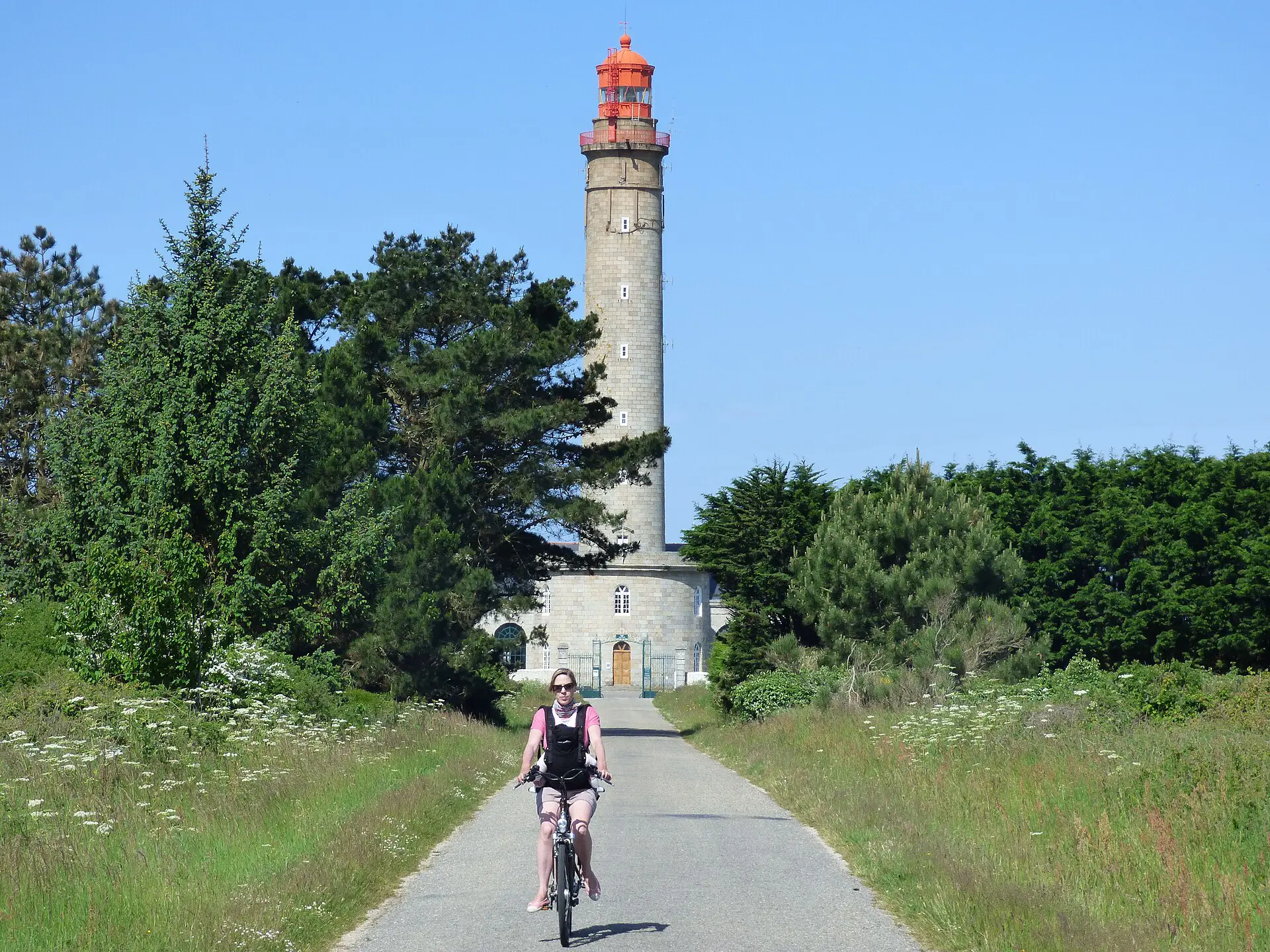
Goulphar lighthouse on Belle-Île-en-Mer
Goulphar lighthouse, Belle-Île-en-Mer - photo: Alexis Amarante, CC0 1.0, via Wikimedia Commons. See the original image .

Things to remember

Number

A dozen headlights

Morbihan has around ten main maritime lighthouses, as well as numerous other lights and beacons.

Belle-Île

3 headlights

Goulphar, les Poulains and Kerdonis form a natural triangle around the island.

Power

Goulphar

Perched 92 m above the sea, its light reaches 27 miles.

History

Port-Navalo

Saved from destruction in 1944 by the famous argument of the engineer Le Net.

Access

Easy

Several lighthouses are accessible by car or on foot, more easily than some of the lighthouses in Finistère.

Atmosphere

Lights

The light is often warmer at the end of the day, between the Gulf and the open Atlantic.

Map of Morbihan lighthouses

The map below will help you locate the lighthouses of Morbihan before planning your route. It immediately illustrates the geographical logic of the department: the three lighthouses on Belle-Île form a natural triangle around the island, The Quiberon peninsula is home to two other sites on the edge of the bay, and the rest of the coast stretches eastwards to the mouth of the Vilaine.

In practice, you can't tour the Morbihan in a single loop. The easiest way is to spend a whole day on Belle-Île and half a day on the Quiberon peninsula, then follow the east coast towards Port-Navalo and Pen Lan.

The interactive map loads only when clicked, to keep the page speeding up.

The lighthouses of Belle-Île-en-Mer

Belle-Île-en-Mer is the largest island in Brittany. It has three major lighthouses: Goulphar on the west coast, Les Poulains to the north-west and Kerdonis to the east. These three sites can be reached by bike.

Goulphar lighthouse in Bangor, Belle-Île-en-Mer
Goulphar lighthouse, Bangor - photo: Alexis Amarante, CC0 1.0, via Wikimedia Commons. See the original image .

Goulphar lighthouse - Belle-Île-en-Mer

Commissioned in 1835 to designs by Augustin Fresnel in Bangor, the Goulphar lighthouse is a double 52.25 m granite tower, perched 92 m above the sea. Its 247 steps lead up to an unobstructed view of up to 27 miles. It is one of the most powerful lighthouses in Brittany.

It now houses a museum dedicated to lighthouses and beacons, and serves as a remote control centre for the other lighthouses in Morbihan. Pen Lan has been remotely controlled since 1995. The Goulphar lighthouse is also at the heart of a current heritage issue: In Bangor, an association was set up in 2025 to bring together residents of Bellil who are concerned about the future of the building and its surroundings. Find out more about the Goulphare association.

Poulains lighthouse at the north-western tip of Belle-Île-en-Mer
Poulains lighthouse, Belle-Île-en-Mer - photo: Remi Jouan, CC BY-SA 3.0, via Wikimedia Commons. See the original image .

Poulains lighthouse - Belle-Île-en-Mer

Inaugurated on 15 September 1868 at the north-western tip of Belle-Île, this 18 m lighthouse is built on an islet that is naturally separated from the island at high tide. Since the installation of 32 m² of photovoltaic solar panels, it has been self-sufficient in energy and is now open to the public.

At the Pointe des Poulains, the fort acquired by Sarah Bernhardt in 1894 was one of her havens in Bellon. For nearly thirty years, until 1922, she spent her summers there and welcomed many of the leading figures of her time, facing one of Belle-Île's most stunning seascapes.

Kerdonis lighthouse at the eastern tip of Belle-Île-en-Mer
Kerdonis lighthouse, Belle-Île-en-Mer - photo: Remi Jouan, CC BY-SA 3.0, via Wikimedia Commons. See the original image .

Kerdonis lighthouse - Belle-Île-en-Mer

Brought into service on 1 June 1879 at the eastern tip of Belle-Île, this lighthouse is linked to one of the most famous acts of courage in the history of Breton lighthouse keepers. On 18 April 1911, lighthouse keeper Alexandre Matelot died suddenly while on duty. His wife and children operated the partially dismantled mechanism by hand throughout the night - without training, without respite, until the morning.

This act was hailed by the national and international press. The chansonnier Théodore Botrel, who celebrated maritime Brittany with a documentary precision that was rare at the time, immortalised it in a song.

Quiberon peninsula and bay

The Quiberon peninsula and the bay around it are home to three lighthouses of very different characters. Port-Maria closes off the Côte Sauvage to the south. Port-Haliguen, now deactivated, faces Carnac from the harbour. La Teignouse, offshore, has marked the passage between Quiberon and the island of Houat since 1845.

Port-Maria lighthouse to the south of the Quiberon peninsula
Port-Maria lighthouse, Quiberon - photo: Remi Jouan, CC BY-SA 3.0, via Wikimedia Commons. See the original image .

Port-Maria lighthouse - Quiberon

Built in 1892 to the south of the Quiberon peninsula, this 24.8 m white cylindrical tower with a green lantern marks the end of the Côte Sauvage. It is now surrounded by the town's buildings and cannot be visited.

The lighthouse has long accompanied the transformations of the port. It has lived through the era of fishing, then that of maritime links and a more lively, traveller-oriented district. This is undoubtedly what gives it its special place in the Quiberon landscape today.

Port-Haliguen lighthouse at sunrise
Port-Haliguen lighthouse, Quiberon - photography © Loïc Delplanque, all rights reserved.

Port-Haliguen lighthouse - Quiberon

Brought into service in 1856 at the entrance to Quiberon Bay opposite Carnac, this 11.30 m white cylindrical tower with a green lantern guided sailors for more than 110 years before being decommissioned in the 1970s. Its caretaker's house now houses a cultural centre. The lighthouse can be visited during the Heritage Days.

I had the chance to see it up close in September 2025, during a week-long exhibition at the Maison du Phare. At the time, a resident of the peninsula told me this phrase, which says a lot about Quiberon: «In Quiberon, you don't just pass through, you come here». It's all there: the discreet charm of a secluded spot, rich in well-guarded treasures such as the Port-Haliguen lighthouse.

La Teignouse lighthouse at sea, between Quiberon and Houat
Teignouse lighthouse - photo : Pline, CC BY-SA 3.0, via Wikimedia Commons. See the original image .

Teignouse lighthouse - Off Quiberon

La Teignouse is an obvious part of the Quiberon skyline. Standing in the sea as an extension of Le Conguel, this lighthouse, commissioned in 1845, has watched over the exit to the bay for almost two centuries.

Behind this familiar silhouette lies an innovative lighthouse, which served as a pilot light in 1892 before being automated in 1983. It's not open to the public, but it's an integral part of the peninsula's maritime identity.

Gulf of Morbihan, east coast and islands

This area is the most geographically dispersed, but it includes some of the lighthouses with the deepest roots in local history. Port-Navalo has been guarding the entrance to the Gulf since 1895. Pen Lan marks the mouth of the Vilaine. Kernevest, extinguished in 2012, preserves the memory of forty years of female presence. The Grands Cardinaux keep watch off Hoëdic.
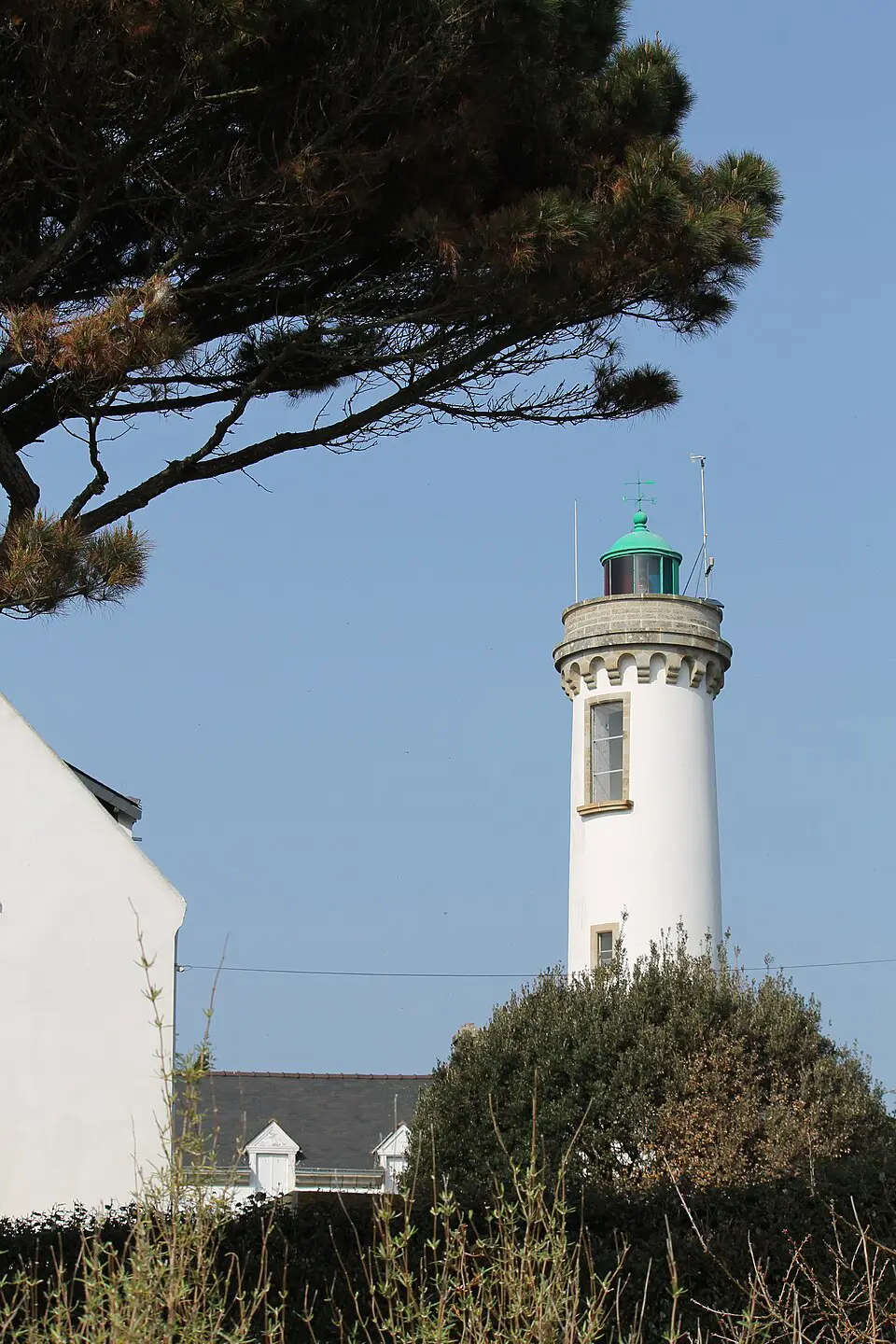
Port-Navalo lighthouse at the entrance to the Gulf of Morbihan
Port-Navalo lighthouse, Arzon - photo: Stéphane Batigne, CC BY-SA 3.0, via Wikimedia Commons. See the original image .

Port-Navalo lighthouse - Arzon

Built in Arzon at the entrance to the Gulf of Morbihan, this 19 m cylindrical lighthouse was brought into service in 1895. In 1944, the occupying forces planned to dynamite it, as they had done with so many Breton lighthouses. It was the engineer Le Net who convinced them - with an argument whose force has not aged a day:

«Lighthouses belong to no one, for they serve to save the lives of sailors of all nations.»
- Le Net engineer, 1944

And the lighthouse is still there!

Pen Lan lighthouse at the mouth of the Vilaine river
Pen Lan lighthouse, Billiers - photo: CaptainHaddock (assumed), CC BY-SA 3.0, via Wikimedia Commons. See the original image .

Pen Lan lighthouse - Billiers

Built in 1882 and commissioned in 1888 at the mouth of the Vilaine, on the Pointe de Pen Lan in Billiers, This 17.93 m lighthouse has long marked the entrance to the estuary. Since 1955, it has emitted a light with two occultations every six seconds, before being automated in 1995 and then remotely controlled from the Goulphar lighthouse in Belle-Île-en-Mer.

The history of the lighthouse can also be told from a woman's perspective. Its last keeper, Eulalie Le Marchand, worked there until 1995, when the site was automated. She looked after the optics, made sure the light was working properly and kept an eye on a number of neighbouring beacons, including Kervoyal and Basse-Bertrand. This daily presence is a reminder that before automation, a lighthouse relied not only on technology, but also on constant human attention. It's a reminder of the end of the world, of a patient, precise and invisible profession that was so useful.

Kernevest lighthouse at Saint-Philibert
Kernevest lighthouse, Saint-Philibert - photo: Amaustan, CC BY-SA 3.0, via Wikimedia Commons. See the original image .

Kernevest lighthouse - Saint-Philibert

Built in 1855 in Saint-Philibert to guide ships towards La Trinité-sur-Mer, the Kernevest lighthouse stood at the entrance to the river at Crac'h before it was shut down in 2012, its horizon gradually closing in with the buildings and trees.

Anna Le Bail was the lighthouse keeper for forty years, from 1925 to 1965, continuing a long-standing family tradition. Her presence remains attached to the site, as a reminder of a time when this small lighthouse still lived to the rhythm of a daily vigil.

Grands Cardinaux lighthouse off Hoëdic
Grands Cardinaux lighthouse, off Hoëdic - photo: CC BY-SA 1.0, via Wikimedia Commons. See the original image .

Grands Cardinaux Lighthouse - Off Hoëdic

The Grands Cardinaux lighthouse, to the south-east of Hoëdic, marks the approach to Quiberon Bay. Classified as a historic monument in 2020, it also owes a great deal to the commitment of a local association that fought for its restoration and for this «Hoëdic lighthouse» to regain its rightful place in the maritime landscape.

Art photography in Brittany

See my artistic photographs of Brittany

Shipwrecks, forests, lighthouses, the coasts of Morbihan and Finistère... A selection of limited edition prints to bring these landscapes home.

Limited editions Signed prints Breton landscapes
See photos of Bretagne

Each print is numbered and comes with a certificate of authenticity. Framing available on request, free delivery.

Morbihan lighthouses in brief

This table summarises the main lighthouses in Morbihan, their area, access and what makes them unique.

HeadlightZoneHeightAccessVisitableWhat makes it unique
GoulpharBelle-Île52,25 mFerry + islandYes, museumDouble tower, 92 m above sea level
FoalsBelle-Île18 mFerry + islandYesSarah Bernhardt, 30 summers in the nearby fort
KerdonisBelle-ÎleLighthouseFerry + islandNoHeroic gesture by the Matelot family (1911)
Port-MariaQuiberon24,8 mRouteNoEnd of the Côte Sauvage
Port-HaliguenQuiberon11,30 mRouteJEPDeactivated, cultural centre in the house
TeignouseLarge Quiberon16,35 mCoast / ferry viewNoIn service since 1845
Port-NavaloMorbihan Gulf19 mRouteNoSaved in 1944 by the engineer Le Net
Pen LanMouth Vilaine17,93 mRouteNoRemote-controlled from Goulphar
KernevestSaint-Philibert~15 mRouteNoOff 2012, 40 years of caretaking
Grand CardinalsLarge Hoëdic27 mBoatNoHistoric Monument 2020

The heights and dates mentioned are given for information only and may be subject to slight variations depending on the historical sources available.

Practical info

Here are some guidelines for organising your lighthouse visits in Morbihan, depending on the area and the season.

ZoneAccessBest momentPhoto advice
Belle-Île-en-MerFerry from Quiberon (approx. 45-50 min)Spring, autumnGoulphar in low evening light
Quiberon peninsulaRouteAll year roundPort-Maria from the sea in winter
Gulf of Morbihan & east coastCar + GR 34 footpathsApril-SeptemberPort-Navalo at ebb tide
Offshore (Teignouse, Grands Cardinaux)Ferry or boatSummerFrom the bridge of the Quiberon-Belle-Île ferry

2-day itinerary - Morbihan lighthouses

A simple itinerary combining Belle-Île, Quiberon, the Gulf of Morbihan and the Vilaine estuary in two days.

Day 1 - Belle-Île-en-Mer

Take the first ferry from Quiberon (about a 50-minute crossing to Le Palais). Arrive at Le Palais and take the car or bike to the Goulphar lighthouse in Bangor. Spend the morning exploring the site, climbing the 247 steps and enjoying the view 92 m above the sea.

In the afternoon, head for the Pointe des Poulains to the north-west: the islet, the rocks and the natural foreground towards the lighthouse. At the end of the day, head east towards Kerdonis, where the golden light falls on the lighthouse at the tip of Belle-Île. Overnight on Belle-Île.

Day 2 - Quiberon, gulf and east coast

Return to the mainland by morning ferry. Morning tour of the Quiberon peninsula: Port-Maria lighthouse to the south, at the end of the Côte Sauvage, then Port-Haliguen lighthouse around the harbour.

Then on to the Gulf: Port-Navalo in the middle of the day, the Pointe d'Arzon and the whirlpools at the entrance to the Gulf at ebb tide. Finish at Pen Lan in Billiers in the late afternoon, with the evening light over the Vilaine estuary.

My most beautiful photographs of lighthouses

Some of these lighthouses are part of my photographic work. In my limited edition collection of photographs of Finistère , you will find the Tourelle des Perdrix, but also the Four lighthouse caught in the violence of the swell.

These photographs are available in limited edition of 30, signed and numbered with a certificate of authenticity. Framing is available on request, and delivery is free.
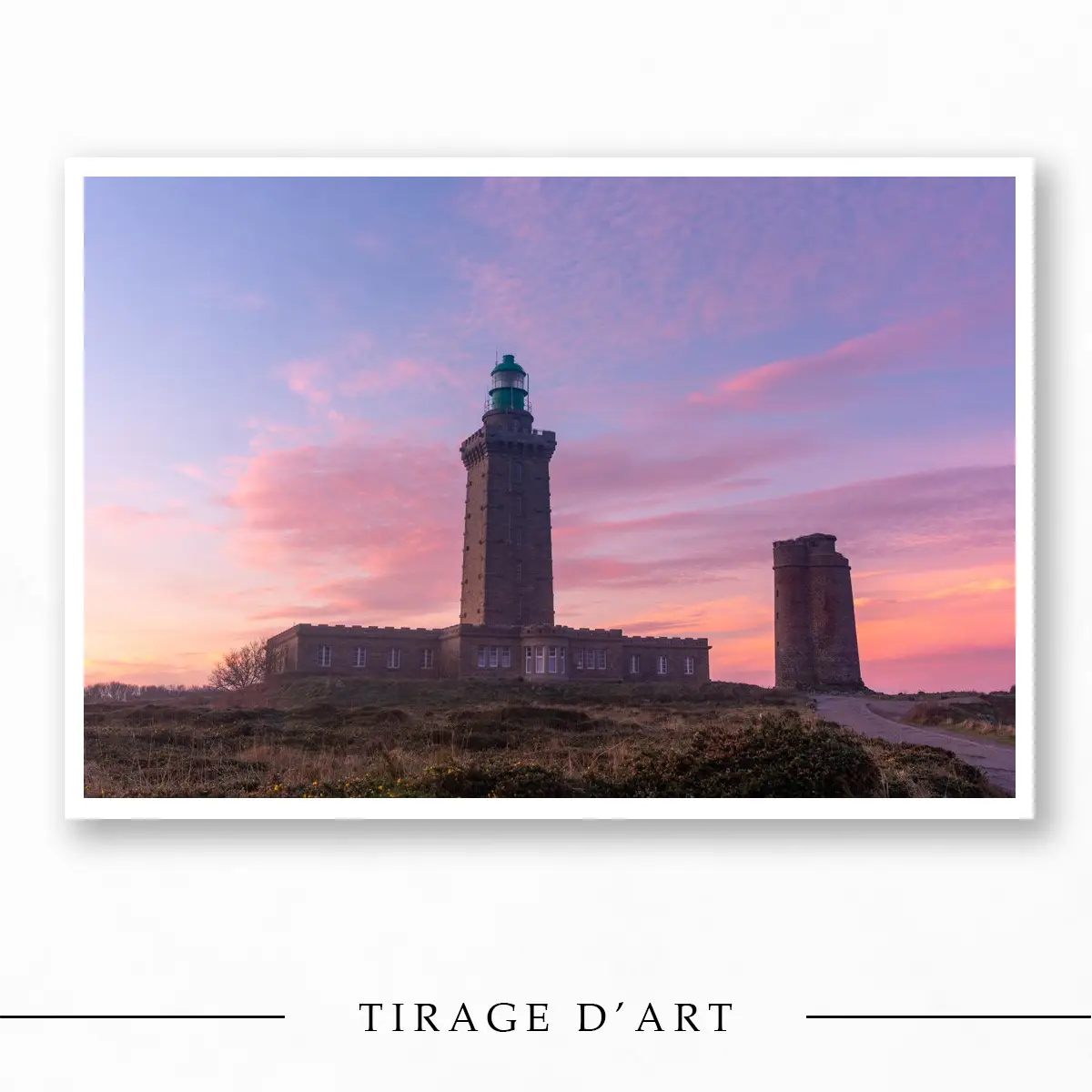
Art print of the Cap Fréhel lighthouse at sunrise

Cap Fréhel Lighthouse — limited edition art print.

Photograph of the Tourelle des Perdrix in Finistère

Tourelle des Perdrix — Limited edition art print.

Photograph of the Phare du Four lighthouse in a storm

Phare du Four — Limited edition black and white art print.

Storm surge of Justine in Le Conquet

Storm Justine — limited edition art print.

If you're fascinated by lighthouses in the middle of a storm, I invite you to discover my Storm guide to Brittany.

FAQ

How many lighthouses are there in Morbihan?

Morbihan has around ten main lighthouses. Belle-Île-en-Mer alone has three: Goulphar, les Poulains and Kerdonis.

Where can I find a map of Morbihan lighthouses?

The interactive map in this article locates all the main lighthouses in the département, from Belle-Île to the mouth of the Vilaine.

What is the most beautiful lighthouse in Morbihan?

Goulphar, in Belle-Île-en-Mer, is the most impressive with its double granite tower and its position 92 m above the sea. For photography, the Poulains offer an exceptional setting with their islet and rocks.

Can you visit the lighthouses in Morbihan?

Goulphar can be visited in season with its museography. Port-Haliguen is open during the Heritage Days. The other lighthouses in Morbihan are not open to the public, but are accessible from coastal paths.

Which Morbihan lighthouse to photograph first?

Goulphar for the unique architecture of its double tower. Les Poulains for its landscape and history. Port-Navalo for the light on the gulf at ebb tide.
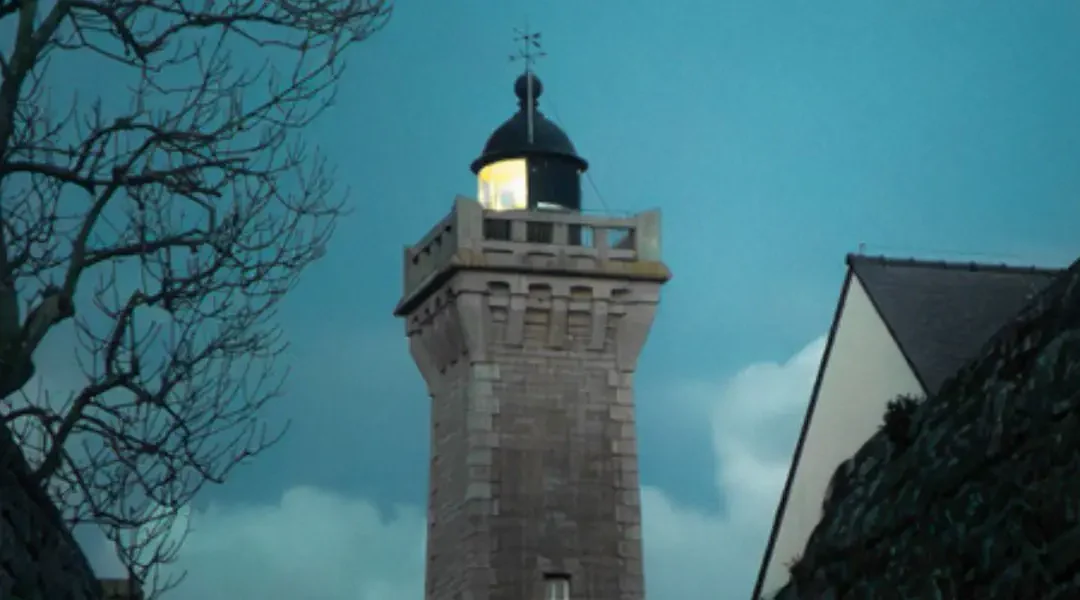
Lighthouses Finistère: complete guide 2026

Lighthouses Finistère: complete guide 2026

FINISTÈRE GUIDE

Lighthouses in Finistère: the most beautiful to see and visit

← Back to the complete guide to lighthouses in Brittany

Finistère is the French department with the most lighthouses. Ouessant alone has five, and many of these date from the 19th and early 20th centuries.

Le Créac'h, l'Île Vierge, La Jument, Saint-Mathieu or le Four are the names that come to mind first. But when you really get down to the coast, you'll also come across more discreet lighthouses, lighthouses at the tip, lighthouses in towns and lighthouses at sea, all of which give Finistère a unique density.

I've been photographing this coast for a long time. I've always seen these lighthouses as silent presences, immobile guardians watching over an indomitable force.

Things to remember

Number

56 headlights

Finistère is still the French department with the most.

Ushant

5 headlights

One island alone is exceptionally dense.

Records

Île Vierge & Créac'h

One has a range of 82.5 m, the other around 60 km.

Former

Stiff

Lit in 1700, it is one of the oldest still in operation.

Icon

The Mare

Jean Guichard's 1989 photograph made it world famous.

Atmosphere

Iroise Sea

This is what gives these silhouettes their tension and strength.

Map of lighthouses in Finistère

The map below will help you locate the main lighthouses in Finistère before planning your route. Above all, it shows the main areas of the department: Ushant, the north coast, the Pointe Saint-Mathieu, the Brest roadstead, the Raz de Sein and South Finistère.

In practical terms, it shows one thing straight away: you can't visit this département in one quick loop. The easiest way is to group the stages by sector and save a whole day for Ushant.

The interactive map loads only when clicked, to keep the page speeding up.

Ushant lighthouses

To start with, you need to go to Ouessant. It's the island with the most lighthouses, and it's also the one that best sums up the importance of the Iroise Sea in Brittany's maritime history.

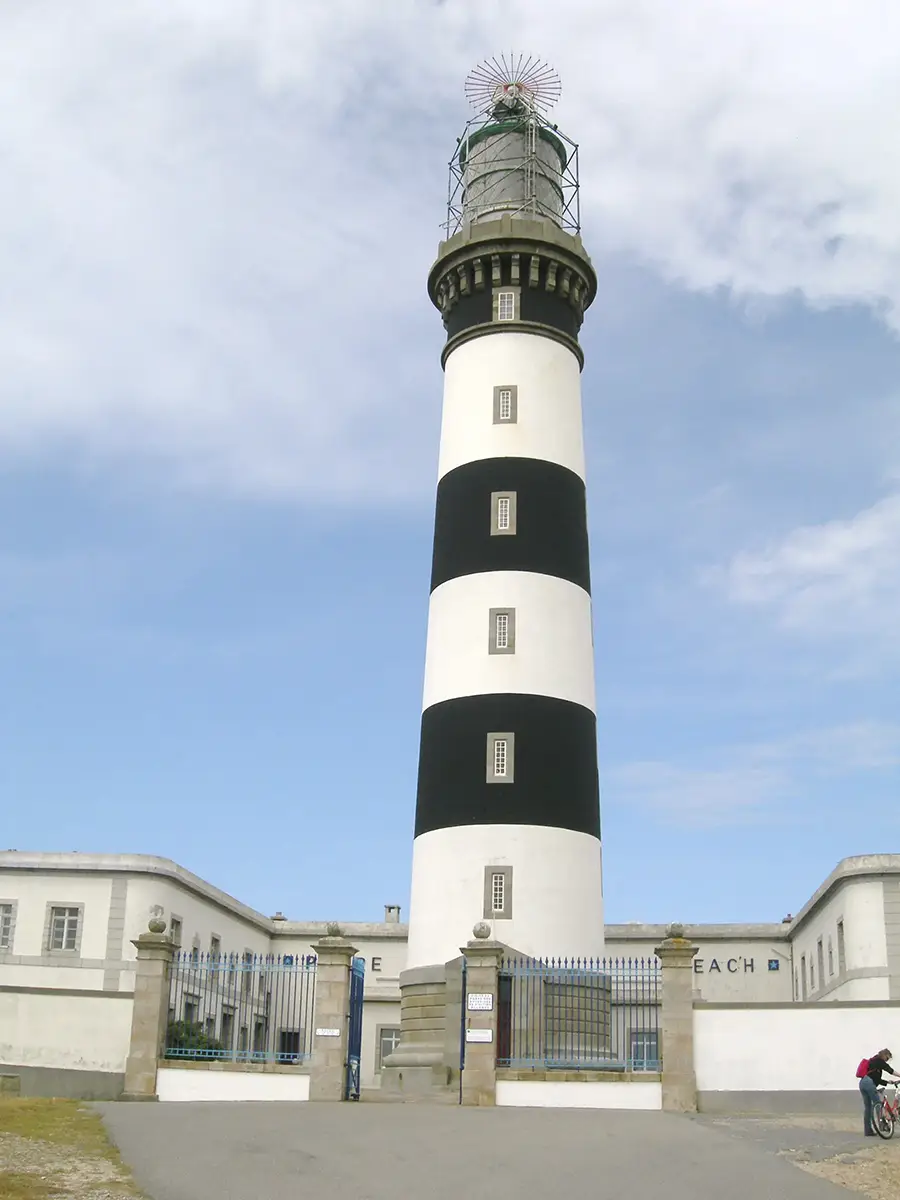
Créac'h lighthouse in Ushant
Créac'h lighthouse, Ushant - photo: Totodu74, CC BY-SA 3.0, via Wikimedia Commons. See the original image.

Créac'h lighthouse - Ushant

Built in 1863, this lighthouse with its black and white stripes is the most powerful in France. Its two white flashes every ten seconds can be seen from a distance of around 60km, and the old power station houses the Lighthouses and Beacons museum.

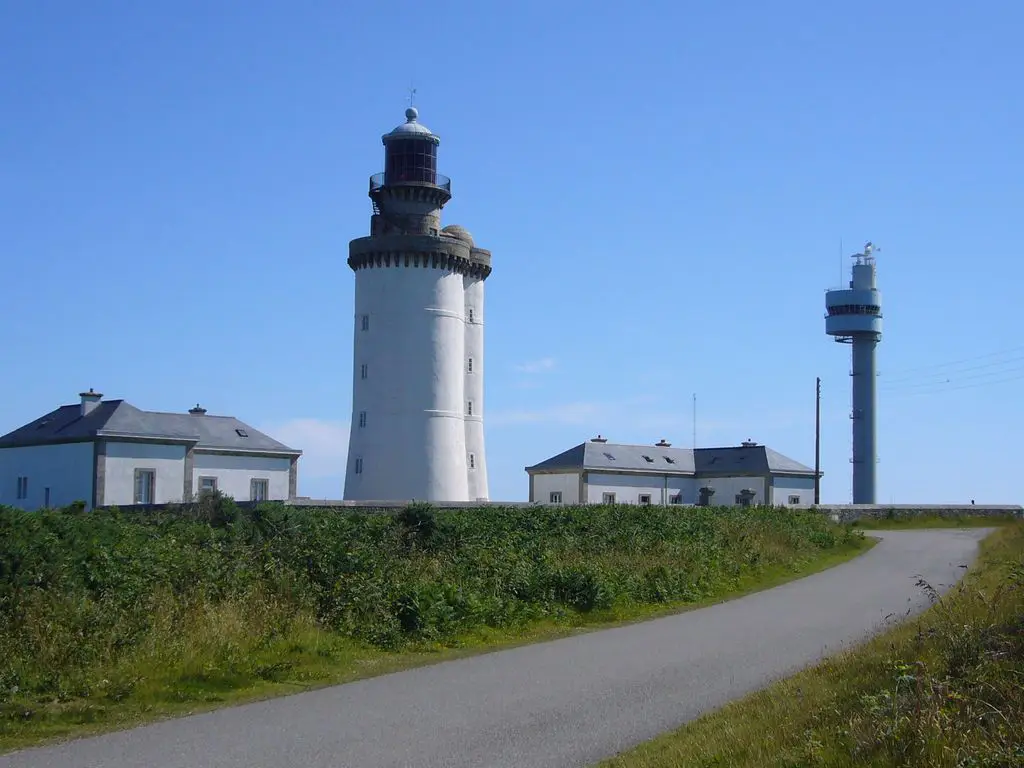
Stiff lighthouse on Ushant
Stiff lighthouse, Ushant - photo: Gzen92, CC BY-SA 4.0, via Wikimedia Commons. See the original image.

Stiff lighthouse - Ushant

Built by Vauban in 1695 and lit in 1700, it is the oldest lighthouse on Ushant. Its two adjoining towers offer a panoramic view of the island and the Iroise Sea.

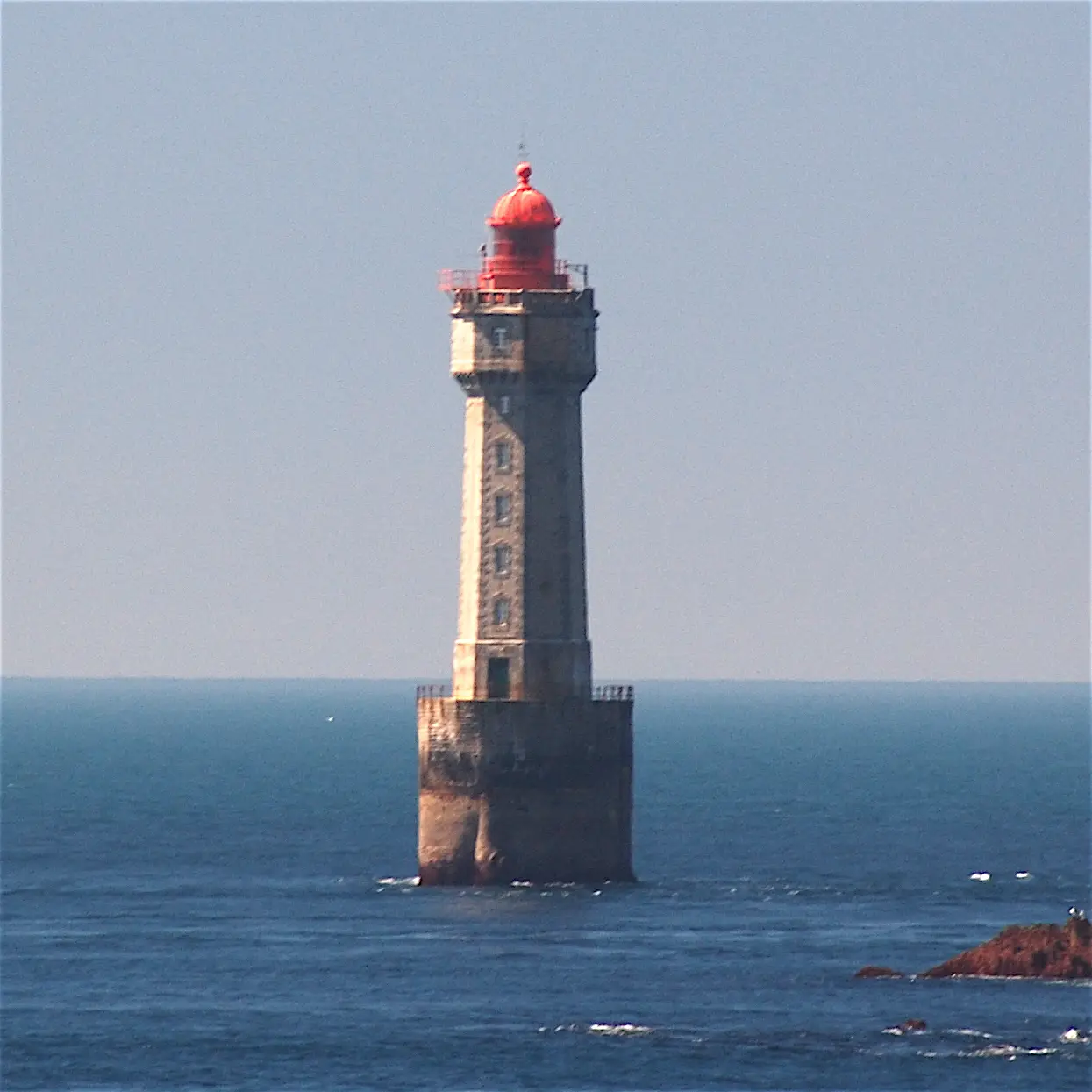
La Jument lighthouse off Ushant
La Jument lighthouse, Ushant - photo: Falken, CC BY-SA 3.0, via Wikimedia Commons. See the original image.

La Jument lighthouse - Ushant

Built between 1904 and 1911 thanks to a bequest of 400,000 francs from a Parisian benefactor, this lighthouse at sea became world-famous with Jean Guichard's photograph taken on 21 December 1989. Sensors on site measured a wave of 24.6 m in 2017-2018.

Kéréon lighthouse seen from Ushant
Kéréon lighthouse - photo: Julien Carnot, CC BY-SA 3.0, via Wikimedia Commons. See the original image.

Kéréon lighthouse - Ushant

Built between 1907 and 1916 in the Passage du Fromveur, it is nicknamed “the Palace” for its interior, with mosaics, inlaid parquet flooring and oak panelling. It owes this richness to the gift of Amicie Lebaudy.

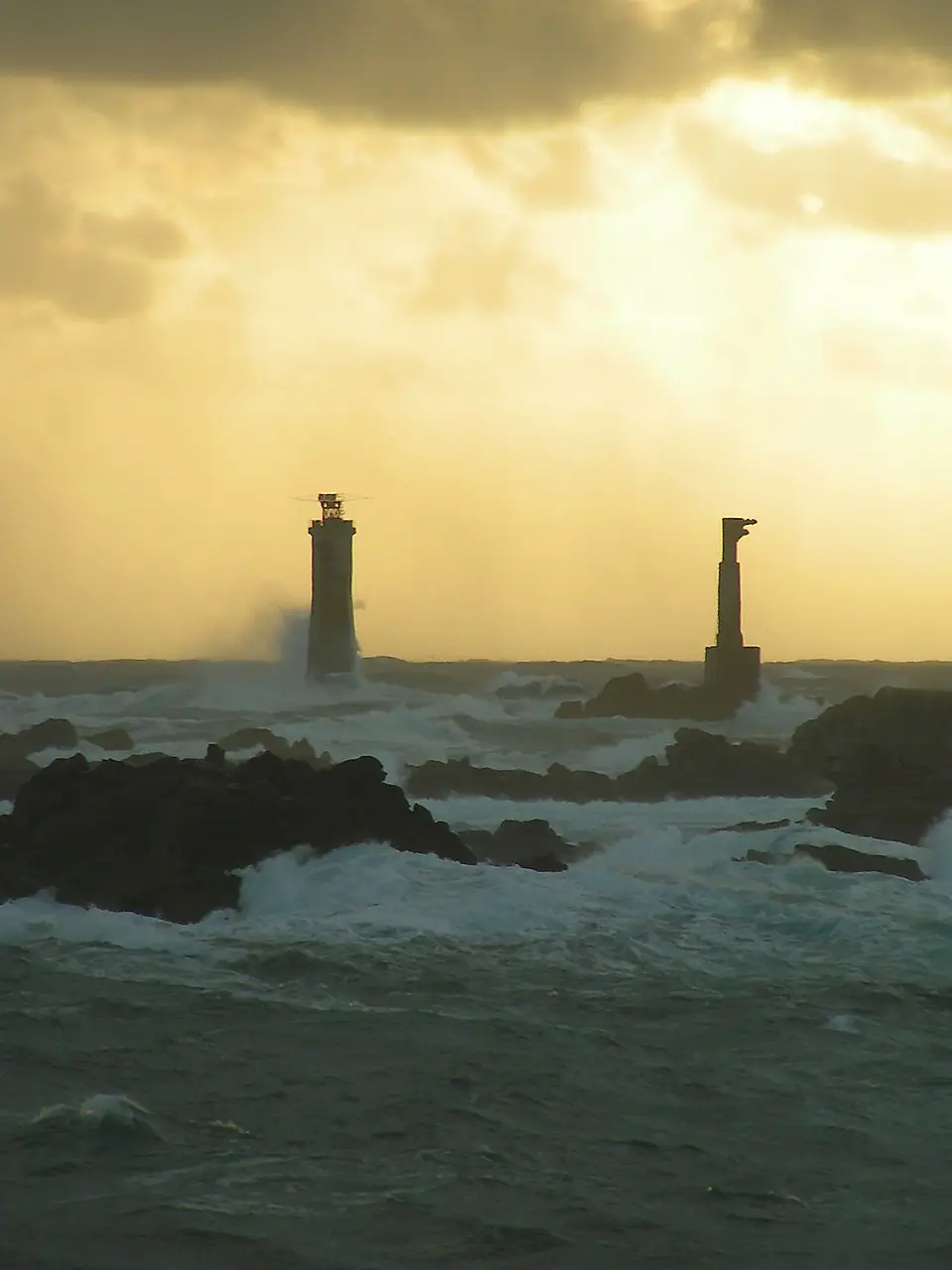
Nividic lighthouse on Ushant
Nividic lighthouse - photo: Samuel Lamotte d'Incamps, CC BY-SA 2.0 FR, via Wikimedia Commons. See the original image.

Nividic lighthouse - Ushant

Built between 1912 and 1936 on the Pointe de Pern, it is the only lighthouse in France to be linked to the coast by a cable car. The pylons can still be seen from the coastal path.

North coast

After Ushant, the north coast offers a series of lighthouses in a sector that is easier to navigate. This is also where you'll find Île Vierge, Finistère's record-breaking lighthouse.

Île Vierge lighthouse at Plouguerneau
Île Vierge lighthouse, Plouguerneau - photography © Loïc Delplanque, all rights reserved.

Île Vierge lighthouse

At 82.5 m, it is the highest ashlar lighthouse in Europe. According to tradition, the islet where it stands was first a Druid sanctuary, then a Franciscan convent in the 15th century.

Île Wrac'h lighthouse at Plouguerneau
Île Wrac'h lighthouse - photo: Yann Caradec, CC BY-SA 2.0, via Wikimedia Commons. See the original image.

Île Wrac'h lighthouse

Commissioned in 1845 in Plouguerneau, it is accessible on foot at low tide. Since 2006, the former guardians' house has been home to an artists' residence and exhibitions.
Pontusval lighthouse at Brignogan-Plages
Pontusval lighthouse - photo: Steffen Heilfort, CC BY-SA 3.0, via Wikimedia Commons. See the original image.

Pontusval lighthouse

Lit on 15 September 1869 in Brignogan-Plages after numerous shipwrecks, it has been listed as a Historic Monument since 2011. Its last caretaker, Marie-Paule Le Guen, lived there until her death in November 2023.

Roscoff lighthouse in the town centre
Roscoff lighthouse - photography © Loïc Delplanque, all rights reserved.

Roscoff lighthouse

Commissioned in 1934 in the heart of the town, it has been automated since 2002. The lighthouse is still manned and is an integral part of the urban fabric.

Brest and the Iroise Sea

Around Brest and on the Iroise Sea, the lighthouses are easier to fit into a short break. This is the right area for a first discovery if you want to see several sites without too much driving.

Saint-Mathieu lighthouse in the abbey ruins
Saint-Mathieu lighthouse - photography © Loïc Delplanque, all rights reserved.

Saint-Mathieu lighthouse

Commissioned on 15 June 1835 in the ruins of the Saint-Mathieu de Fine-Terre abbey, this 36-metre lighthouse has 163 steps and a range of 29 miles. It has been listed as a Historic Monument since 2011 and is open to the public every day in July and August.

Kermorvan lighthouse linked by its granite bridge
Kermorvan lighthouse - photography © Loïc Delplanque, all rights reserved.

Kermorvan lighthouse

Commissioned in 1849 at Le Conquet, this 20.35 m square lighthouse, linked to the land by a granite bridge, is the most westerly land-based lighthouse in France. It has been open to visitors since 2022.

Petit Minou lighthouse at the entrance to Brest harbour
Petit Minou lighthouse - photography © Loïc Delplanque, all rights reserved.

Petit Minou lighthouse

Lit in 1848 in Plouzané, it guides ships as they enter Brest harbour. Closed since 2024 for restoration, it received major heritage support in 2025.

Four lighthouse battered by swell
Phare du Four lighthouse - photography © Loïc Delplanque, all rights reserved.

Four lighthouse

Built between 1869 and 1874 off Porspoder, this lighthouse at sea has been listed as a Historic Monument since 2017. It is one of Finistère's best-known lighthouses for the breakers that hit its tower. From the coast, it's one of the best subjects for photography in heavy weather.

Its name may make you smile at first sight, but Petit Minou simply comes from the headland where it stands, at the entrance to Brest harbour. Here, “Minou” has nothing to do with a cat and refers to the Breton word for cat. min, the tip or the mouthpiece.

Pointe du Raz and South Finistère

The Raz de Sein and the south of the département round off the route. There are fewer lighthouses to visit, but several very impressive sites.

La Vieille lighthouse in the Raz de Sein
La Vieille lighthouse - photo: Bastenbas, CC BY-SA 4.0, via Wikimedia Commons. See the original image.

La Vieille lighthouse

Built between 1882 and 1887 on Gorlebella Rock in the heart of the Raz de Sein, it remained manned until 1995. Its last guards refused to take over when it was automated.

Portzic lighthouse in Brest
Portzic lighthouse - photo : Pline, CC BY-SA 3.0, via Wikimedia Commons. See the original image.

Portzic lighthouse

Lit on 1 January 1848 at the narrowest point of the Brest Narrows, this 35 m octagonal lighthouse is the closest to the city. Its semaphore has regulated maritime traffic in the harbour since 1987.

Perdrix turret at the entrance to the Loctudy channel
Tourelle des Perdrix - photography © Loïc Delplanque, all rights reserved.

Partridge Turret

Erected in 1918 at the entrance to the Loctudy and Île-Tudy channels, it is distinguished by its black and white checkerboard pattern. Threatened with destruction, it was saved thanks to local efforts.

The main lighthouses in Finistère in brief

A quick overview of the lighthouses not to be missed and how to approach them on site.

HeadlightZoneAccessVisitableWhat makes it unique
Créac'hUshantFerry + islandAdjacent museumThe most powerful in France, range approx. 60 km
StiffUshantFerry + islandYes, in seasonLit in 1700
The MareUshantSea / boat viewNoThe 1989 photo made her a global icon
KéréonUshantSea / boat viewNoInterior nicknamed «the Palace»
NividicUshantCoastal pathNoThe only cable car of its kind in France
Virgin IslandNorth coastShuttle / excursionYes, in seasonEurope's tallest ashlar lighthouse
Île Wrac'hNorth coastLow tideYesArtists in residence since 2006
PontusvalNorth coastRoad + footpathNoA long presence for Marie-Paule Le Guen
RoscoffNorth coastCity centreNoGuarded urban lighthouse
Saint-MathieuBrest / IroiseRouteYesHoused in the ruins of the abbey
KermorvanBrest / IroiseGranite bridgeYesThe most westerly land-based lighthouse in France
Little KittyBrest / IroiseRoad + footbridgeClosed for cateringHeritage work in progress
OvenBrest / IroiseView from PorspoderNoSpectacular breakers
La VieilleRaz de SeinSea / boat viewNoRefusal to change over during automation
PortzicBrestRouteNoActive semaphore in the harbour
Partridge TurretSouth FinistèreCoastal viewNoBlack and white checkerboard

Practical info

Here are some practical guidelines for organising your stopovers in the main areas of Finistère.

ZoneAccessPossible visits linked to lighthouses
UshantFerry from Le Conquet or Brest.Stiff lighthouse, open from 4 April 2026 to 1 November 2026; Musée des Phares et Balises at the foot of Créac'h, currently closed for works, with reopening planned for 2026.
North coastCar, then crossing or access depending on the site.Île Vierge, guided tour of the large lighthouse from March to October depending on the tides; Île Wrac'h, access on foot around low tide almost all year round, with exhibitions in July and August.
Brest / IroiseAn easy loop by car.Saint-Mathieu, open from March to January with daily opening in July-August; Kermorvan, open from April to early November with daily opening in July-August; Petit Minou, no visit to the lighthouse during the works, only the exterior.
Pointe du Raz & the south Finistère coastStages spaced further apart.La Vieille and Le Four lighthouses are not open to visitors, but can be seen from the coast or when out at sea; Portzic and Tourelle des Perdrix can be discovered from the coastal paths.

Exploring the lighthouses of Finistère? See also our guide to Morbihan lighthouses, You'll be able to compare the two Breton départements and enhance your coastal itinerary.

My most beautiful photographs of lighthouses

Some of these lighthouses are part of my photographic work. In my limited edition collection of photographs of Finistère, You'll find the Tourelle des Perdrix, as well as the Four lighthouse caught in the violence of the swell.

These photographs are available in limited edition of 30, signed and numbered with a certificate of authenticity. Framing is available on request, and delivery is free.

Art print of the Cap Fréhel lighthouse at sunrise

Cap Fréhel lighthouse - limited edition fine art print, photography © Loïc Delplanque.

Fine art photography of the Tourelle des Perdrix in Finistère

Tourelle des Perdrix lighthouse - limited edition fine art print, photography © Loïc Delplanque.

Black and white photograph of the Four lighthouse in the middle of a storm

Tempête sur le phare du Four - limited edition black and white fine art print, photography © Loïc Delplanque.

Giant wave from storm Justine at Le Conquet

Tempête Justine au Conquet - limited edition fine art print, photography © Loïc Delplanque.

If you're fascinated by lighthouses in the middle of a storm, I invite you to discover my complete guide to storms in Brittany The latest information: wave records, places to photograph and shooting tips.

FAQ

What is the highest lighthouse in Finistère?

The Île Vierge lighthouse, at 82.5 m.

Can you visit the Ushant lighthouses?

The Stiff can be visited in season, and the Créac'h can also be discovered via the Lighthouses and Beacons Museum. La Jument, Kéréon and Nividic are not open to the public.

Which lighthouse is the best to see in Finistère?

For a first discovery, the best place to start is Créac'h, Île Vierge, Saint-Mathieu and Le Four.

Which lighthouse to photograph in bad weather?

Le Four is a benchmark in Finistère. La Jument and La Vieille are also big names when the sea forms.

What is the oldest lighthouse still in operation in Finistère?

Le Stiff, lit in 1700.

Brittany lighthouses: history, map and photos by department

Brittany lighthouses: history, map and photos by department

FULL GUIDE

Lighthouses of Brittany: guide to the most beautiful lighthouses to visit

Brittany is home to over a third of France's lighthouses, covering some 2,700 km of coastline. This guide lists the most remarkable lighthouses in Finistère, Côtes-d'Armor, Morbihan and Ille-et-Vilaine - their history and the anecdotes that accompany them.

I've been photographing these coasts for years. Let me take you on a voyage of discovery of these giants of the seas.

Things to remember

Lighthouses in Brittany

1/3 of France's 148 leading lights

A density that is unique in Europe, concentrated along some 2,700 km of coastline.

Departments

29 - 22 - 56 - 35

Finistère, Côtes-d'Armor, Morbihan and Ille-et-Vilaine.

Records

Île Vierge & La Jument

Europe's tallest ashlar lighthouse, and one of the most famous lighthouse photos in the world.

Heritage

From the Stiff to La Jument

From Brittany's oldest working lighthouse to the giants of the Iroise Sea.

Map of lighthouses in Brittany

The map below shows the main lighthouses in Brittany. Click on the image to display the interactive map without leaving this page and prepare your own lighthouse tour. lighthouse route.

First click on the image to load the Google Maps map, then zoom in and explore the lighthouses directly from this page.


This interactive map shows the main lighthouses in Brittany, from Finistère to Côtes-d'Armor, via Morbihan and Ille-et-Vilaine. You can see the location of each lighthouse at a glance, making it easier to plan your itinerary along the lighthouse route along the Brittany coastline.

Lighthouses in Finistère

With 56 lighthouses, including 14 listed as historic monuments, Finistère is the French department with the most. Ouessant alone is home to five. Most were built between 1830 and the beginning of the 20th century.e century, following the invention of the Fresnel lens, which transformed navigation in the Iroise Sea.

Créac'h lighthouse on Ushant at dusk
Créac'h lighthouse, Ushant - photo: Totodu74, CC BY-SA 3.0, via Wikimedia Commons. See the original image.

Créac'h lighthouse - Ushant

Its two white flashes every 10 seconds remain visible for 60 km - the most powerful lighthouse in France, and for a long time the most powerful in the world. The old power station at its foot houses the Musée des Phares et Balises, One of the largest collections of Fresnel lenses in Europe.

Île Vierge lighthouse, a large stone tower overlooking the sea
Île Vierge lighthouse, Plouguerneau - photography © Loïc Delplanque, all rights reserved.

Île Vierge lighthouse

At 82.5 metres, it is the highest ashlar lighthouse in Europe. The islet is thought to have been a Druid sanctuary before becoming the site of a Franciscan convent in the 15th century. Its 397 spiral steps lead up to a circular space entirely clad in stone.’opaline Saint-Gobain.

La Jument lighthouse surrounded by waves off Ushant
La Jument lighthouse, Ushant - photo: Falken, CC BY-SA 3.0, via Wikimedia Commons. See the original image.

La Jument lighthouse - Ushant

Built between 1904 and 1911 thanks to a bequest from a Parisian grateful to the lighthouses for saving him from shipwreck, it has become one of the most famous images in maritime photography. On 21 December 1989, Jean Guichard's photo of the lighthouse keeper facing a giant wave went around the world.

The lighthouses of Côtes-d'Armor

The Pink Granite Coast and the Bréhat archipelago give the lighthouses of the Côtes-d'Armor an instantly recognisable visual identity. The local stone, warm-toned granite, is an integral part of the lighthouse architecture.

Mean Ruz lighthouse on the pink granite rocks of Ploumanac'h
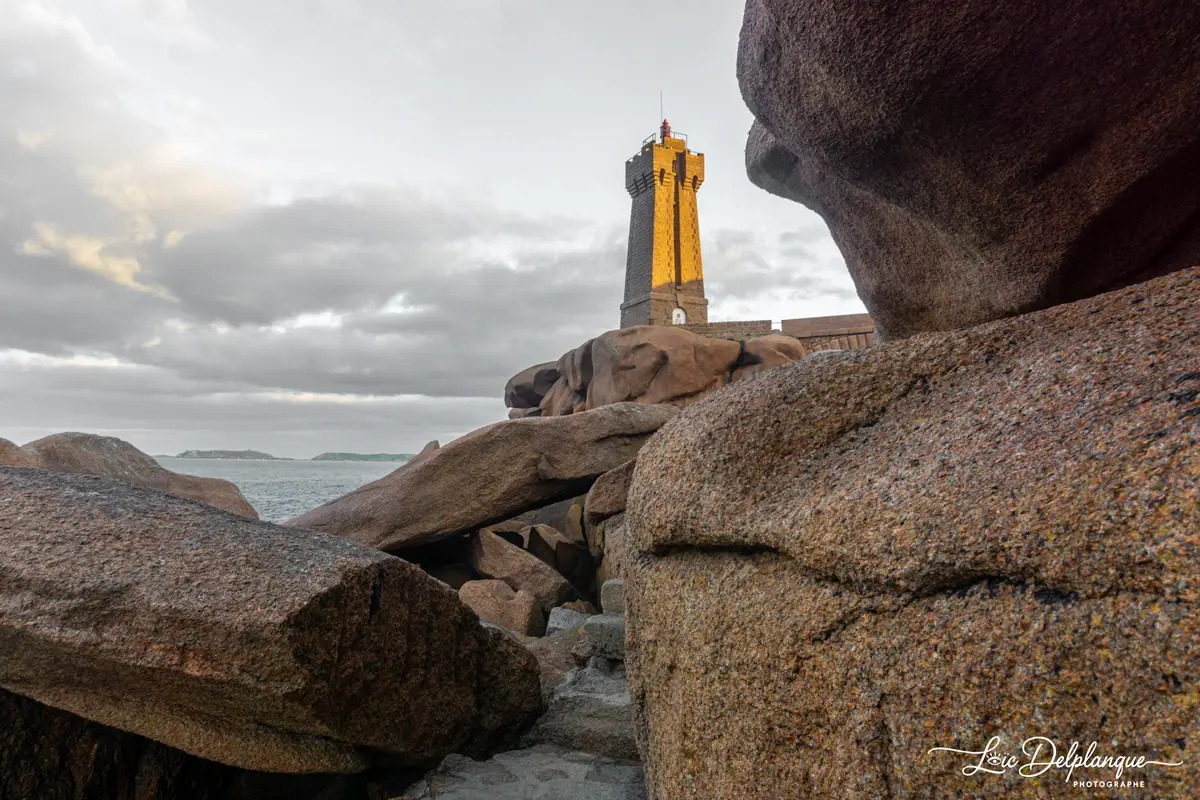
Mean Ruz lighthouse, Ploumanac'h - photography © Loïc Delplanque, all rights reserved.

Mean Ruz lighthouse - Perros-Guirec

Built of pink granite from La Clarté and lit in 1948, it replaces the original 1860 fire, blown up by German troops. Its interior mosaics are the work of Rennes mosaicist Isidore Odorico.

Cap Fréhel lighthouse dominating the cliffs of Côtes-d'Armor
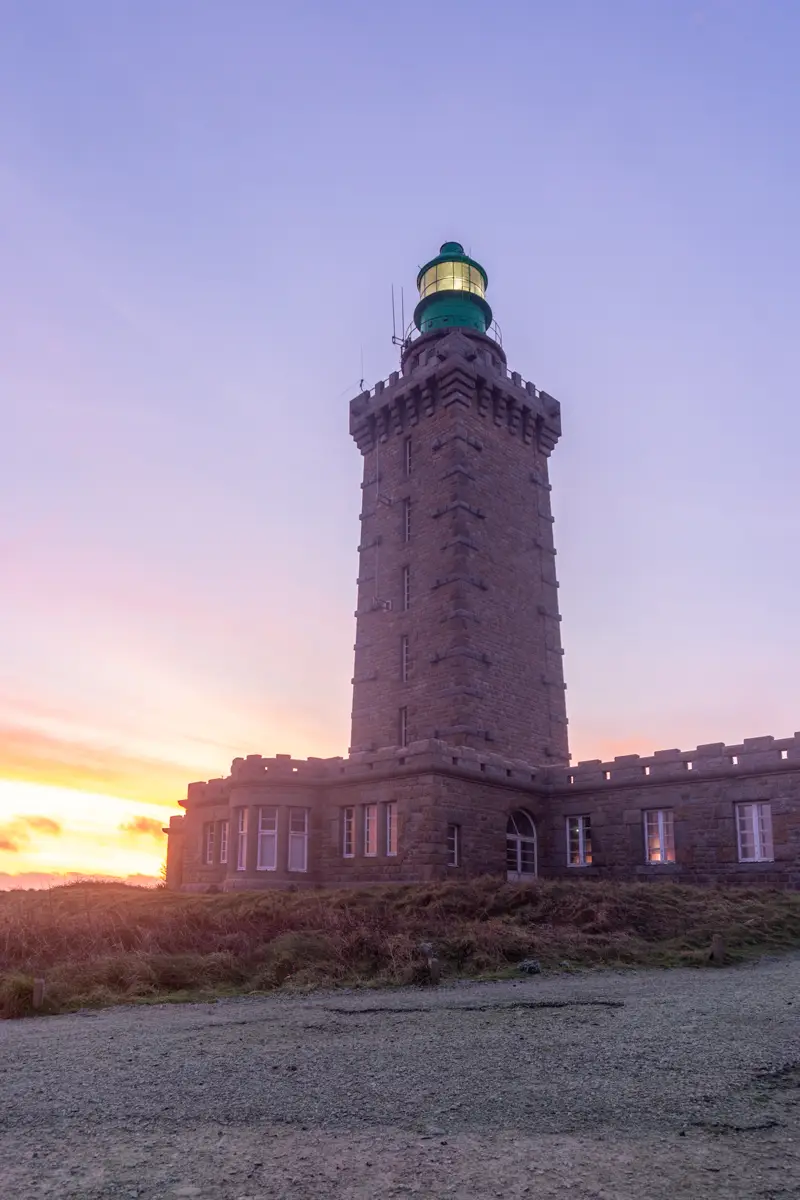
Cap Fréhel lighthouse - photography © Loïc Delplanque, all rights reserved.

Cap Fréhel lighthouse

Three lighthouses have stood on this promontory since 1702. The current lighthouse, lit in 1950 after the destruction of the previous one, is a listed historic monument. It was the last guarded lighthouse in France until 2019.

Les Héaux de Bréhat lighthouse on an offshore reef
Les Héaux de Bréhat lighthouse - photo: Pilot’22, CC BY-SA 3.0, via Wikimedia Commons. See the original image.

Les Héaux de Bréhat lighthouse

Designed by Léonce Reynaud and lit in 1840 on the Épées de Tréguier reefs, it is the second oldest French lighthouse on the high seas. Partially blown up in 1944, it was rebuilt and raised one storey.

Lighthouses of Morbihan

Belle-Île-en-Mer is home to the Morbihan's best-known lighthouses, starting with Goulphar and Les Poulains. But the department also boasts Port-Navalo at the entrance to the Gulf, the Grands Cardinaux off Hoëdic, and Pen Lan at the mouth of the Vilaine.

Poulains lighthouse on a rocky promontory in Belle-Île-en-Mer
Poulains lighthouse, Belle-Île-en-Mer - photo: Remi Jouan, CC BY-SA 3.0, via Wikimedia Commons. See the original image.

Poulains lighthouse - Belle-Île-en-Mer

Inaugurated in 1868 at the north-western tip of Belle-Île, on an islet inaccessible at high tide, it owes some of its fame to Sarah Bernhardt. At around 18 m high, it is now open to the public and runs on solar energy.

Goulphar lighthouse overlooking the south coast of Belle-Île-en-Mer
Goulphar lighthouse, Bangor - photo: Alexis Amarante, CC0 1.0, via Wikimedia Commons. See the original image.

Goulphar lighthouse - Belle-Île-en-Mer

This 52.25 m lighthouse has dominated the south coast of the island since 1836. It can be visited in summer and is used as a remote control centre for navigational aids in Morbihan. Despite its listed status, the lighthouse is falling into disrepair, prompting the creation of the association Grand Phare watchmen.

Port-Navalo lighthouse surrounded by pine trees at the entrance to the Gulf of Morbihan
Port-Navalo lighthouse, Arzon - photo: Stéphane Batigne, CC BY-SA 3.0, via Wikimedia Commons. See the original image.

Port-Navalo lighthouse - Arzon

This 19 m cylindrical lighthouse, built in 1895, was almost blown up in 1944. The engineer Le Net saved it with a famous phrase: «Lighthouses belong to no one, for they serve to spare the lives of sailors of all nations».»

The lighthouses of Ille-et-Vilaine

From the Bay of Mont-Saint-Michel to Saint-Malo, Ille-et-Vilaine has few lighthouses, but they all play a key role on one of Europe's busiest shipping routes.

Grand Jardin lighthouse on a rock off the coast of Saint-Malo
Grand Jardin lighthouse, Saint-Malo - photo: Unukorno, CC BY 4.0, via Wikimedia Commons. See the original image.

Grand Jardin lighthouse - Saint-Malo

Standing on a rock off the Rance estuary, this 32.71 m lighthouse, commissioned in 1868 and rebuilt after 1944, marks the approach to Saint-Malo amid the shallows. Its double red light can be seen for almost 17 miles.

Pierre-de-Herpin lighthouse seen from the Pointe du Grouin
Pierre-de-Herpin lighthouse, off Cancale - photo: Alan Hughes, CC BY-SA 3.0, via Wikimedia Commons. See the original image.

Pierre-de-Herpin lighthouse - Pointe du Grouin

Commissioned in 1882 on a rock off the Pointe du Grouin, this 24 m lighthouse marks the entrance to the Bay of Mont-Saint-Michel and the passageway to the Channel Islands. Its base can be seen at low tide.
Rochebonne lighthouse overlooking the beach and rooftops of Saint-Malo
Rochebonne lighthouse, Paramé - photo: JGS25, CC BY-SA 4.0, via Wikimedia Commons. See the original image.

Rochebonne lighthouse - Saint-Malo

Lit in 1868, this 19.90 m square tower forms, with the Grand Jardin, the alignment of the channel of the Grande Porte. Partially destroyed in 1944, it was rebuilt and relit in 1951.

The route of Brittany's lighthouses

In just a few days, you can follow a veritable lighthouse route, from the tip of Finistère to the ramparts of Saint-Malo. The idea is not to see everything, but to choose a few emblematic stops, both on the mainland and on the islands.

Finistère & Mer d'Iroise

  • Pointe Saint-Mathieu - Lighthouse in the ruins of a medieval abbey, facing the Iroise Sea.
  • Ushant - Two days minimum by bike: Créac'h, Stiff, Nividic, La Jument and Kéréon.
  • Virgin Island - The highest lighthouse in Europe, accessible by shuttle from Lilia or Aber Wrac'h.

North coast & islands

  • Mean Ruz & Cap Fréhel - Two days on the GR 34, between pink granite chaos and cliffs.
  • Belle-Île-en-Mer - A day's cycling from Poulains to Goulphar along the wild coast.
  • Saint-Malo & Pointe du Grouin - Grand Jardin can be seen from the ramparts, and Pierre-de-Herpin from the headland.

Before each stage, check the tide times and coefficients: some paths, landing stages and car parks depend directly on the water level.

Limited editions - Brittany lighthouses

These four lighthouses are part of my collection of limited edition art prints - 30 signed and numbered copies on Hahnemühle paper with certificate of authenticity.

Art print of the Cap Fréhel lighthouse at sunrise

Cap Fréhel lighthouse - limited edition fine art print, photography © Loïc Delplanque.

Fine art photography of the Tourelle des Perdrix in Finistère

Tourelle des Perdrix lighthouse - limited edition fine art print, photography © Loïc Delplanque.

Black and white photograph of the Four lighthouse in the middle of a storm

Tempête sur le phare du Four - limited edition black and white fine art print, photography © Loïc Delplanque.

Giant wave from storm Justine at Le Conquet

Tempête Justine au Conquet - limited edition fine art print, photography © Loïc Delplanque.

If you're fascinated by lighthouses in the middle of a storm, I invite you to discover my complete dossier on lighthouses in the middle of a storm. storms in Brittany The latest information: wave records, places to photograph and shooting tips.

Emblematic lighthouses by department

An overview of the lighthouses not to be missed if you're planning a photographic trip to Brittany.

HeadlightDepartmentAccessVisitableWhat makes it unique
Créac'hFinistère (29)Ushant FerryAdjacent museumOne of the most powerful lighthouses in Europe (range ~60 km).
Virgin IslandFinistère (29)Boat, Aber Wrac'hYes, in seasonEurope's tallest ashlar lighthouse.
Cap FréhelCôtes-d'Armor (22)Car, GR 34Yes (July-August)France's last remaining lighthouse until 2019.
Mean RuzCôtes-d'Armor (22)GR 34, Ploumanac'hOutdoor freePink granite and Odorico mosaics.
FoalsMorbihan (56)Pied, Belle-ÎleYesSarah Bernhardt - lighthouse now powered by solar energy.
Pierre-de-HerpinIlle-et-Vilaine (35)View from the Pointe du GrouinNoGuards the entrance to the bay of Mont-Saint-Michel.

To find out more, you can also discover how I design a limited edition fine art photo print, from the choice of paper to framing.

FAQ

What is the highest lighthouse in Brittany?

The Île Vierge lighthouse at Plouguerneau in Finistère stands 82.5 metres high. It is the highest lighthouse in Europe and the highest ashlar lighthouse in the world. You have to climb 397 steps to reach the lantern.

Can you visit the Ushant lighthouses?

The Stiff lighthouse (1695, designed by Vauban) is open to the public during the season. Le Créac'h is accessible via its Lighthouses and Beacons Museum. La Jument, Kéréon and Nividic are lighthouses at sea that are not accessible - they can be seen from coastal paths or by boat.

Which Breton department has the most lighthouses?

Finistère, with 56 lighthouses - the highest concentration of maritime sentinels in the world. The Iroise Sea is one of the most dangerous and busiest shipping areas on the planet, which historically justifies this exceptional density.

Can you sleep in a Breton lighthouse?

Yes, the Kerbel lighthouse in Riantec (Morbihan) has been converted into a studio apartment perched 25 metres high. The lighthouse keeper's house on Île Vierge (Finistère) offers an eco-cottage facing the ocean. 

The Unmissable Legends of the Forest of Brocéliande

The Unmissable Legends of the Forest of Brocéliande

Key points to remember: Brocéliande is the setting for the Arthurian cycle, where the stories of Merlin, Viviane and Morgane have shaped the cultural identity of this Breton forest. These medieval legends continue to permeate the collective imagination, lending a unique mythological dimension to the Paimpont massif.

Brocéliande and its legends: Merlin, Viviane and Morgane

Merlin imprisoned by Viviane, Lancelot raised under water, Morgane which traps unfaithful knights: the Brocéliande forest home to the most famous Arthurian legends. You'll discover who these characters are, their stories of love and betrayal, and how they became embedded in the real-life sites of the Paimpont massif.

To prepare your visit with the GPS coordinates for each location, consult my guide to the Brocéliande forest.

Merlin imprisoned: the tragic end of the enchanter

Merlin meeting Viviane near the Barenton fountain. The soothsayer falls madly in love with the young fairy. She agrees to become his companion, but on one condition: that he teach her all his magical secrets.

Merlin hesitates. He knows what awaits him. His visions have already shown him his own destiny. But love is stronger than reason. He reveals to Viviane the ultimate spell: how to hold a man forever.

The fairy waits for the right moment. One day, when Merlin had fallen asleep in the forest, Viviane trace nine magic circles around him and says nine enchanted phrases (Wikimini - Fée Viviane). The enchanter wakes up a prisoner. A prison without bars, made entirely of air and magic. He can never get out.

According to some versions, Viviane immediately regretted what she had done. She didn't believe the spell would really work. According to others, she wanted to keep Merlin for her alone until the end of time. The two lovers remain together in this invisible prison, separated from the world but reunited for eternity.

The King Arthur loses its advisor. Without Merlin , the Round Table is faltering. The decline of Camelot start.

Viviane and the education of Lancelot: forging the perfect knight

Viviane is not just Merlin's lover. She plays a central role in another story: the education of Lancelot du Lac (Wikipedia - Fée Viviane).

The young Lancelot is the son of King Ban of Benoïc. When his father dies and his kingdom falls, the baby is taken in by the Lady of the Lake. Viviane takes her to his palace under the waters of the'Comper pond. She decides to make him the perfect knight.

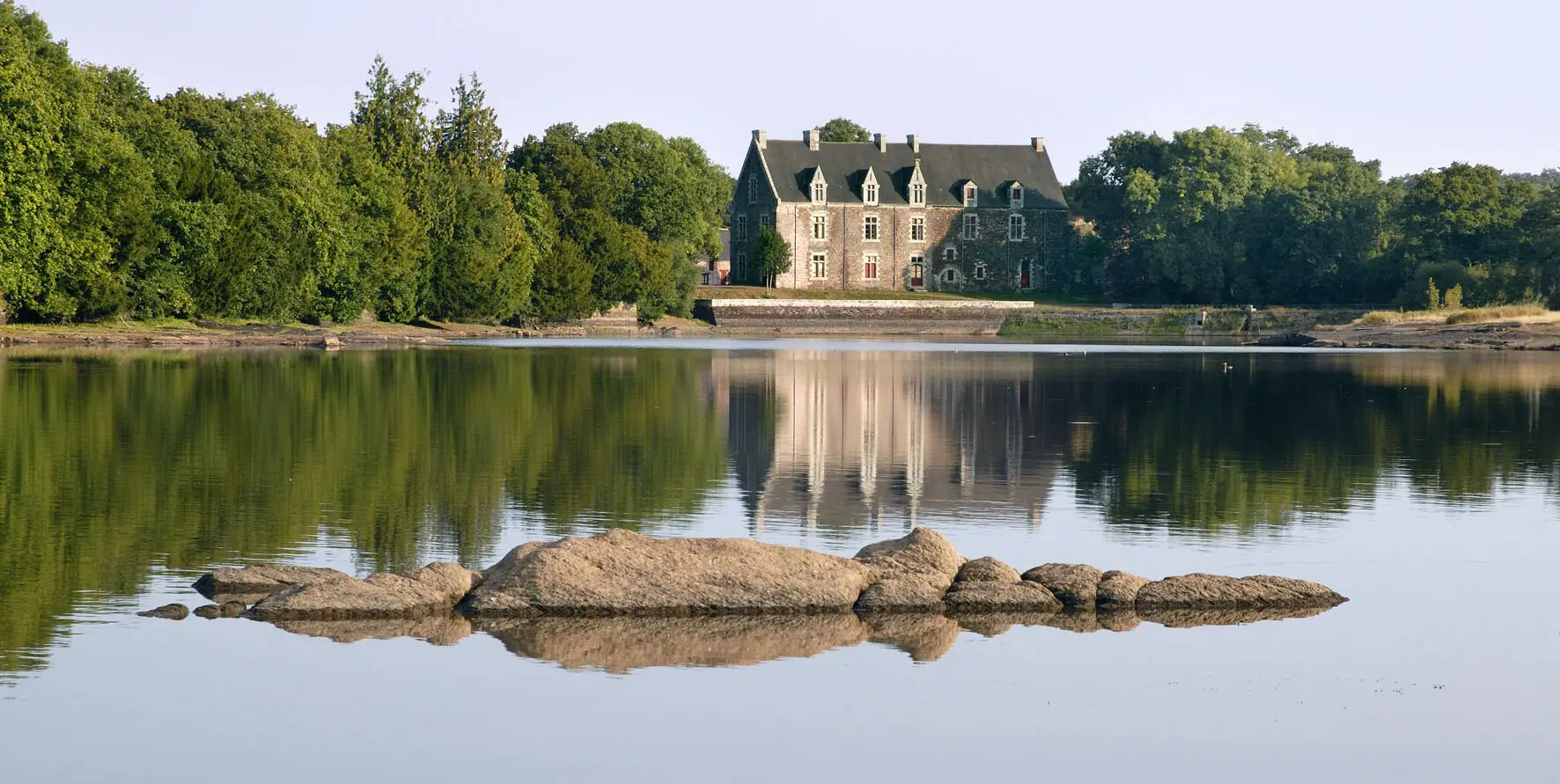
Château de Comper Brocéliande Etang Viviane Crystal Palace Dame du Lac
The Château de Comper and its pond where, according to legend, the crystal palace of Viviane, the Lady of the Lake, is hidden. Photo : Centre de l'Imaginaire Arthurien, CC BY-SA

The child grows up cut off from the world of men. Viviane teaches him:

  • Hunting and sword fighting
  • Music and the courtly arts
  • Courtesy and good manners
  • Letters and wisdom
  • Courage and nobility of spirit

Lancelot was unaware of his royal origins throughout his childhood.

When he reaches adulthood, Viviane deems him ready. She leads him to Camelot to be knighted by the king Arthur. Lancelot joins the Round Table and quickly became the most famous of all the knights. His loyalty to the Queen Guenièvre will be legendary - the very loyalty that will later enable him to break the spell of Morgane.

Morgane and the Valley of No Return: the revenge of a betrayed woman

Morgane, Arthur's half-sister, studied magic with Merlin. She became a formidable magician. Then she falls in love with a knight called Guyomard.

One day, she catches him in the arms of another woman. The betrayal shatters her. Rather than cry, Morgane decides to take revenge - not just on her unfaithful lover, but on all men who betray their oath of love.

She created the Val sans retour, an enchanted valley in the forest of Brocéliande (Wikipedia - Val sans Retour). Any knights who have deceived their lady and enter this valley are immediately trapped by circles of magical mist. There is no way out. The spell is relentless.

Guyomard is the first prisoner. The woman who accompanied him was given an additional curse: she felt the cold of ice from her feet to her waist, and the fire of an inferno from her waist to her head. An eternal punishment.

For seventeen years, the knights accumulated in the Val. Two hundred and fifty-three Arthurian warriors are prisoners (Wikipedia - Val sans Retour). None can break the spell of Morgane - until the arrival of Lancelot.

Lancelot, perfectly faithful to Guenièvre despite the years, enters the Val sans retour. Her pure heart automatically breaks the enchantment. The mists dissipate. The 253 knights regain their freedom. The most dazzling action of Morgane against Arthurian chivalry ended in failure.

This story reverses the usual roles in medieval literature. A woman takes magical power to punish men. She judges, condemns and imprisons. The knights become the victims, powerless in the face of female magic.

Yvain and the Fountain of Barenton: the duel that sets off the storm

Between 1176 and 1181, Chrétien de Troyes writes Le Chevalier au Lion (Maremurex - The Lion Knight). It tells the story of'Yvain, Gauvain's cousin, in the forest of Brocéliande.

Yvain learns of the existence of a magical fountain guarded by a mysterious Black Knight. Anyone who pours water from the spring onto the stone staircase unleashes a terrible storm. The guardian appears to punish the unwary.

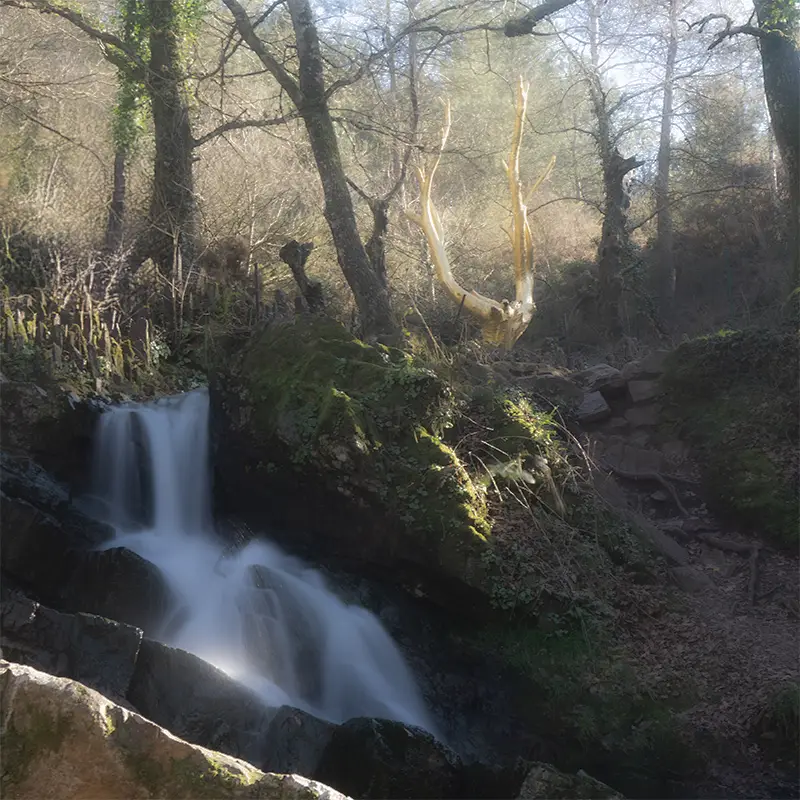
Cascade Brocéliande mossy rocks golden light Barenton fountain - ©Loïc Delplanque
The Brocéliande waterfall evokes the Barenton Fountain, the setting of the legends of Yvain, Merlin and Viviane - ©Loïc Delplanque

Yvain decided to take up the challenge. He found the fountain and poured water over the stone. A thunderstorm broke out immediately. The Black Knight emerges, furious. The two men face off in a fierce battle.

Yvain mortally wounding his opponent. But the knight manages to escape to his castle. Yvain pursues him, hoping to finish the fight. This is the start of a long series of adventures that will lead him to become the "Lion Knight" - accompanied by a lion whom he saves and who becomes his faithful companion.

This story anchors the forest of Brocéliande in the literary geography of the Arthurian cycle. Chrétien de Troyes creates a link between a real place - the Paimpont massif - and the medieval imagination.

The legendary places of Brocéliande: from myth to stone

To help you distinguish between legendary accounts and real historical remains, here is a guide to the main sites:

WebsiteType of monumentAssociated legendArchaeological reality
Merlin's tombNeolithic covered walkwayPrison of air where Viviane locked up the enchanterMegalithic remains dating from 4000 BC.
Barenton fountainNatural spring in the forestYvain's battle against the Black KnightA spring with special geological properties
Val sans retourValley of moors and shaleMorgana's enchanted domain trapping the unfaithfulSite ravaged by fire in 1990 (Chrislyne - Arbre d'Or)
Comper CastleMedieval fortressViviane's invisible crystal palace beneath the pond13th-century castle housing the Centre de l'Imaginaire Arthurien
Hotié de VivianeMegalithic chestViviane's observation point on her estate4500-year-old funerary monument (Brocéliande Guide - Hotié)

This table shows how legends of the Brocéliande forest have been grafted onto authentic prehistoric and medieval sites, creating a fascinating overlap between history and mythology.

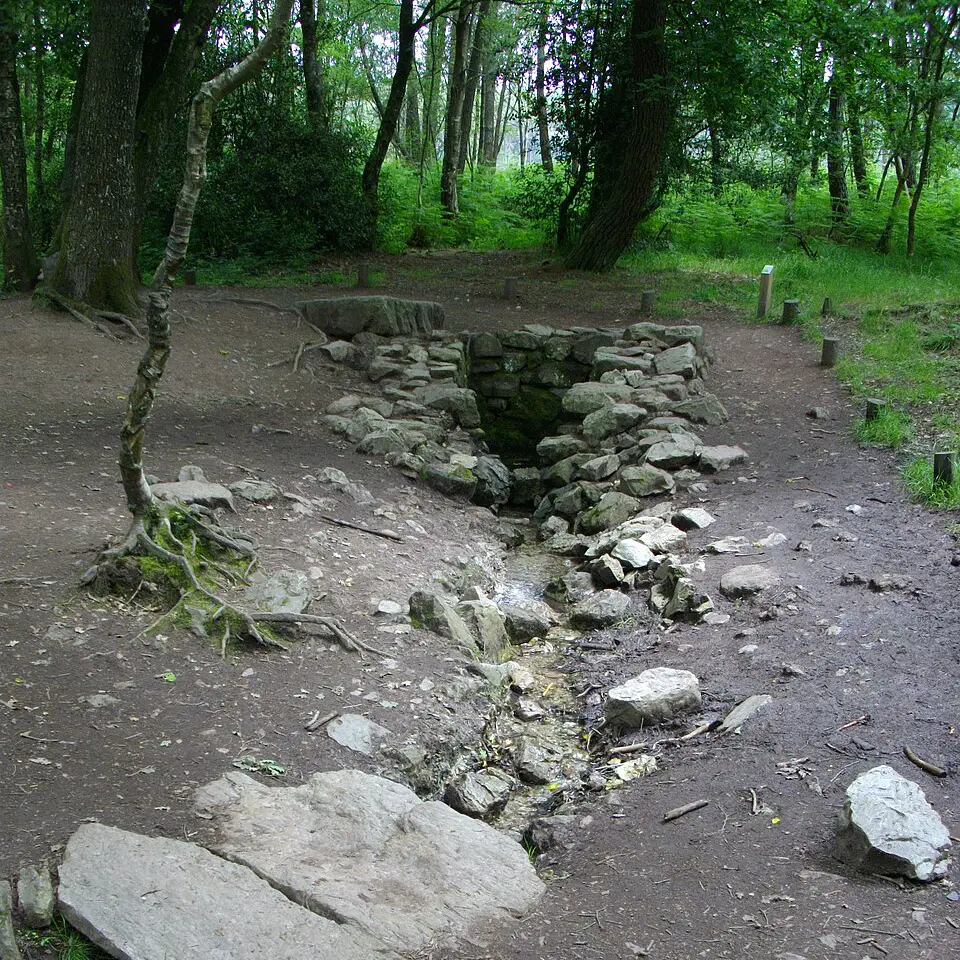
Fountain of Barenton Brocéliande perron stone legend Yvain Knight of the Lion
The Barenton Fountain, where Yvain challenged the Black Knight. According to legend, pouring water on the stoop triggers the storm. Photo : Wikimedia Commons, free licence

The little Breton people: korrigans and creatures of the night

The Arthurian legends are not the only ones to inhabit Brocéliande. Visit Breton folklore adds his own creatures.

The legendary creatures of the Paimpont massif :

  • The korrigans These mischievous little creatures dance around the standing stones and play tricks on hikers.
  • The night washerwomen ghosts washing their clothes by streams - seeing one is a sign of imminent death
  • The black dogs ghostly creatures that lead night-time travellers astray
  • Night mares equine apparitions that lead the unwary off the trail
  • The Guillotin Oak : remarkable tree 500 years old and 9.6 m in circumference (Wikipedia - Guillotin oak)

These creatures of folklore live side by side with Arthurian figures. Merlin rubs shoulders with korrigans. Viviane shares the forest with the washerwomen. The line between the legends of chivalry and the people of Brittany remains blurred, reinforcing the supernatural atmosphere of the place.

Abbé Gillard and the Church of the Grail: when Christianity meets legend

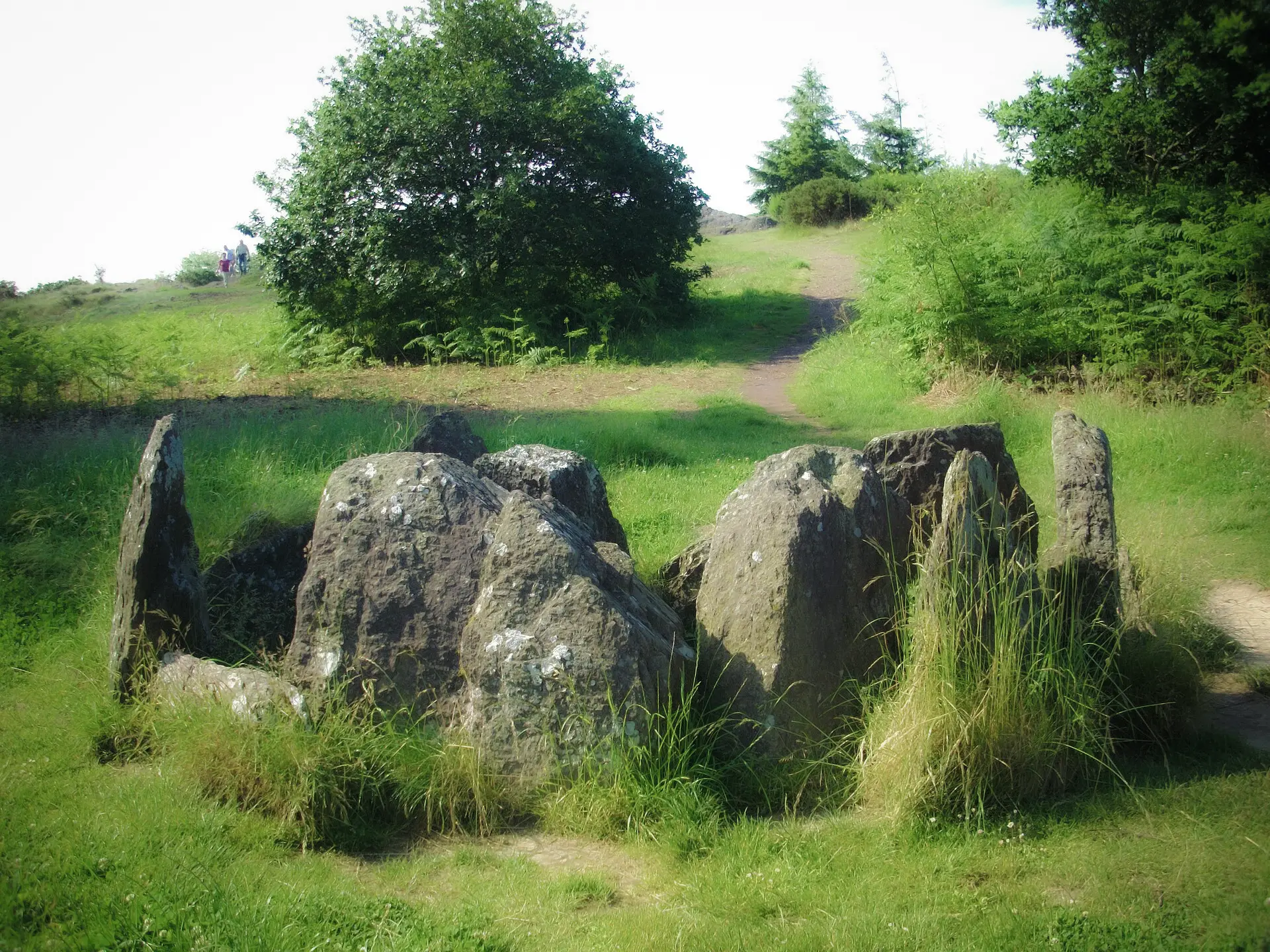
Hotié de Viviane Brocéliande Neolithic megalith schist Val sans Retour
Le Hotié de Viviane, a 4500-year-old megalithic chest overlooking the Val sans Retour. Photo : Wikimedia Commons, modified, free licence

Visit 1942, l'abbé Henri Gillard arrives at Tréhorenteuc, a remote village in the heart of the forest (Wikipedia - Church). He discovered a dilapidated church and a poor population scarred by the war.

Gillard has a bold vision: to decorate his church with the symbols of the Grail and Arthurian legends. During twelve years, He transformed this Christian place of worship into a sanctuary combining Catholic faith and pagan mythology. (Tréhorenteuc church - Abbé Gillard).

The symbolic elements of the Church of the Grail :

  • Stained glass windows representing the white stag, a symbol of Christ and a creature of Celtic legend
  • Mural paintings evoking the quest for the Grail
  • Mysterious inscriptions combining sacred Latin and Arthurian references
  • Mosaics illustrating the knights of the Round Table

It is the only church in the world dedicated to the legend of the Grail. This unique syncretism shows how legends of Brocéliande go beyond the literary framework to become rooted in local spirituality. Myth becomes prayer. Fiction becomes sacred.

Prepare your visit to the places of legend

These stories take on another dimension when you actually walk through the places where they take place. Visit Merlin's tomb , the Barenton fountain the Val sans retour Each site bears the memory of these millennia-old stories.

For a simplified first visit with GPS coordinates of each location and car parks, consult my complete guide to the Brocéliande forest. You'll find all the practical information you need to explore the legendary sites on your own.

If Brocéliande fascinates you, discover also the 8 most beautiful forests in Brittany, each with its own identity and unique landscapes. And to extend your connection with these mythical places, explore my collection of photographs of Breton forests, where I tried to capture the special atmosphere of these natural spaces steeped in history.

The legends of the Brocéliande forest weave an invisible web between the trees. Merlin prisoner of love, Viviane shaping the perfect knight, Morgane avenging betrayals, Yvain defying the storm: these stories can't be read, they have to be experienced.

Walk to the Merlin's tomb. Pour the water from the Barenton fountain. Cross the Val sans retour. Every step you take brings you closer to these thousand-year-old stories. The red shale beneath your feet bears the memory of eight centuries of Arthurian mythology.

Ready to explore these legendary places? Download my complete guide with GPS coordinates, car parks and detailed routes so you don't miss a thing. And if these forest landscapes move you, discover my collection of photographs where I've tried to capture this unique atmosphere where nature meets legend.

Brocéliande first visit guide
(with GPS coordinates)

FAQ

Is Merlin's Tomb really home to the famous enchanter?

No. This site is a Neolithic covered walkway dating back to 4000 BC, well before the Arthurian legends. Two slabs of red schist remain, damaged in the 19th century by treasure hunters. However, visitors still leave wishes here. Myth has transformed these remains into a living sanctuary.

What is the history of Le Val sans Retour?

Morgane's enchanted domain in the Arthurian legends, the Val sans Retour was a trap for unfaithful lovers. Following the fire in 1990, the Golden Tree was installed to symbolise the rebirth of the site. Explore this mythical site by following the signposted paths.

Does the Barenton Fountain have any powers?

In the 12th century, Chrétien de Troyes described how pouring water into it triggered a storm. This is where Merlin and Viviane met. The water, reddened by the iron in the soil, creates a unique atmosphere where legend and geology meet.

Where can I find Viviane's crystal palace?

At the Château de Comper in Concoret. Legend has it that Viviane's crystal palace lies beneath the pond. The castle now houses the Centre de l'Imaginaire Arthurien, with exhibitions on Arthurian stories.

Why is the church in Tréhorenteuc called "Porte du Graal"?

Because Abbé Gillard decorated it entirely with symbols from the Grail legend and the Arthurian cycle between 1942 and 1954. The stained glass windows depict the white stag and the quest for the Grail, the mosaics illustrate the knights of the Round Table, and the inscriptions combine Christian sacred texts with references to the Arthurian legend. It is the only church in the world dedicated to the legend of the Holy Grail.

Should you fear the Korrigans in the forest?

The Korrigans are the mischievous guardians of these woods. They dance around the standing stones at night and play tricks on disrespectful hikers. Stay on the paths. Avoid the banks of the lakes at dusk: the night washerwomen attract the unwary.

Limited Edition Photography: Avoid the Pitfalls and Choose Your Work of Art

Limited Edition Photography: Avoid the Pitfalls and Choose Your Work of Art

In a nutshell: A limited edition photograph, is much more than just a number on a print run. It is a contractual commitment of the artist never to exceed a fixed number of copies. This guaranteed rarity transforms your acquisition into collection object whose value is protected over time. In this article, I explain the rules of the market, the criteria to check before buying, and why I have chosen 30 copies to guarantee status as a work of art to my collectors.

Are you hesitating to take the plunge and acquire a limited edition photograph ? Are you wondering whether the number on the print really makes sense, or whether it's just a marketing ploy?

I understand your question. The limited edition photography is full of different, sometimes vague, practices, and it is legitimate to want to be clear before investing your money in a work of art.

In this article, I'm going to decipher the mechanisms of the'limited edition photography What makes it valuable French tax rules, And above all, I'm going to explain my own choices as a photographer and why they sometimes differ from current market practice.

What is a limited edition photograph?

A contractual commitment by the artist

A limited edition, It's not just a commercial label. It's a moral and legal oath. When I engrave "15/30" on one of my prints, I formally undertake never to produce more than 30 copies of this image in all formats.

The end of the print run is final. Once the last copy has been sold, the image definitively ceases to exist on the market. No reissues, no exceptions, no "little extra series because it works well". No more.

It is this tangible and contractual scarcity that forges the value of the work and cements the trust between the artist and the collector. Without this firm commitment, the limited edition concept is meaningless.

The 30-copy tax rule in France

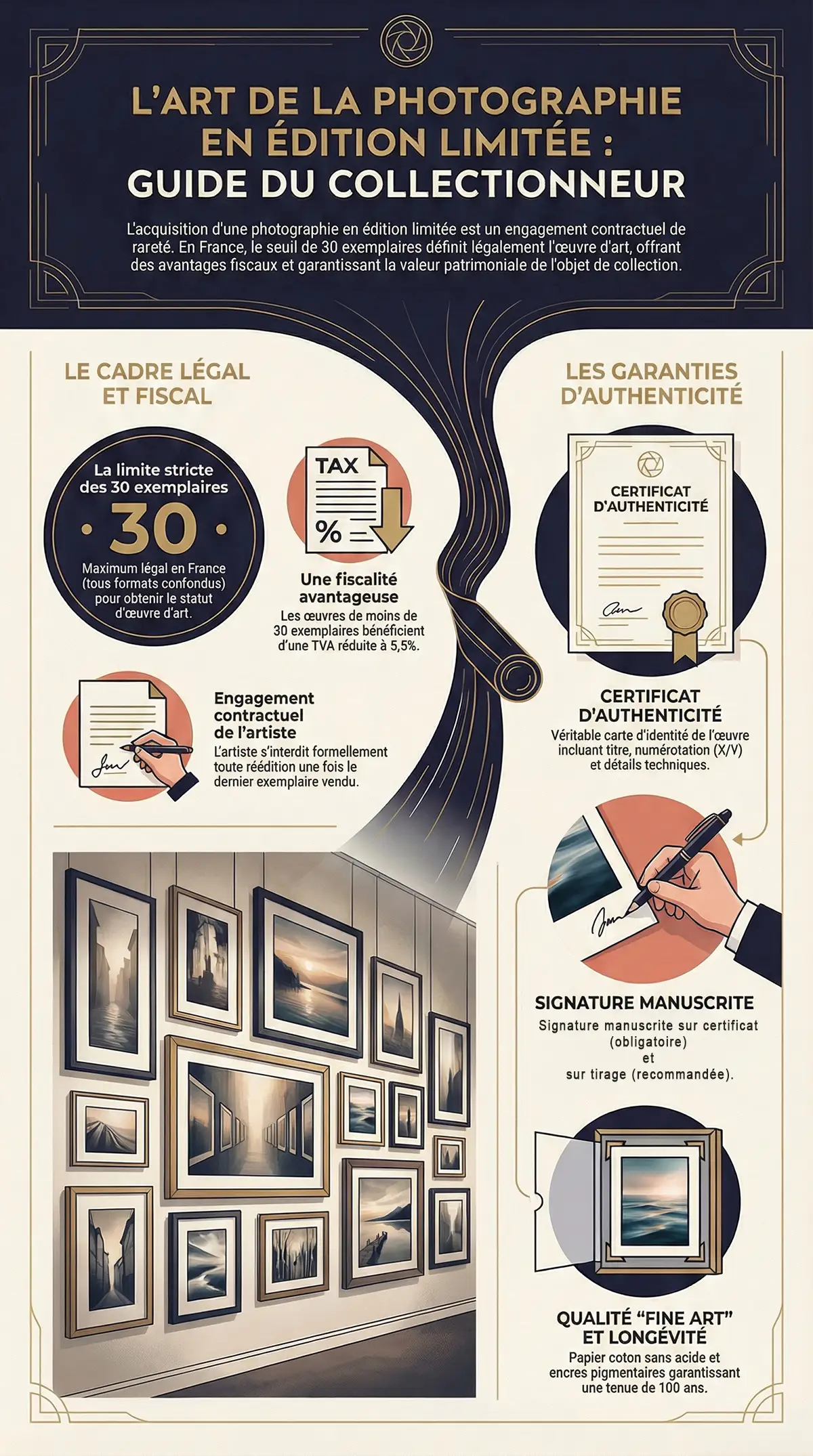
French law is very clear on this point: for a photograph be recognised as an original work of art, it must be limited to 30 copies maximum, all sizes and media combined. It is this legal boundary that distinguishes a work of art from a mere reproduction.

Photograph sunrise Saint-Valery-en-Somme limited edition Fine Art print 30 copies

So why do we see series of 50, 100 or even 500 copies? It's often a deliberate choice by the artist to make their work more accessible to a wider audience. collectors, Even if this means giving up our privileged tax status.

In my case, I chose to adhere strictly to the limit of 30 copies. Why? Because I want each person who acquires one of my photographs knows that they belong to a circle of thirty people in the world, not one more.

It is a balance that protects both the value of your acquisition and the heritage dimension of the work.

How to recognise an authentic print

Certificate of authenticity and signature

Certificate of authenticity photograph limited edition handwritten signature numbering 30 copies

The certificate of authenticity, It is the work's vital identity card. Without it, you have no real guarantee of what you own.

A certificate must it is essential to mention :

  • The artist's name
  • The title of work
  • The copy number in the series (e.g. 12/30)
  • The creation date of the work
  • The type of paper used (e.g. Hahnemühle Photo Rag)
  • The printing technique (pigment inkjet, for example)
  • The print dimensions
  • The location of the signature on the work (optional but recommended)

The handwritten signature of the artist on the print (on the back or in the white margin) as well as its numbering are the two conditions laid down by French law (Article 98A of the CGI) for a photograph to be recognised as an original work of art. The certificate of authenticity, on the other hand, is not a legal requirement — but it is the mark of professional practice, and the best safeguard to know exactly what you are buying.

Fine Art paper quality and X/Y numbering

The Fine Art paper, It's not a luxury, it's the right thing to do. longevity guarantee of the image. The papers I use (in particular Hahnemühle) are made from cotton or alpha-cellulose, acid-free, This guarantees that they will never yellow over time.

The pigment inks I use are stable for over 100 years old under normal exposure conditions. Your limited edition photography will be passed down through the generations without losing its intensity.

The numbering is always expressed as a fraction : X/Y. The first number (X) is the number of your copy. The second (Y) is the total authorised print run for this image. For example, "12/30" means that you own the 12th copy out of a total of 30 that will ever be produced.

A print run without a visible number is only a commercial reproduction. It immediately loses its status as a collector's item.

Value and price of a limited edition photograph on the market

The progressive pricing strategy: a recognised practice that I don't follow

This is a subject on which I want to be totally transparent with you.

In the art photography, There is indeed a practice of progressive pricing documented: the price of the print run may increase as the edition runs out. The first issues sold (not necessarily issues 1, 2, 3... but the first ones bought) are offered at an "introductory price", and the last copies available may cost two or three times as much.

The Ministry of Culture itself refers to this practice as legitimate:

"It is possible to apply a progression range for the sale of a print. The first issue of a print can be set at a fixed price, but if this image is successful and there are few left on the market, it is justifiable to increase its price. In this way, we can have a price that doubles or even triples between the first and last edition."

This is what it might theoretically look like for a limited edition photo with progressive pricing :

Sales stageTime of purchaseTheoretical priceAvailability
LaunchFirst buyers (e.g. issues 1-10 sold out)800 €Strong
Mid-range11-20 copies sold1200 € (+50%)Average
End of seriesLast copies sold (21-30)1600 € (+100%)Low
Secondary marketEdition out of printVariableResale only
Photography limited edition blockhaus bunker sea view graffiti art print 30 copies

But that's not what I do.

I have chosen to propose a fixed price for all copies of my editions, no matter when you buy it or which issue you receive. Why do I do this? Because I think it's fairer and more transparent. Whether you trust me from the first print run or discover my work later, you pay the same price for every copy. same price for the same quality.

The quality is strictly identical, whatever the number.

It's important to make this clear: a number 1/30 is not of better quality than a number 28/30. This myth comes from the antique engraving, where the copper plates wore out with each print. In modern digital photography, each draw is rigorously identical in quality.

The progressive pricing system I mentioned above is therefore not linked to the engraved number, but at time of sale over time. A photographer who uses this method increases his price when he has 5 copies left, regardless of whether they are numbers 3, 12, 18, 24 or 29.

I think it's fairer that each collector pays the same price, whether he trusted my work from the start or discovered it later. The rarity of 30 copies already protects the value of your acquisition: there's no need to add an artificial speculative mechanism.

Secondary market and heritage dimension

Once an edition is sold out, it switches to the secondary market These include resale platforms for collectors, specialist galleries and auctions. This is when the artist rating makes perfect sense.

Buy a limited edition photograph, But it's more than just a decorative purchase. It's about building a cultural heritage. The work can be passed on to your children or resold if you wish. It has a tangible, traceable value, protected by its certificate of authenticity.

Avoiding the pitfalls when buying a limited edition photograph

Demystifying false scarcity indicators

Let's be realistic: a 500 copies is not uncommon. It's a quasi-industrial production disguised as exclusivity to justify an inflated price. You don't buy a work of art, You buy a numbered poster.

The quality between numbers is identical Unlike copperplate engraving, where the plate would wear away, a modern digital print is exactly the same from number 1 to number 30. What may vary is only the selling price depending on the time of purchase (if the artist practices progressive pricing), but technically each print is equivalent.

Also beware of pre-printed certificates without handwritten signature real. They have no legal value nor artistic.

Pre-purchase checklist

Before buying a limited edition photograph, Ask the seller or artist these questions:

  • Is the image sold under different formats with separate counters, Or are all formats counted together in the 30 copies?
  • If this photograph is sold on several platforms, are all the copies counted within the same limit of 30 ?
  • Can I see an example of certificate of authenticity ?
  • What laboratory makes the prints?
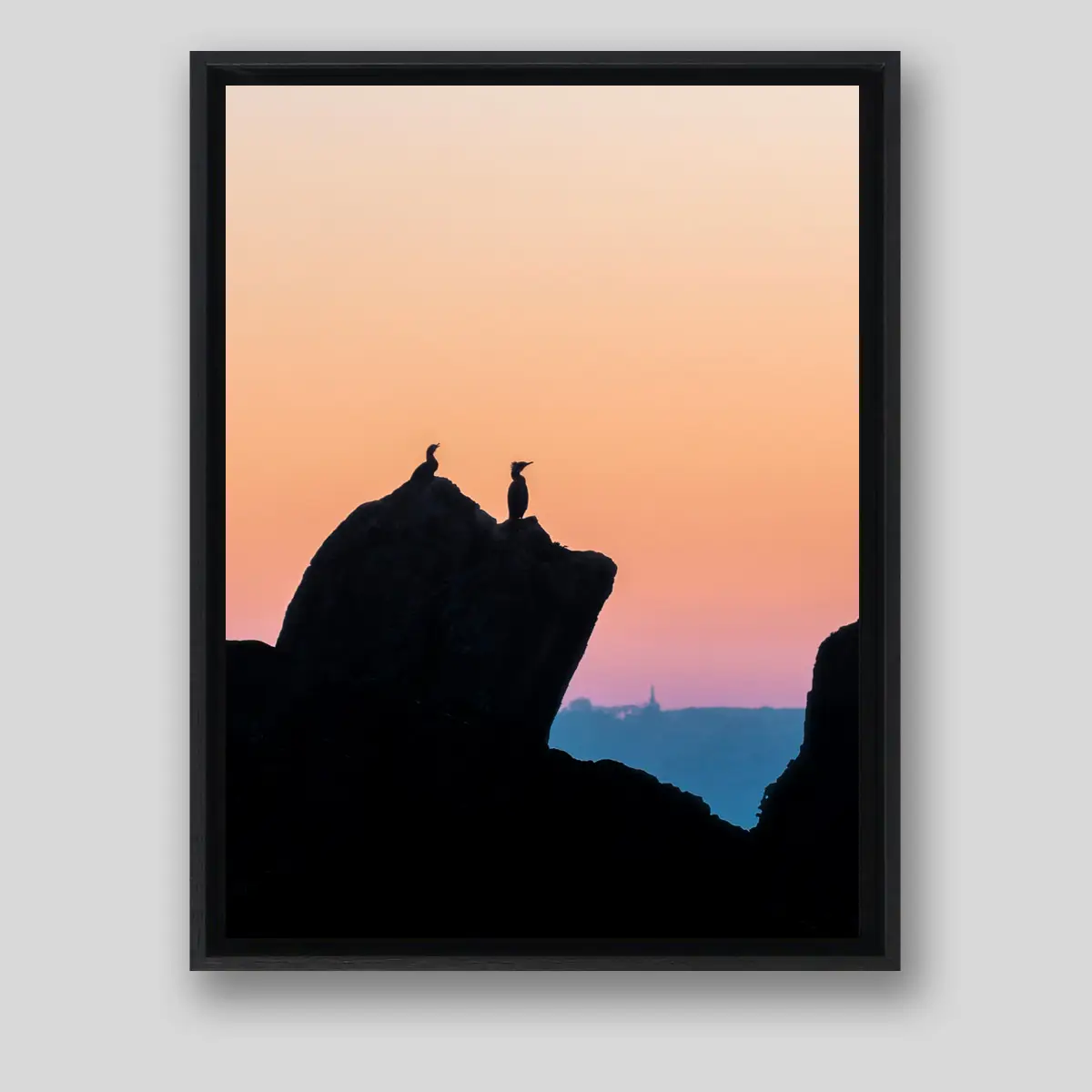
Photography birds sea twilight limited edition american box frame art print

Here are the essential elements to check before buying:

  • Presence of a complete certificate of authenticity
  • Original handwritten signature of the artist on the print
  • Certified fine art paper (Hahnemühle, Canson, etc.)
  • Some high-quality inks — ask the lab what longevity is guaranteed

A serious artist must be able to explain his or her approach, his or her choice of limitations, and keep a record of his or her work. accurate sales records. Transparency is the key to trust.

Limited edition computer graphics photography: 30 copies rule, certificate of authenticity, handwritten signature, Fine Art paper

Investing in a limited edition photography, It's not just about acquiring an image. It means owning a piece of history that is certified, rare and protected. It means directly supporting an artist and bringing into your home a work that will touch you every day.

Market rules exist (30 copies for tax status, progressive pricing possible depending on the artist), but each photographer makes their own choices based on their values. Mine are clear 30 copies to guarantee my collectors the status of an official work of art, a fixed price to ensure fairness, and total transparency about my approach.

If this approach appeals to you, I invite you to discover my limited edition photographs. You will find series artistic with varied worlds, sometimes enhanced with drawings to prolong the emotion, offered on Hahnemühle paper, Dibond or Forex, and always delivered with their certificate of authenticity.

Discover my limited editions

FAQ limited edition photography

What is a limited edition photograph?

This is a photograph printed in a strictly limited number (e.g. 30 copies), signed and numbered by the artist. In France, to qualify as a work of art for tax purposes, it must be limited to a maximum of 30 copies in all formats (article 98A of the General Tax Code). Beyond that, it is considered a reproduction. This contractual rarity guarantees exclusivity and protects the value of your acquisition.

Why do some photographers print more than 30 copies?

This is a deliberate artistic choice to reach a wider audience. Editions of 50, 100 or 500 copies make art more accessible, but forgo the privileged tax status (VAT reduced to 5.5%). Personally, I strictly adhere to the 30-copy limit to guarantee my collectors the official status of a work of art and maximum exclusivity.

Does the price of a limited edition increase with each sale?

Yes, this is a common practice known as progressive pricing. The Ministry of Culture acknowledges that a price can «double or triple between the first and last edition». Please note: the increase is linked to the time of purchase (first vs. last buyers), not to the number engraved. 

Is the 1/30 number worth more than the 30/30?

No. In modern digital photography, each print is rigorously identical in quality. This myth comes from old-fashioned engraving, where plates wore out. With digital printing, 1/30 and 30/30 are technically equivalent. Some collectors have sentimental preferences, but the quality is strictly the same.

What is an Artist's Proof (AP)?

EAs (or APs in English) are non-commercial prints reserved for the artist's archives or close friends and family. They do not count towards the official quota (an edition 30 may have 3 additional EA prints). Their extreme rarity makes them highly sought-after by discerning collectors, as they are as close as possible to the artist's private life.

How can I check authenticity before buying?

Ask for the full certificate of authenticity with title, artist's name, numbering (X/30), date, paper used and handwritten signature. Ask these questions: «Are all the formats counted together in the 30?», «Is the image sold exclusively by you?», «Can I see the sales register? A transparent artist will answer without hesitation.

Does a limited edition photograph increase in value?

Potentially yes, but never guaranteed. It depends on the artist's reputation, the consistency of his or her work, whether the edition is completely sold out, and demand on the secondary market. Above all, buy for the emotional value: a work that moves you and that you live with every day. The heritage aspect is a bonus, not the main objective.

0
    0
    Your basket
    Your basket is emptyBack to the shop